GIANT FLYING FOXES: THE ENORMOUS BATS OF THE PHILIPPINES
Discover the Philippine golden-crowned flying fox, its enormous wings, fruit-based diet and forest role. Separate real biology from human-sized bat myths.
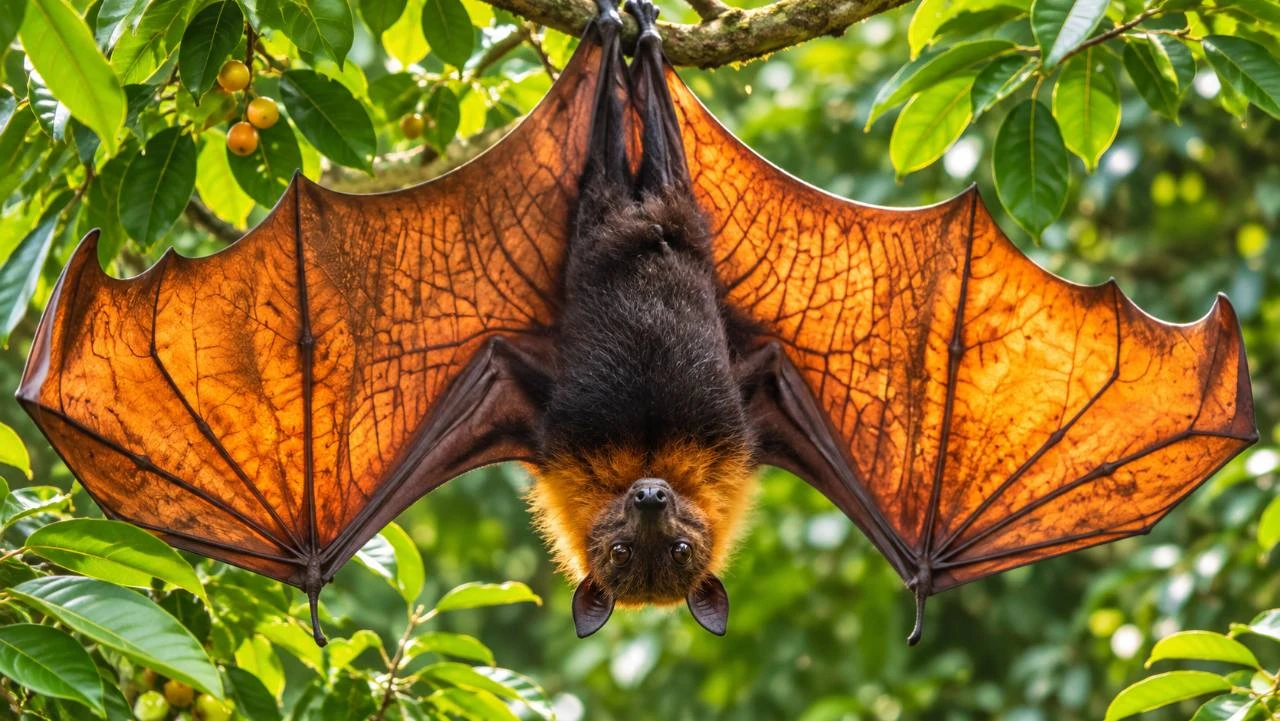
Conceptual wildlife illustration. Species identification, wingspan and scale cannot be verified from this supplied image. Editorial image supplied for PRESDA. Original creator and reuse licence not provided.
A bat unfolds its wings and suddenly seems far larger than the animal resting a moment earlier in a tree. That transformation explains much of the fascination with the Philippines’ giant flying foxes. Their wings are genuinely enormous. The familiar leap from enormous wings to a human-sized monster, however, tells us more about viral photographs than about bats. Their real lives belong to fruit, forest canopies and vulnerable communal roosts.
Meet the golden-crowned flying fox
Acerodon jubatus, the giant golden-crowned flying fox, is endemic to the Philippines. Bat Conservation International identifies it as a fruit bat in the family Pteropodidae, with a diet strongly associated with figs. Flying fox is a common name, not a statement that these mammals are foxes. Nor should every large Philippine bat be assigned to this species: it can share roosts with Pteropus vampyrus, a different flying fox. Bat Conservation International: Acerodon jubatus
A large wingspan, a much smaller body
The University of Michigan’s Animal Diversity Web reports wingspans of approximately 1.51 to 1.7 metres, but head-and-body lengths of about 18 to 29 centimetres. Those measurements describe different things. A person’s height cannot sensibly be compared with a bat’s body by substituting wingspan for length. The thin wing membranes stretch across elongated fingers, turning a compact mammal into an expansive flying surface when opened. University of Michigan: Acerodon jubatus
The forest behind the spectacle
These bats rest in trees and forage preferentially in primary forest or good-quality secondary forest. Their reliance on fruit makes their relationship with plants central to the story; fruit bats can transport seeds as they feed and travel. A surviving roost alone is therefore not the whole conservation picture. Animals also need feeding habitat within reach, and a landscape that allows movement between the places where they rest and eat. University of Michigan: Acerodon jubatus
An endangered animal, not a monster
Bat Conservation International’s profile lists the species as Endangered and describes the harm caused by disturbance at roosts. Hunting and habitat loss add pressure. Its fruit-based diet is nothing like the blood-feeding life suggested by vampire imagery. An impressive photograph should invite curiosity, not persecution. The most consequential question is not how frightening the wings look, but whether enough intact forest and undisturbed resting places remain for the animals to keep using them. Bat Conservation International: Acerodon jubatus
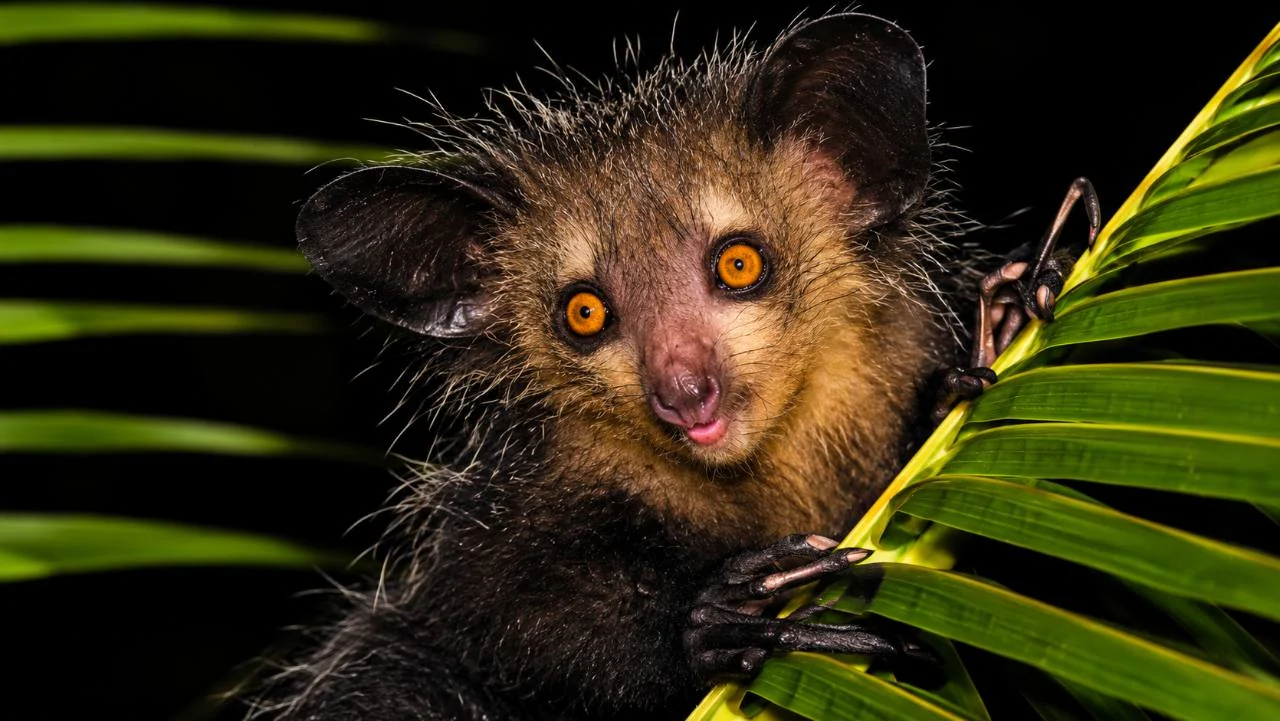
Related reading: The remarkable aye-aye of Madagascar.
FAQ
Frequently Asked Questions
Are these bats really human-sized?
No. A wingspan around 1.5 to 1.7 metres does not mean a body that long; published head-and-body measurements are roughly 18 to 29 centimetres.
Do golden-crowned flying foxes drink blood?
They are fruit bats, strongly associated with figs, not blood-feeding bats.
Are they threatened?
Bat Conservation International lists Acerodon jubatus as Endangered. Habitat loss, hunting and roost disturbance are important concerns.
PRESDA Dispatch
Stay Informed. Stay Aware.
A sharp briefing across AI, gaming, sport, business, world affairs, paparazzi, and lifestyle.