THE GREAT EMU WAR: WHEN AUSTRALIA SENT SOLDIERS AGAINST BIRDS
Why Australia deployed soldiers against emus in 1932, why the cull failed and what the famous story of a war against birds gets wrong.
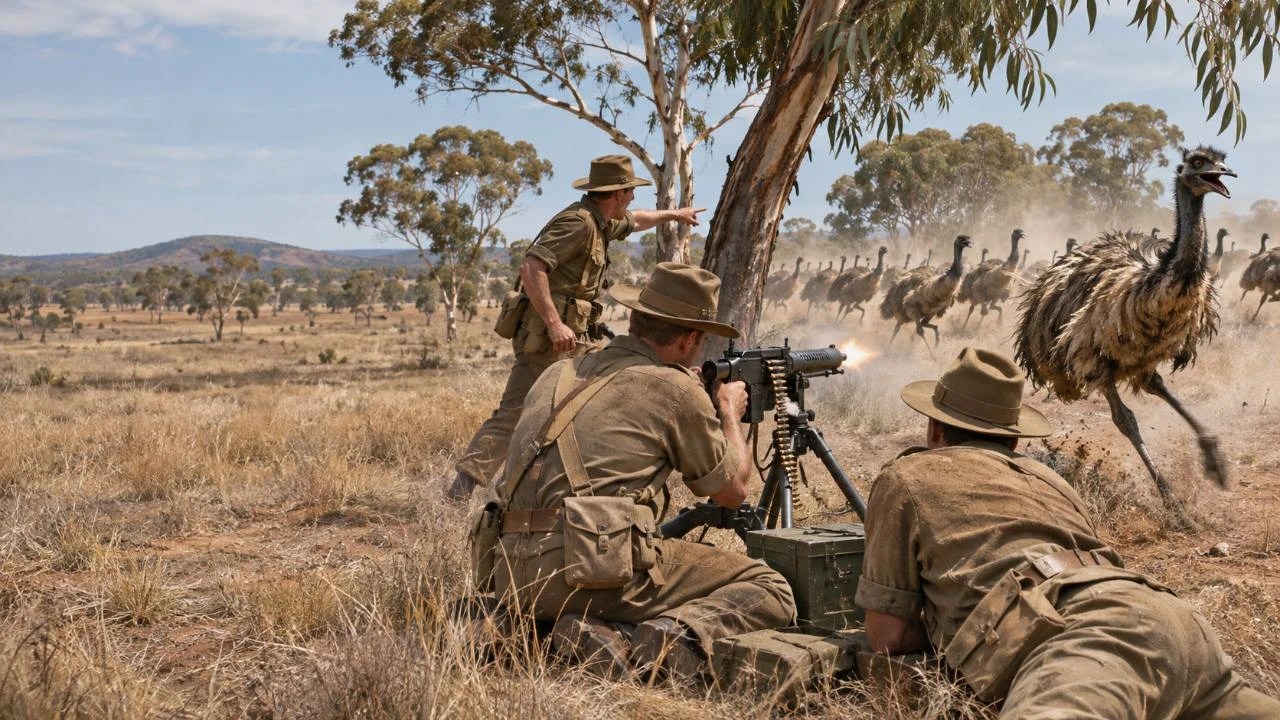
Historical reconstruction supplied for PRESDA, not an authenticated photograph of the 1932 operation. People, equipment placement and bird positions are illustrative. Editorial image supplied for PRESDA.
Australia really did send soldiers with machine guns to kill emus in 1932. The episode remembered as the Great Emu War was a wildlife-control operation in Western Australia, not a declared war between opposing armies. Its failure to solve farmers’ problems made it irresistible to newspapers and, much later, the internet. Beneath the joke lies a collision between agricultural hardship, animal behaviour and the mistaken assumption that military equipment could provide a quick solution.
Why were farmers asking for soldiers?
After the First World War, soldier-settlement schemes placed returning veterans on agricultural land. By the early 1930s, drought and low wheat prices had made farming precarious. Emus moving through crops added damage to an already difficult situation. Farmers appealed to Defence Minister George Pearce for machine guns. This context matters: the operation began as a response to threatened livelihoods, even if the chosen response now sounds extraordinary. National Archives of Australia: the 1932 emu cull
The birds were not behaving like an invading army. Emus are mobile native animals that travel in search of suitable conditions. Western Australia’s conservation profile describes them as highly nomadic and notes the damage they can cause to fences and water points in farming areas. A landscape divided into fields does not make animal movement disappear. Calling that movement an invasion turns a land-use conflict into a simpler, more dramatic story. Western Australian conservation agency: emu species profile
November 1932: firepower meets a moving target
ABC’s reconstruction places three Royal Australian Artillery soldiers at Campion on November 2, under Major G. P. W. Meredith. The initial effort encountered scattered birds and mechanical trouble. A November 4 ambush failed when a gun jammed. The army withdrew on November 8, then renewed the effort after further appeals. The final withdrawal came on December 10. It was therefore an interrupted campaign, not one uninterrupted comic afternoon. ABC: revisiting the Emu War through historical reports
Why didn’t machine guns settle the problem?
A weapon’s rate of fire is only one part of a cull. Operators also need to locate animals, get within useful range and maintain a clear target. Once a flock breaks into smaller groups, concentrating fire becomes harder. Even killing birds at one location cannot prevent more from moving through the district. The mismatch was between a powerful tool and the scale and behaviour of the problem, rather than between brave soldiers and supernatural birds.
Did Australia really lose a war?
Contemporary newsreel material survives in the State Library of Western Australia’s catalogue, which identifies the episode as a largely unsuccessful military wildlife-management operation. The footage documents guns and birds, not an organised emu command structure. Saying the birds won is a memorable shorthand for an unsuccessful policy. It becomes misleading when treated as a literal military verdict, complete with surrender or enemy strategy. State Library of Western Australia: contemporary newsreel catalogue
The National Archives summarises the cull as abandoned with fewer than 1,000 emus killed, amid public opposition and the birds’ tendency to scatter. Later requests for military help in 1934, 1943 and 1948 were refused. Precise casualty claims in retellings deserve caution: a number repeated in a report is not automatically a complete count of animals that died. Failure did not mean that no birds were killed, nor did killing birds establish that the agricultural problem had been solved. National Archives of Australia: the 1932 emu cull
The animal behind the punchline
The Smithsonian identifies the emu as Australia’s largest bird and the world’s second-largest living bird. It is flightless, but flightlessness should not be confused with helplessness or immobility. Its long legs are part of a terrestrial way of life. Reading the episode through biology makes it less mysterious: equipment designed around human conflict was being applied to animals whose survival did not depend on standing their ground. Smithsonian National Zoo: emu biology
The lasting lesson is not that nature always defeats technology. It is that success has to be defined before a spectacular intervention begins. Was the aim to kill a certain number of birds, protect one harvest or reduce recurring conflict across a region? Those are different tasks. The Great Emu War remains funny at a distance, but its serious history concerns institutions choosing an impressive response before establishing whether it could deliver the result people needed.
What would count as success?
Counting dead birds is simpler than measuring a protected harvest. The first is a visible output; the second is the outcome farmers actually needed. Confusing them can make an intervention look productive even when the wider problem persists. Conversely, describing the operation only as a national humiliation hides the people who had sought help and the animals that were killed. Both perspectives are needed to understand why a small deployment became a lasting historical story.
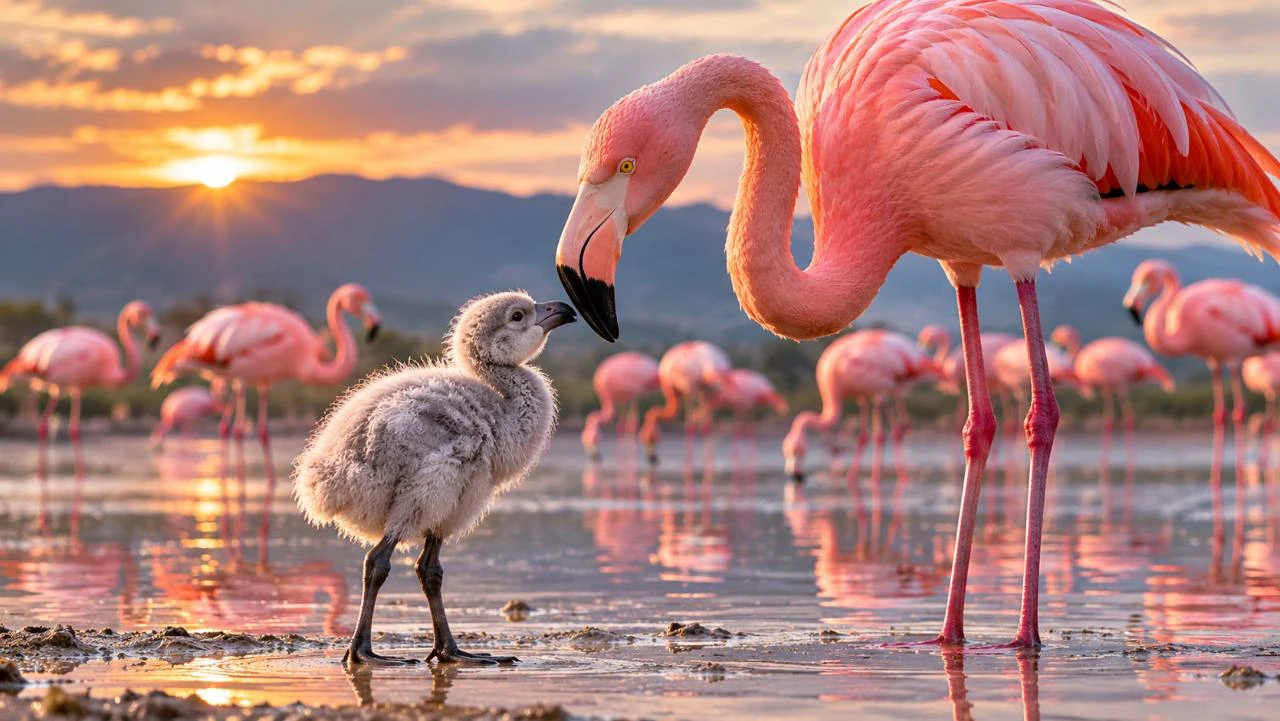
Further reading: Why flamingos hatch gray before turning pink.
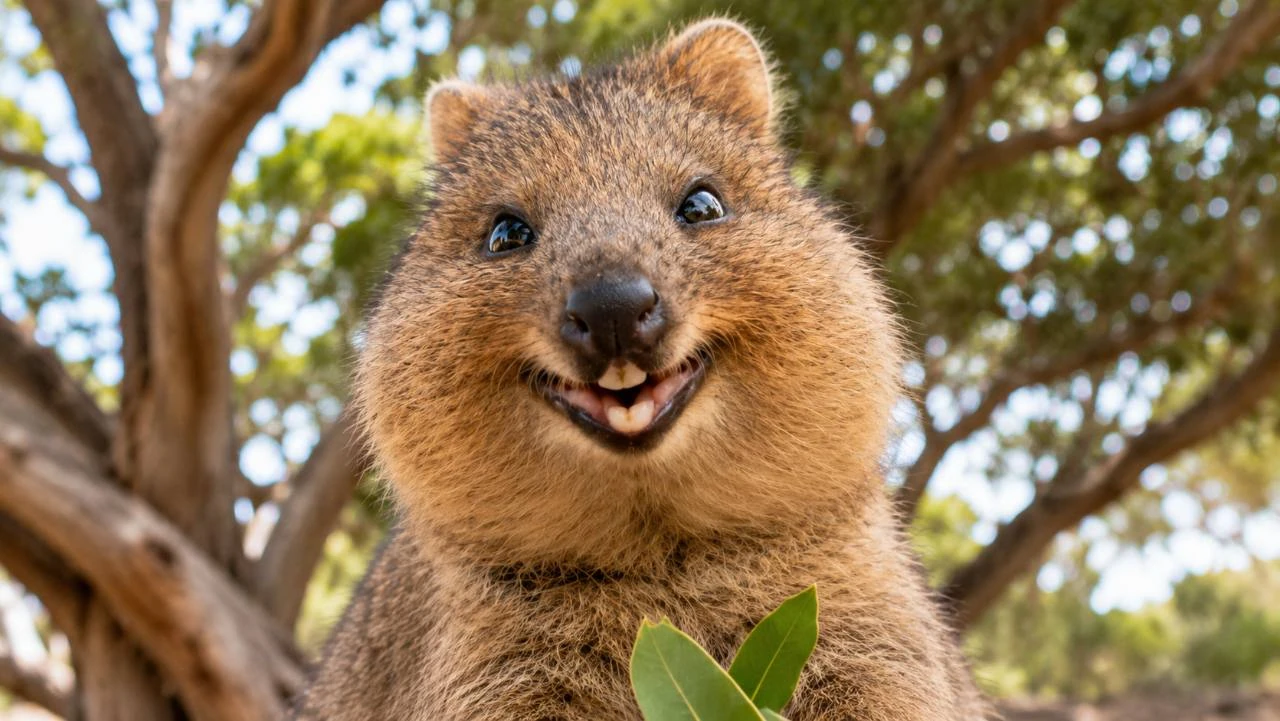
Related reading: The biology behind Australia’s smiling quokkas.
FAQ
Frequently Asked Questions
When was the Great Emu War?
The military cull took place in Western Australia in November and December 1932, with an initial withdrawal and a renewed effort.
Did the emus actually defeat Australia?
That is a popular joke about a largely unsuccessful cull. There was no declared war, negotiated surrender or organised emu army.
Were emus killed during the operation?
Yes. The National Archives summarises fewer than 1,000 killed. Failure to solve crop damage does not mean the operation caused no animal deaths.
PRESDA Dispatch
Stay Informed. Stay Aware.
A sharp briefing across AI, gaming, sport, business, world affairs, paparazzi, and lifestyle.