GREEK FIRE: THE BYZANTINE WEAPON THAT BURNED ON WATER
Byzantine writers describe a feared naval incendiary. Its use is documented, but the exact composition and parts of its early history remain disputed.
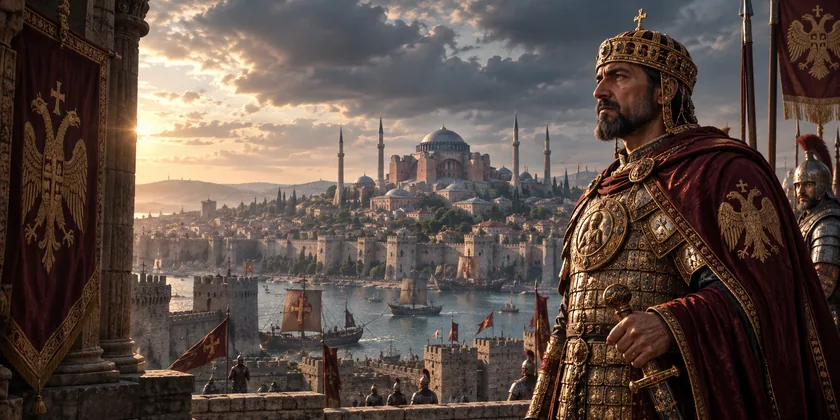
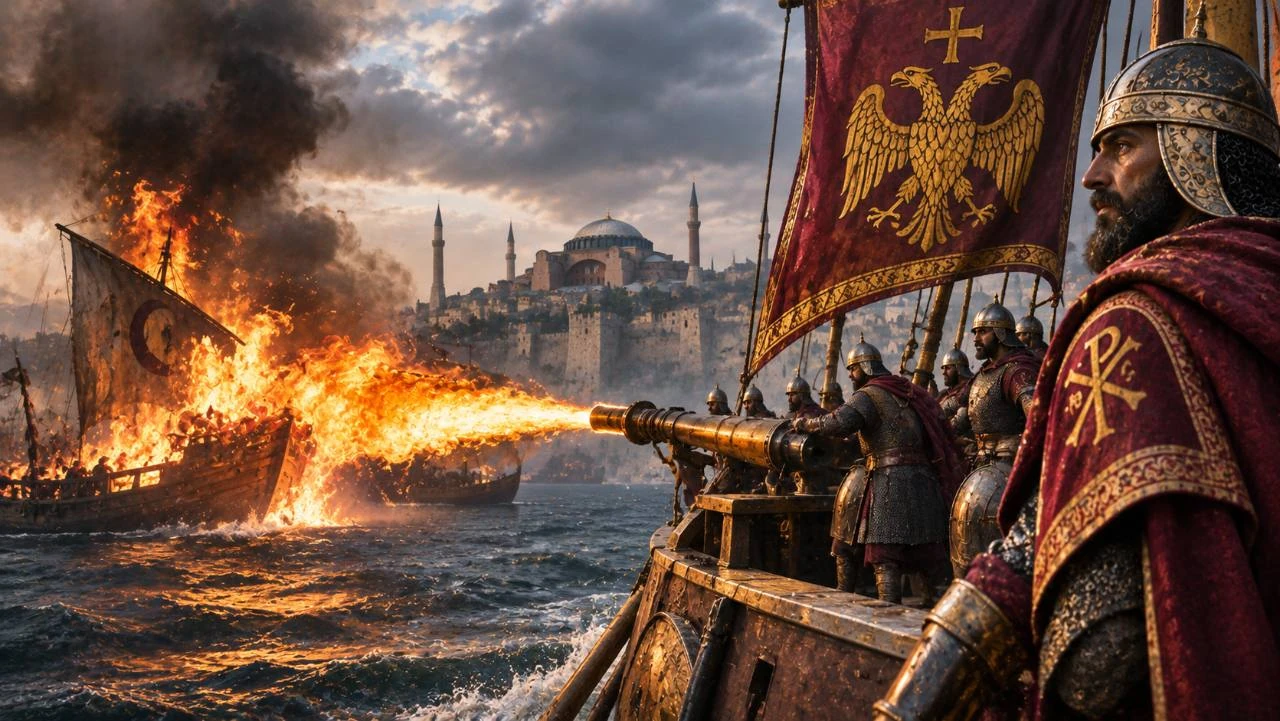
AI-generated historical illustration supplied for PRESDA. The scene is imagined, and the minarets depict a later period.
Greek fire was a Byzantine incendiary remembered above all for its use at sea. Medieval accounts describe a substance that could keep burning on the surface of water, a terrifying prospect for crews on wooden ships. The sources establish that the Byzantine navy used incendiary fire. They leave a much less complete record of what it was made of, how consistent it was across centuries and who first developed it. World History Encyclopedia: Greek fire in Byzantine history
What the chronicles say about its origins
The chronicler Theophanes connects the fire with Kallinikos, an architect from Heliopolis in Syria who fled to the Romans during the early Arab campaigns against Constantinople. This is a historical attribution preserved in a later chronicle. It does not settle whether he invented an entirely new substance, adapted earlier practices or acquired his reputation through the way the story was transmitted. King’s College London: Kallinikos in the Byzantine sources
Why the early siege dates are disputed
The traditional chronology places the first Arab siege in the 670s. Historian Marek Jankowiak has argued from a comparison of sources that the first attempt to take the capital belongs instead to 667–669. The debate shows why the familiar date of a siege cannot by itself supply a precise date for the invention of Greek fire. Later testimony can preserve an event while leaving its timing and sequence open to revision. Marek Jankowiak: chronology of the first Arab siege
Why it mattered at sea
Accounts of incendiary fire belong in the wider history of Byzantine defense. Naval action, fortifications, logistics and the decisions of opposing commanders all shaped the outcome of sieges. The defense against the Umayyad siege of 717–718 is a useful example of the danger of giving one weapon all the credit. The Byzantine capital survived because it could sustain a defense over time, and naval power was one part of that capacity. World History Encyclopedia: Greek fire in Byzantine history
What survives of the secret
No authenticated recipe establishes the precise composition of the Byzantine naval weapon. Medieval terminology also varied, and later writers could apply similar names to different incendiaries. A description of fire burning on water records an observed or reported effect. It does not identify the substance conclusively. The strongest account of Greek fire is therefore a history of its documented use, its reputation and the limits of the surviving evidence. World History Encyclopedia: Greek fire in Byzantine history
The sources survive in different forms. A chronicle preserves stories of particular campaigns. An illustrated manuscript presents the past through the choices of a later artist. Both are useful, but they answer different questions. A dramatic image can show what later readers were invited to imagine without establishing the appearance or construction of a specific object. Biblioteca Nacional de España: the Madrid Skylitzes
Related reading · The Byzantine Empire and its capital.
FAQ
Frequently Asked Questions
What was Greek fire?
A Byzantine incendiary especially associated with naval warfare.
Who invented it?
Theophanes associates it with Kallinikos. The details of its development remain uncertain.
Is its exact composition known?
No authenticated recipe establishes the precise composition.
PRESDA Dispatch
Stay Informed. Stay Aware.
A sharp briefing across AI, gaming, sport, business, world affairs, paparazzi, and lifestyle.