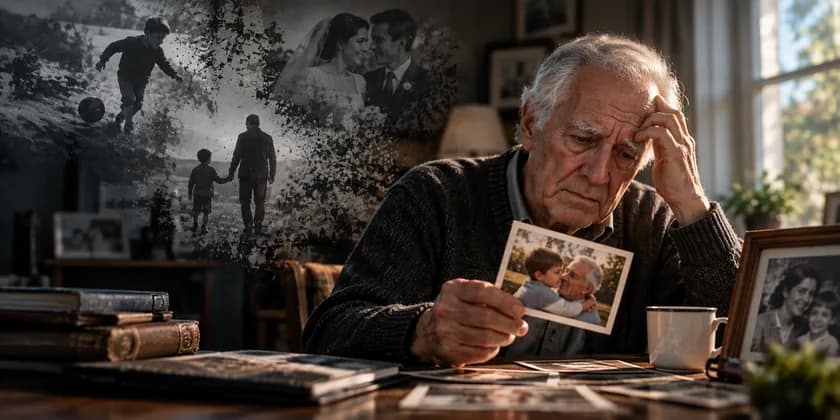
HACHIKŌ'S STORY MAKES US WONDER: WHY DO DOGS STAY LOYAL TO HUMANS?
Hachikō waited for years after his owner never returned. His story became a symbol of loyalty, but science reveals that the bond between dogs and humans began thousands of years before him.
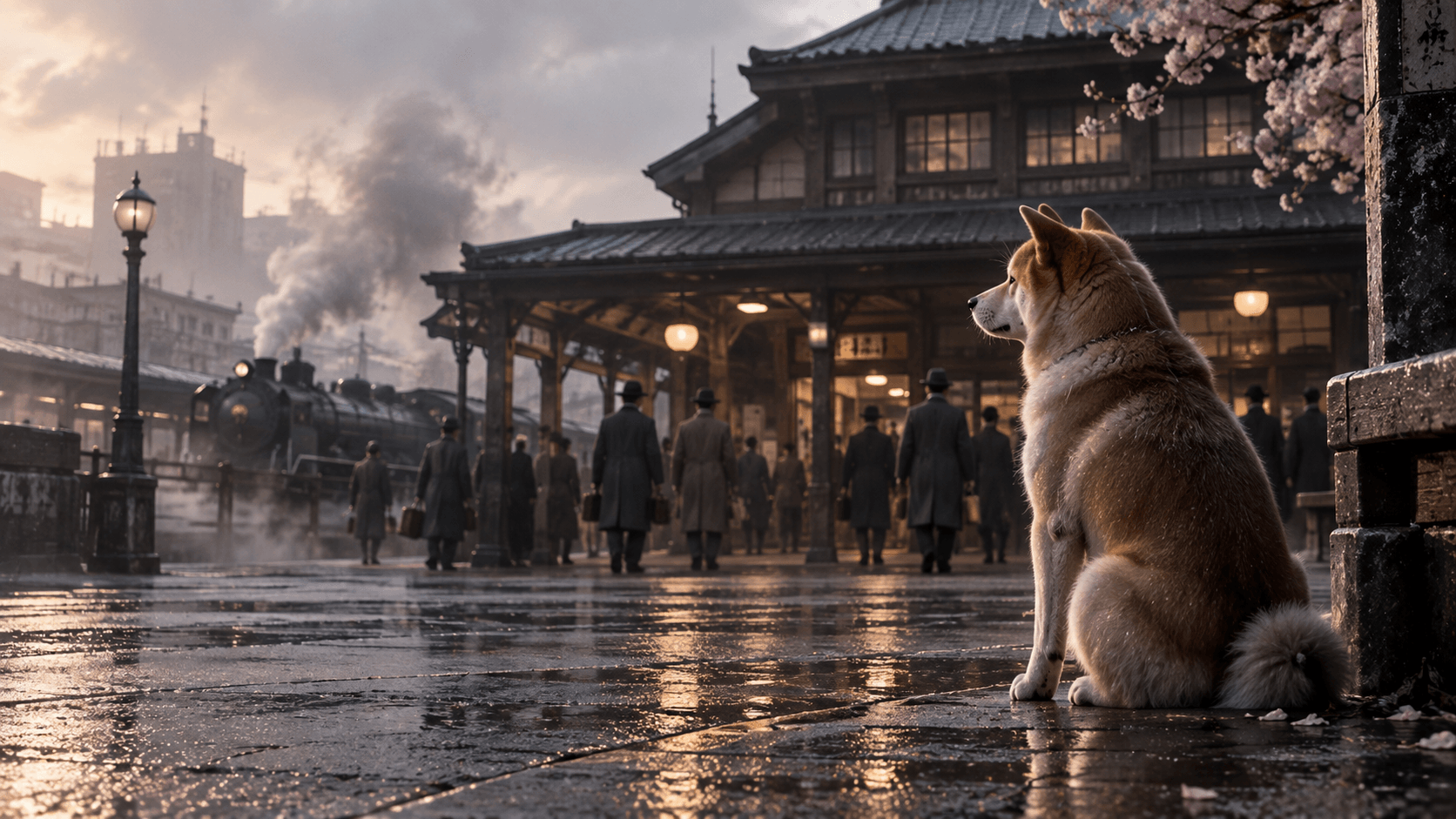
Every afternoon in 1920s Tokyo, commuters passed through Shibuya Station. Among them was an Akita named Hachikō.
His owner, University of Tokyo professor Hidesaburō Ueno, regularly returned through the station, and Hachikō became associated with waiting for him there.
Then, on May 21, 1925, Ueno died suddenly while at work. He never came back through the station.
But Hachikō did.
The documented facts are already powerful enough without exaggeration. Hachikō was born in 1923. He belonged to Professor Ueno. After Ueno's death, the dog repeatedly returned to and waited around Shibuya Station. Newspaper coverage made him nationally famous. A bronze statue was erected while Hachikō was still alive. Hachikō died on March 8, 1935.
We do not need to claim he arrived at exactly the same minute every day for precisely calculated years to understand why the story endures.
The deeper question is harder: why would an animal continue returning for a human who was never coming back?
That question opens the science of dog loyalty, attachment, domestication, memory and the unusual bond between humans and the species that chose to live beside us.
Who Was Hachikō?
Hachikō was an Akita born in Odate, Akita Prefecture, in 1923. He later came to Tokyo and lived with Hidesaburō Ueno, an agricultural science professor at the University of Tokyo.
Ueno's commute connected the dog to Shibuya Station. Over time, Hachikō became associated with waiting there for his owner to return.
When Ueno died suddenly in 1925, Hachikō's life changed. He was cared for by others after Ueno's death, but he continued appearing around Shibuya Station over the following years.
That repeated return became the heart of the legend: not a dog frozen in one exact pose for nearly a decade, but a living animal whose behavior seemed to express attachment after the human relationship that shaped his life had been broken.
Hachikō: The True Story Behind The Legend
Hachikō's fame did not happen only after his death.
Japanese newspaper attention in the early 1930s brought national attention to the dog who kept appearing at Shibuya Station. Readers saw in him a model of devotion, patience and loyalty.
In 1934, a bronze statue of Hachikō was unveiled near Shibuya Station while he was still alive. The original statue was later removed during wartime metal collection, but a postwar statue became one of Tokyo's best-known meeting points.
Hachikō died in 1935. His story continued through monuments, museum displays, books, school lessons, local memory and films.
He became more than a famous dog. He became a Japanese cultural symbol of loyalty and devotion.
Are Dogs Really Loyal?
Loyalty is a human word. It carries moral meaning: faithfulness, devotion, staying with someone even when it is hard.
Science usually studies more measurable behaviors: attachment, proximity seeking, social preference, separation response, greeting behavior, cooperation, attention to human cues and reunion behavior.
When people say dogs are loyal, they are often describing a cluster of real behaviors. Dogs follow familiar people, respond to absence, seek contact, learn routines, prefer some individuals over others and show intense excitement at reunion.
What we call loyalty may not be one single instinct. It may emerge from biology, learning, domestication, attachment and individual experience working together.
The Story Began Long Before Hachikō
Hachikō's story began in modern Japan, but the human-dog bond began tens of thousands of years earlier.
Dogs did not descend directly from the modern wolves we see today. Dogs and modern wolves share ancestry from ancient wolf populations, and scientists still debate the exact timing, location and population history of domestication.
Genetic and archaeological evidence suggests a complex story rather than one simple moment when humans tamed wolves and created dogs.
Some early canids may have lived near human camps. Some may have scavenged. Some humans may have tolerated less fearful animals. Over generations, selection favored animals better able to live with people.
That process eventually produced an animal uniquely tuned to human society.
Why Would Wolves Approach Humans?
One leading idea is self-domestication: less fearful wolves or wolf-like canids gained access to food around human groups and survived better near camps.
Humans may have benefited from alert animals, scavengers, hunting partners or companions. Animals that could tolerate human presence had an advantage in that new ecological niche.
This is still debated. Domestication may have happened through multiple populations, long periods of gene flow, different regions and changing human practices.
The safest conclusion is that dog domestication was not a single simple event. It was a long relationship gradually shaped by food, fear, cooperation and selection.
Humans Changed Dogs, And Dogs Changed Human Life
As dogs adapted to people, people also adapted to dogs.
Dogs may have helped with hunting, guarding, warning, transport, waste scavenging, herding in later agricultural societies and companionship. Humans gave dogs food, protection, shelter and social inclusion.
Domestication became a two-way relationship. Dogs changed their bodies, behavior and social sensitivity in human environments. Humans built dogs into work, ritual, settlement, travel, protection and family life.
By the time Hachikō waited at Shibuya Station, thousands of years of interspecies history were already inside the relationship between one professor and one dog.
Dogs Became Experts At Reading Us
Dogs are unusually skilled at using human social cues.
Research has shown that dogs can follow pointing gestures, respond to gaze and body orientation, attend to voice, and use human communication in ways that differ from many other animals.
This does not mean dogs understand humans perfectly. It means they are highly sensitive to signals that matter in shared life with people.
Compared carefully with wolves, dogs often show stronger tendencies to look toward humans for information or assistance in certain experimental contexts. That may reflect domestication, development, socialization and individual history.
A dog does not need human language to know that a raised voice, a pointed finger, a turned body or a familiar footstep matters.
Does Your Dog Know When You Are Sad?
Many dog owners believe their dog knows when they are sad.
Science approaches that belief cautiously. Dogs can respond to tone of voice, facial expressions, posture, movement, scent and changes in routine. Some studies suggest dogs can discriminate emotional expressions or show behavior consistent with emotional contagion.
But we should avoid saying dogs understand complex human emotions exactly as humans do.
A dog may not think, 'my owner is grieving in a human autobiographical sense.' But the dog may detect softer movement, different smell, crying sounds, changed routines or unusual stillness and respond with proximity or attention.
That response can still be deeply meaningful.
The Power Of Smell
Humans live in a visual world. Dogs live in a world where smell carries extraordinary information.
A familiar person is not only a face or voice. They are also a scent profile: skin, clothes, home, food, stress, environment and time.
Smell helps dogs recognize individuals, detect changes, map places and gather social information. A station, a route, a coat, a platform or a doorway may hold layers of information that humans barely notice.
This matters for Hachikō because returning to a place may have involved more than visual memory. The station environment, human traffic and routines could have been part of a sensory world tied to Ueno.
Does A Dog See Its Owner As Family?
Attachment research has compared some dog-human relationships with infant-caregiver patterns, especially through secure-base effects.
In simple terms, many dogs use familiar humans as a source of security. They may explore more confidently when the owner is present, show stress when separated and greet strongly when reunited.
Dogs are not human babies. The comparison is not saying their psychology is identical.
It means researchers can measure relationship patterns that resemble attachment: preference, comfort, reunion and reliance on a familiar social partner.
For many dogs, a human is not merely a food dispenser. The human is part of the dog's social world.
The Oxytocin Connection
One influential line of research found that mutual gaze between dogs and humans can be associated with oxytocin changes in both species.
Oxytocin is sometimes simplified as the love hormone, but that phrase can mislead. It is involved in social bonding, reproduction and other processes, and its effects depend on context.
The interesting idea is a positive feedback loop: human looks at dog, dog engages with human, social interaction strengthens the bond, and biological systems involved in affiliation participate.
Still, no single chemical explains the human-dog bond.
Love, attachment and loyalty are not one molecule. They are relationships built from bodies, behavior, memory, learning and history.
Do Dogs Love Us, Or Just Love Food?
Food matters enormously to dogs. It would be silly to deny that.
But the best answer is not either food or love. Dogs are motivated by many things: food, play, scent, routine, praise, touch, safety, exploration and social contact.
Behavioral and neuroscience studies suggest many dogs value human interaction independently of food, though individual dogs differ. Some dogs may strongly prefer food in a specific task. Others may prefer praise or contact from a familiar person.
A dog can love food and still form a real attachment to a human.
That is not a contradiction. It is life.
Why Does Your Dog Get So Excited When You Come Home?
Reunion is powerful because it combines recognition, expectation, attachment, routine and reward.
Your dog knows your sound, smell, movement and timing. Your return may mean safety, attention, walks, food, play or simple social contact.
For a highly social animal, the return of an important partner matters.
That is why some dogs bark, spin, jump, run, bring toys or press their bodies against people at the door. The behavior may look excessive to a human, but from the dog's perspective the social world has just been restored.
Do Dogs Miss Humans?
Dogs can clearly respond to absence.
Some show mild waiting or increased attention near doors. Some settle. Some show separation-related distress. A smaller number experience clinical separation anxiety that requires professional veterinary or behavior support.
We cannot directly interview dogs about subjective longing. But we can observe behavior: changes in activity, vocalization, appetite, sleep, destructiveness, elimination, greeting and proximity seeking.
Absence can matter deeply to dogs even if we cannot translate their experience into human sentences.
Did Hachikō Understand That Ueno Had Died?
We cannot know.
That is the honest answer.
Dogs can respond to absence, changed routines, loss of social partners, scent disappearance and the emotional behavior of humans around them. But there is no evidence that lets us say Hachikō understood death exactly as a human adult understands it.
That uncertainty does not weaken his story. It makes it more interesting.
Maybe Hachikō expected Ueno. Maybe he was drawn by routine. Maybe the station was emotionally and socially important. Maybe repeated returns became reinforced by attention from people. Most likely, more than one mechanism was involved.
What we know is behavior. What we cannot know is the exact inner explanation.
Do Dogs Grieve?
Dogs can show behavioral changes after the loss of another dog or human companion.
Studies and owner reports have described changes in activity, sleep, appetite, attention, play, vocalization and proximity seeking after a social loss.
The challenge is proving subjective grief scientifically. A dog cannot tell us whether its experience matches human grief.
Careful language matters. Dogs may show grief-like responses, stress after loss, altered routines and social searching. That is already significant.
We do not need to pretend dogs grieve exactly like humans to take their loss seriously.
Memory: How Long Can A Dog Remember A Person?
Dogs have associative memory, social recognition, olfactory memory and forms of episodic-like memory that researchers continue to study.
A dog may remember people through scent, voice, appearance, routines, places and emotional associations.
It is too simple to say dogs remember people forever. Memory depends on the individual, the relationship, reinforcement, time, context and sensory cues.
But emotionally and socially important individuals can remain strongly represented in a dog's behavior for long periods.
For Hachikō, Ueno was not just any person. He was the central human in a daily routine.
Why Some Dogs Protect Humans
Protective behavior can come from attachment, territorial behavior, fear, training, breed history, confidence, anxiety or a specific learned response.
It is tempting to describe every protective dog story as heroic loyalty. But aggression is not automatically noble. A fearful or poorly socialized dog may bite because it is afraid, not because it is making a moral sacrifice.
True protection work requires training, control and careful handling.
The loving version of loyalty is not simply a dog attacking someone. Often it is quieter: staying close, alerting, guiding, comforting, waiting.
Are Some Breeds More Loyal?
Breeds differ in tendencies because humans selectively bred dogs for different work: herding, guarding, retrieving, hunting, companionship, pulling, scent work and protection.
Akitas, shepherd breeds, retrievers, livestock guardian dogs and companion breeds may show different patterns of independence, sociability, watchfulness or handler focus.
But breed is not destiny.
Individual development, socialization, environment, training, health and experience matter enormously. A breed label cannot tell you everything about a dog's capacity for attachment.
Why The Akita Matters To Hachikō's Story
Hachikō was an Akita, a Japanese breed associated with the northern region of Akita.
Akitas have a working history and became culturally important in Japan. Hachikō's fame helped increase public recognition of the breed, especially during a period when preservation of Japanese dog breeds became a national concern.
It would be too simple to say Hachikō behaved as he did only because he was an Akita.
But his breed became part of the story: a Japanese dog, in a Japanese station, becoming a national symbol of fidelity.
Dogs Did Something Few Animals Ever Did
Dogs did not merely learn to tolerate humans.
Over thousands of years, they became integrated into homes, work, rituals, war, hunting, agriculture, security, disability assistance, therapy and family life.
Few animals crossed so deeply into human society while remaining a different species with their own senses and needs.
This raises a fascinating question: did humans domesticate dogs, or did both species gradually domesticate life together?
The answer may be both.
The Human Side Of The Bond
Dogs are not the only attached species in this relationship. Humans become intensely attached to dogs too.
Dogs give people routine, touch, companionship, nonverbal interaction, caregiving, exercise, social support and a sense of being needed.
Losing a dog can cause profound grief because the relationship is daily, embodied and emotionally repetitive. The dog is there in the morning, at the door, on the walk, beside the bed, inside the ordinary rhythm of life.
Pet bereavement should not be trivialized. For many people, a dog is family.
Why Dogs And Humans Work So Well Together
Humans bring planning, language, tools, long-range cooperation and complex culture.
Dogs bring smell, hearing, movement, rapid social cue detection, trainability and specialized skills.
Together, humans and dogs formed an unusually effective interspecies partnership. Dogs could help find, guard, guide, track, herd, pull, retrieve, alert and comfort.
The partnership worked because each species had abilities the other lacked.
From Hunting Partner To Family Member
Dog roles changed as human societies changed.
Dogs have been hunting partners, camp sentinels, herders, guardians, transport animals, symbols, working animals and companions.
Today many dogs no longer primarily work for humans. They live inside homes, sleep near people, visit veterinarians, wear collars with names and occupy the emotional category many people reserve for family.
That is extraordinary in the history of human-animal relationships.
A descendant of ancient canids now waits at apartment doors for people carrying grocery bags.
Is A Dog's Loyalty Unconditional?
Unconditional love is emotionally powerful language, but it is not a precise scientific description.
Dogs can fear humans. They can avoid abusive people. They can change attachment. They can form new relationships. Their behavior responds to treatment, safety, health, learning and environment.
That does not make the bond less real. It makes it a relationship rather than magic.
Dogs are loyal in part because relationships shape them, and because thousands of years of evolution made them unusually ready to build those relationships with us.
Hachikō: Myth Vs Reality
MYTH: Hachikō spent every moment of nearly ten years sitting motionless in exactly one place.
REALITY: He became known for repeatedly returning to and waiting around Shibuya Station over many years.
MYTH: Nobody cared about him until after he died.
REALITY: Hachikō became nationally famous during his lifetime, and his first bronze statue was unveiled while he was alive.
MYTH: Scientists know Hachikō understood that Ueno was dead.
REALITY: We cannot know what Hachikō understood about death.
MYTH: Dogs are loyal only because humans feed them.
REALITY: Food matters, but attachment research demonstrates a much richer social relationship.
MYTH: Dogs behave like humans because they think exactly like humans.
REALITY: Dogs have their own cognition shaped by canine evolution and thousands of years living alongside humans.
Hachikō After Death
Hachikō's legacy continued after 1935.
The Shibuya statue became one of Tokyo's most famous meeting points. His preserved remains and historical memory connect him to Japanese museums and institutions. His story has been retold in books, school materials, television and film.
Film adaptations helped bring the story to global audiences, but adaptations are not historical records. They dramatize emotion, simplify timelines and create scenes no source can verify.
The original story is quieter and stronger: a dog, a professor, a station, a broken routine and years of return.
Why The Story Still Hurts
Hachikō's story contains something almost everyone understands: waiting for someone you love.
The dog could not explain what he was doing. He could not write a memoir or defend his behavior.
That silence allowed generations of humans to see something of themselves in him.
We know what it means to wait. We know what it means when someone does not come back.
Why Are Dogs So Loyal To Humans?
There is no single reason dogs are loyal to humans.
The bond likely emerges from thousands of years of domestication, selection for social compatibility, attachment, learning, routine, communication, reward, individual relationships and dogs' unusual sensitivity to human behavior.
What humans call loyalty is the visible result of a relationship built across generations and then rebuilt personally between every dog and its human.
Hachikō's story feels exceptional because it was unusually public and emotionally clear. But the ingredients were ancient: a dog, a human, a routine, a bond.
The Waiting Dog
Cities change. Buildings disappear. Millions of people pass through stations.
Yet nearly a century later, people still stop beside the statue of one dog.
Not because Hachikō discovered anything. Not because he conquered anything. Not because he understood human language.
He simply kept returning.
Science can explain attachment, domestication, hormones, memory and behavior. But Hachikō reminds us why the question matters in the first place.
Thousands of years ago, two species began sharing the same world. Somewhere along the way, dogs stopped merely living beside us.
They began waiting for us to come home.
FAQ
Frequently Asked Questions
Who was Hachikō?
Hachikō was an Akita born in 1923 who belonged to University of Tokyo professor Hidesaburō Ueno. After Ueno died in 1925, Hachikō became famous for repeatedly returning to and waiting around Shibuya Station.
How long did Hachikō wait?
Hachikō continued appearing around Shibuya Station for years after Professor Ueno's death. Exact popular formulas about the precise number of years, months and days should be treated cautiously unless tied to an authoritative source.
Why are dogs loyal to humans?
Dog loyalty likely comes from domestication, attachment, learning, routine, social communication, reward and dogs' unusual sensitivity to human behavior.
Do dogs understand death?
We cannot know whether dogs understand death as humans do. Dogs can respond to absence, changed routines, loss of social partners and human emotional changes.
Do dogs love their owners or just love food?
Food is important, but research on dog attachment and social reward suggests many dogs also value human interaction independently. Individual dogs differ.
PRESDA Dispatch
Stay Informed. Stay Aware.
A sharp briefing across AI, gaming, sport, business, world affairs, paparazzi, and lifestyle.