HERMÈS: FROM HORSE HARNESS MAKER TO GLOBAL LUXURY EMPIRE
How Hermès turned a Paris harness workshop into a luxury house through leatherworking, silk and handbags such as the Kelly and Birkin.
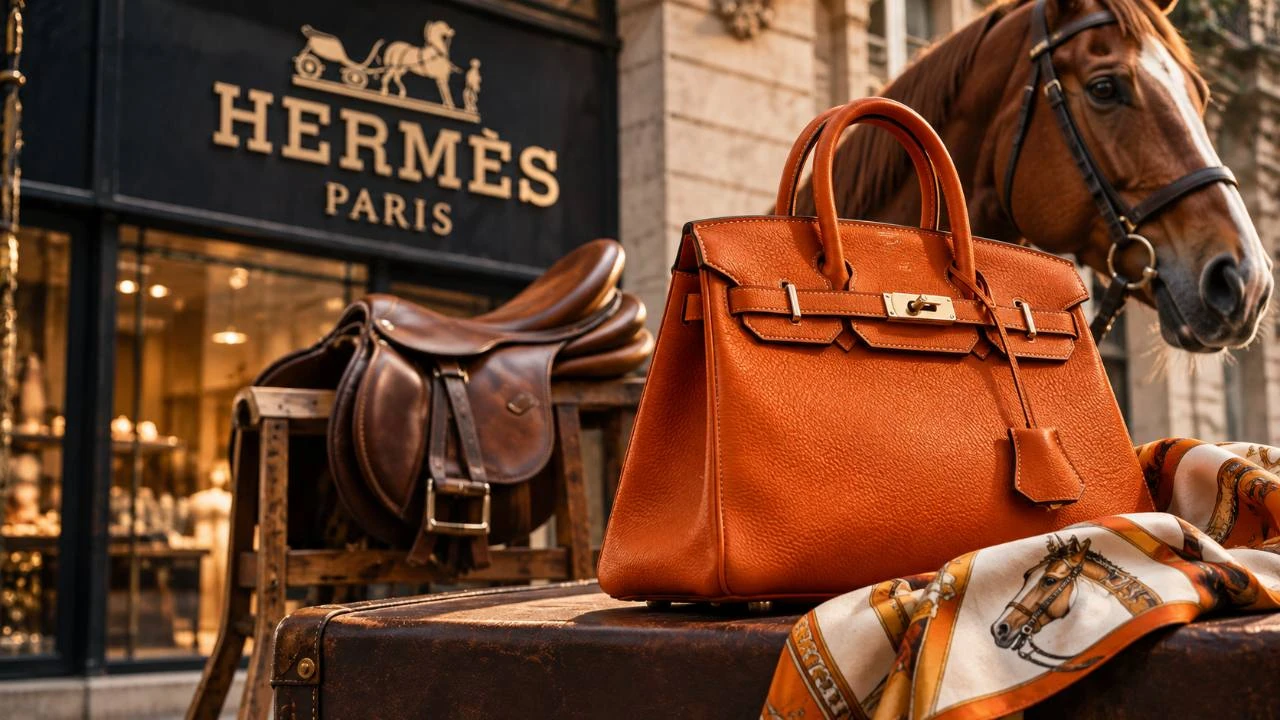
AI-generated editorial montage supplied for PRESDA. The storefront, bag and equestrian scene are imagined.
In 1837, Thierry Hermès opened a harness workshop in Paris. His customers needed equipment that endured repeated strain, fitted the horse and could be repaired. Decades later, the same family name would appear on silk scarves and handbags. The thread connecting those products was a workshop’s ability to adapt its knowledge of materials and construction to new ways of travelling and dressing. Hermès: Six generations of artisans
The move from harnesses to travel goods
In 1880, Charles-Émile Hermès moved the business to 24 rue du Faubourg Saint-Honoré. Saddlery complemented harness work. In the interwar years, Émile Hermès expanded the range as travel and clothing changed. Leatherworking could serve luggage and personal accessories as readily as it served equestrian equipment. The transition created new uses for skills the business had already spent generations developing. Hermès: Six generations of artisans
What silk added to the business
Hermès dates its first silk scarf to 1937. A square of silk created a new surface for illustration and color and could carry motifs from the house’s equestrian past. It also gave customers another way into the brand. A scarf could change with each design while preserving a recognizable format, an approach that differed from building a reputation around a single leather model. Hermès: Six generations of artisans
How the Kelly and Birkin acquired their names
The bag associated with Grace Kelly existed before her association made it famous. The Birkin took its name from Jane Birkin and grew out of a conversation with Jean-Louis Dumas about a practical bag. Hermès dates the Birkin’s creation to 1984 in its corporate chronology. Sotheby’s dates the original bag it catalogued for auction to 1985. A design milestone and the date assigned to an individual object answer different questions. The house’s annual report identifies Dumas as the bag’s creator. Sotheby’s: Hermès chronology and the original Birkin
The business behind the workshop
The company’s historical chronology lists the Birkin under 1984. Hermès annual report: historical chronology
Hermès describes training and workshops as part of how it grows. More output requires people able to do the work and maintain its standards. The history of the business shows another way to grow: add categories that carry recognizable design and craft into different parts of a customer’s life. That is how a harness maker could become a house known for silk, leather and much else. Hermès: École des savoir-faire
The house opened its École des savoir-faire in 2021. Its leatherworking training can lead to a French national vocational qualification. Training takes time even when demand grows quickly. That gives the workshop a role in business planning as well as in the brand’s public identity. Hermès: École des savoir-faire
Related reading · How Lacoste’s crocodile became a logo.
FAQ
Frequently Asked Questions
When was Hermès founded?
Thierry Hermès opened his Paris harness workshop in 1837.
When did Hermès make its first silk scarf?
The house dates the first carré to 1937.
Who inspired the Birkin bag?
Jane Birkin, after a conversation about a practical bag with Jean-Louis Dumas.
PRESDA Dispatch
Stay Informed. Stay Aware.
A sharp briefing across AI, gaming, sport, business, world affairs, paparazzi, and lifestyle.