THE HIMBA: NAMIBIA'S PEOPLE OF RED OCHRE
Learn what Himba red ochre paste is made of and how Ovahimba families in Kunene navigate grazing, drought, education and work.
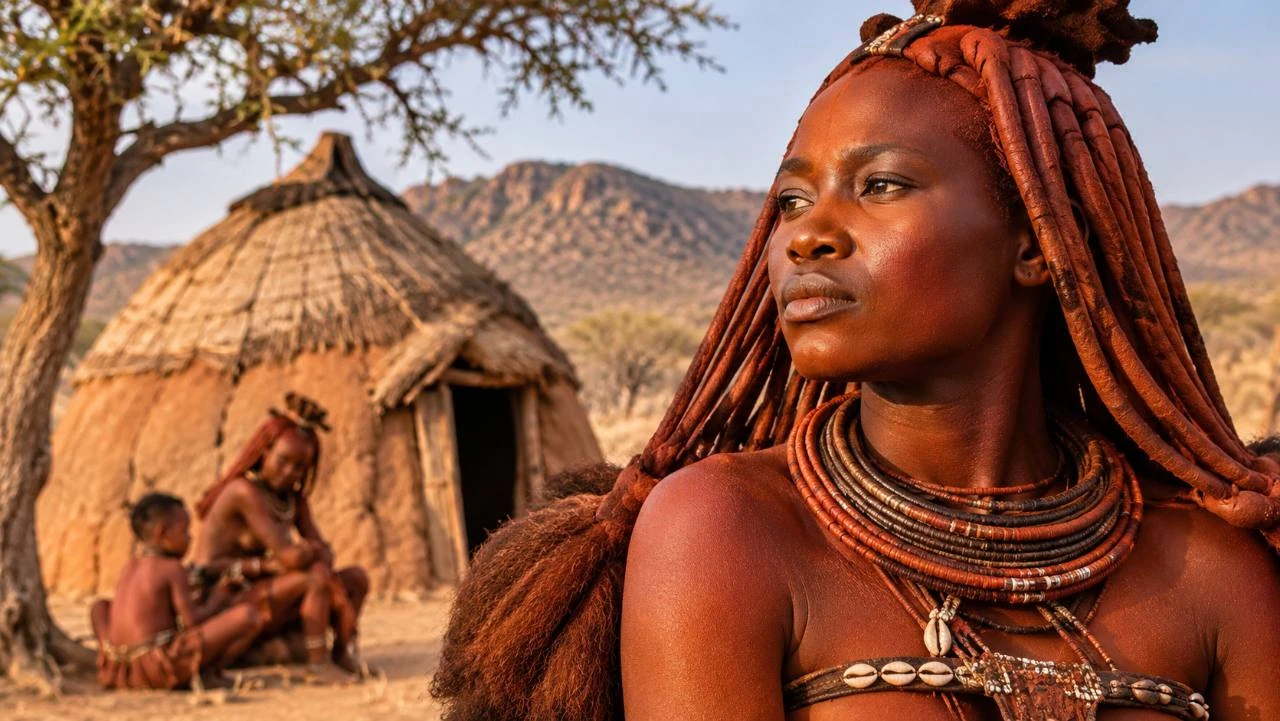
Editorial illustration supplied for PRESDA.
Red ochre is often the first detail a visitor notices in a portrait of a Himba woman. It is also an incomplete way of getting to know a community. The people commonly called the Himba, or Ovahimba, live chiefly in the arid northwest of Namibia and across the border in Angola. Some households keep livestock and move according to water and grazing conditions. Others combine herding with employment, education, trade or other income. The red paste is a visible practice within this wider social and economic life. Its materials link the household to animals, minerals and the people who produce or trade them. Pastoral fieldwork in Kunene South African Journal of Science field observations Controlled study of ochre and ultraviolet radiation
Where Himba families live
| Evidence | What it helps explain |
|---|---|
| Pastoral fieldwork | How households organise grazing, school and work |
| Observations of otjize preparation | How ochre and clarified milk fat are used |
| Controlled tests | How particular ochre samples filter ultraviolet radiation |
In Namibia, the region most closely associated with Himba pastoralism is Kunene. It contains settlements, larger towns, grazing areas and water points connected by journeys that vary over the year. The border with Angola cuts across a wider landscape of related communities. Describing the Himba as if everyone lived in a single village, followed one migration schedule or made a living only from cattle obscures that variation. One settlement can contain households with different access to animals, transport and opportunities for paid work. Pastoral fieldwork in Kunene Controlled study of ochre and ultraviolet radiation
How herding works in a dry place
Pastoral mobility is a way of responding to patchy resources. When rain is uneven, the best grazing may be some distance from a household’s usual settlement. A herder has to think about the location of water as well as grass, the strength of the animals and the cost of the journey. A herd might move while relatives remain near a school or service centre. It is possible for movement to be central to how a household manages livestock without every member moving together. Pastoral fieldwork in Kunene
What is otjize?
Researchers have described otjize, also written otjise, as a mixture of finely ground red ochre and clarified milk fat. Field observations in Kunene document grinding the mineral between stones and using the mixture on skin, hair and ornaments. The materials tell part of the story. Fat comes from working with livestock and processing milk. Ochre may be obtained through exchange as well as gathered. A careful description can acknowledge the skill and time involved without assuming that every person applies the same recipe or uses it for exactly the same reason. South African Journal of Science field observations Controlled study of ochre and ultraviolet radiation
Why a laboratory test cannot explain a cultural practice
Research has examined whether ochre can reduce exposure to ultraviolet radiation. In a study of iron-rich pigment, the properties of specific samples depended on the material used. Those results concern how particular preparations behaved in tests. They are not enough to explain why people value the practice, how it is learned or what it communicates within a community. Appearance, care of the body and identity can all matter. A scientific measurement and an account from the people who make and wear the paste answer different questions. The findings should also not be treated as a recommendation to substitute a paste for a proven form of sun protection. South African Journal of Science field observations Controlled study of ochre and ultraviolet radiation
How a pastoral landscape changed
Historical research on Kunene describes pressures from colonial administration, drought and changing relationships with markets and government institutions. Rules that constrain movement can affect pastoralism directly. A dry area rarely offers all the resources a herd needs in one place, so blocking an old route can make an otherwise manageable season harder. The effect will differ according to whether a household has other grazing options, a way to transport animals or earnings that allow it to buy feed. Pastoral fieldwork in Kunene
School, work and livestock can belong to the same household
Schooling and paid work introduce schedules around which families organise their lives. A term may make it preferable for some relatives to stay in one place. An income from work may help a household support school costs or keep animals through a dry year. Conversely, the need to look after livestock may make an opportunity in a town difficult to take up. The choices depend on access to land, roads and services as well as individual preferences. Qualitative fieldwork is valuable here because it records those trade-offs in people’s own settings. It does not automatically give a census of every Himba household. Pastoral fieldwork in Kunene
Why drought is about more than rainfall
A drought can reduce forage and water while increasing the distance a herd has to travel. Its effects also depend on decisions made well before the rains fail. A settlement with several available grazing areas can adjust differently from a settlement hemmed in by other land uses. Households with fewer animals may have less room to absorb a loss. A good account therefore asks who can move, who has access to water, and who has other sources of support. The same weather event can produce quite different outcomes. Pastoral fieldwork in Kunene
What a portrait can and cannot tell us
Clothing, hair and adornment can convey experience and identity. A photograph records a moment, often the moment an outsider chose to capture. It cannot tell us by itself how the individual makes a living, what languages they use, how they understand a local practice or what they want public policy to do. Identifying the image as an illustration avoids assigning that personal history to people shown in the hero. When a project uses real photographs, a useful caption names the setting and date where known and distinguishes facts from what the photographer inferred.
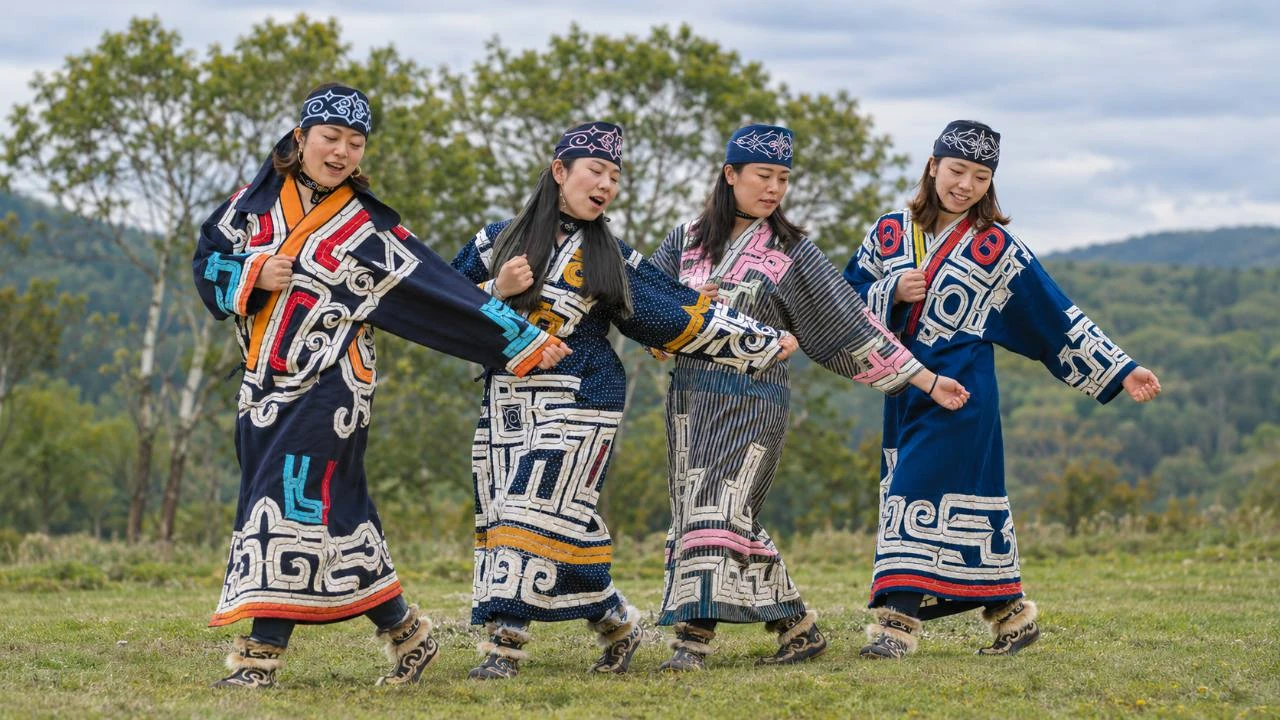
This is why the red ochre is a good starting point for a feature and a poor ending. It opens onto questions about work, materials, family and the changing use of land. A reader can take those questions forward by asking who describes the practice and what kind of evidence supports their account. For another example of how culture survives through people actively teaching and adapting it, see PRESDA’s feature on the Ainu.
Why reliable population counts are hard to compare
Numbers about the Himba often circulate without a dated census or a description of who was counted. A regional population total answers a different question from a count of people who identify as Ovahimba, especially when descendants live outside the region or on the other side of an international boundary. A field study may speak closely to the households interviewed and still be unsuitable for estimating a total. For these reasons, this article uses the names and locations confirmed by the sources and leaves the population figure open.
Research in Kunene also reminds us that a practice can change without disappearing. New ways of sourcing materials can alter the work of grinding ochre or keeping animals. A household can teach a craft while some of its members spend part of the year in town. People may have different views about what is worth retaining or changing. The fact that a practice changes gives a historian questions to ask about who controls the resources and the pace of change. Pastoral fieldwork in Kunene South African Journal of Science field observations
FAQ
Frequently Asked Questions
Where do the Himba live?
Himba communities live in northwestern Namibia, especially Kunene, and across the border in Angola.
What gives otjize its red colour?
The pigment comes from ground red ochre, often mixed with clarified milk fat.
Does everyone in a Himba household move with livestock?
No single pattern applies to all households. People can divide responsibilities and combine herding with school, employment or other activities.
PRESDA Dispatch
Stay Informed. Stay Aware.
A sharp briefing across AI, gaming, sport, business, world affairs, paparazzi, and lifestyle.