ICELAND: THE COUNTRY THAT HEATS HOMES WITH VOLCANIC ENERGY
Iceland’s geothermal heating explained: what the 90% figure means, how district heating works and why lava can threaten pipes.
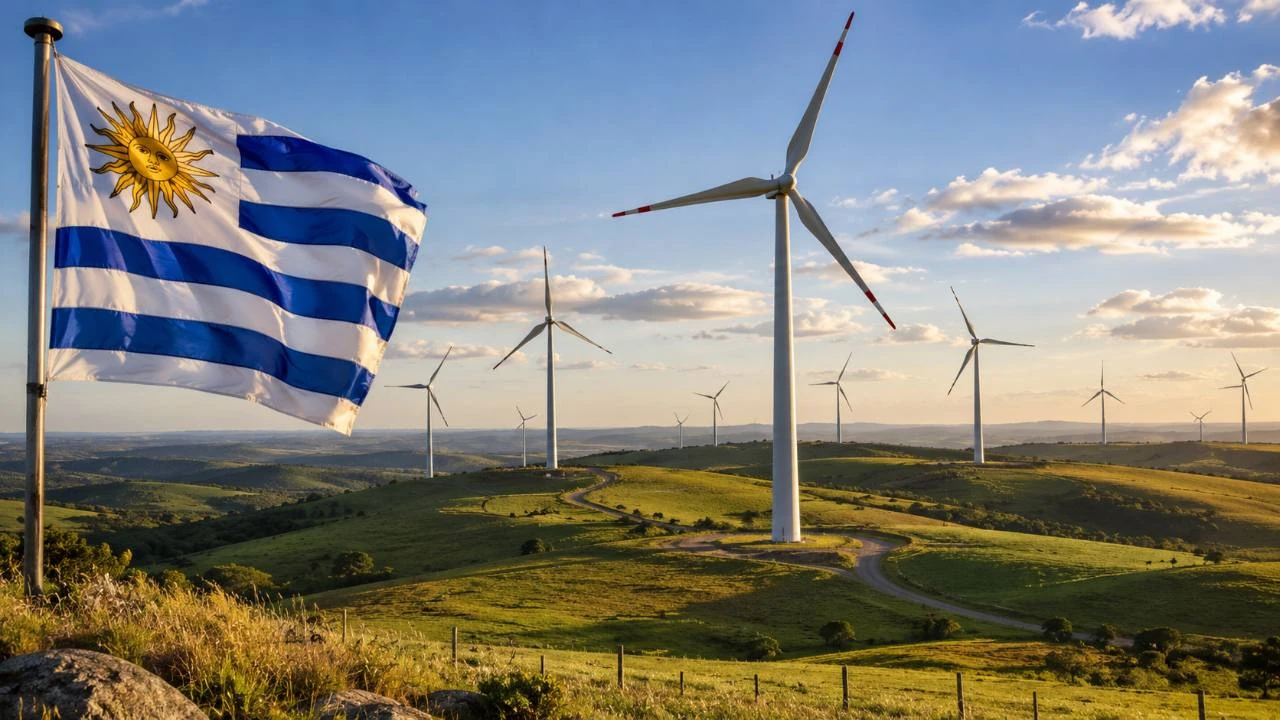
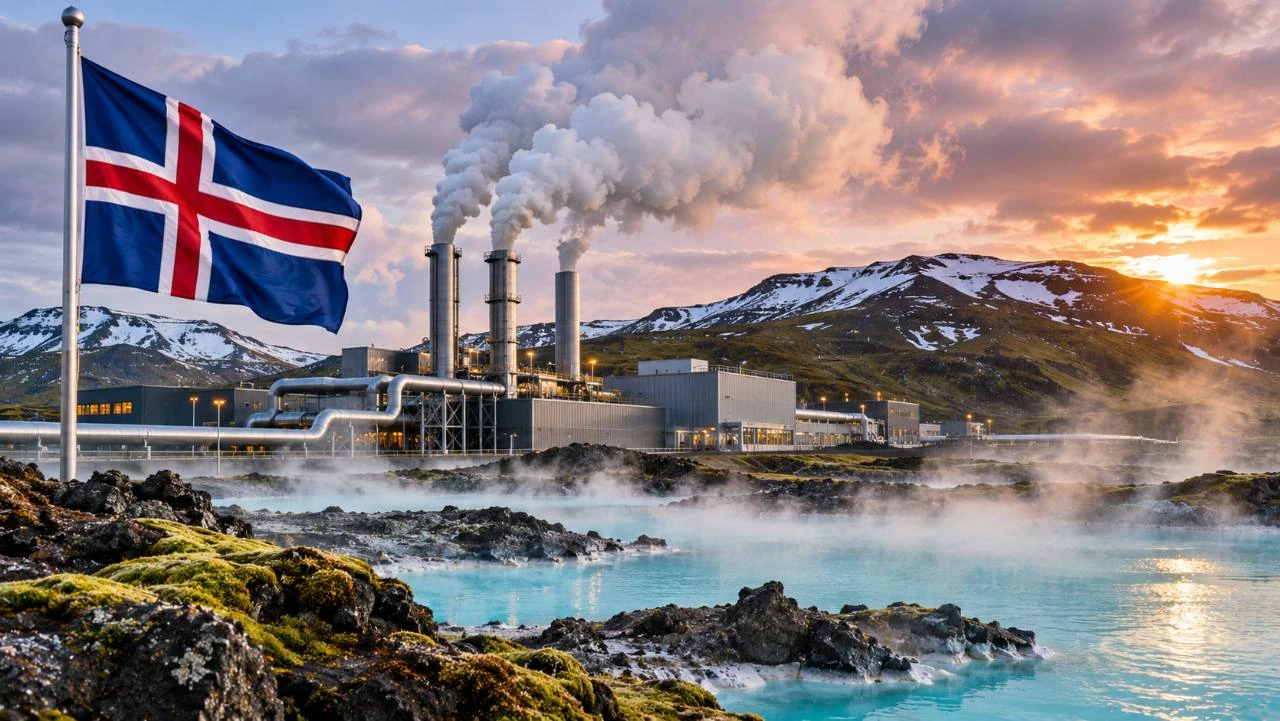
Editorial illustration supplied for PRESDA.
A radiator in Reykjavík can draw on heat from below ground without requiring a furnace in the building. That result took more than hot rock. Wells, treatment equipment, pumping stations and pipe networks had to connect a useful source of heat with a dependable demand. Iceland’s National Energy Authority reports that geothermal energy supplied about 90% of the energy used for domestic heating in 2020. This is a measure of heat used in homes. Iceland’s greenhouse-gas inventory reports a smaller geothermal share of electricity production, which is a different measure. Iceland’s National Energy Authority Iceland National Inventory Document
What “volcanic energy” means at home
| System stage | What it does |
|---|---|
| Resource | A well accesses hot geothermal fluid |
| Direct use or heat exchange | The system uses suitable hot water or transfers its heat to fresh water |
| District network | Insulated pipes deliver heat to connected buildings |
| Local equipment | Radiators or other equipment transfer heat indoors |
Iceland’s geology helps make accessible geothermal resources possible, but a town does not need an active lava flow to run its heating system. Heat in the ground warms water and rock. A well can bring hot water or a mixture of water and steam to the surface if the resource has suitable temperature, chemistry and flow. The design varies according to the field. The phrase “volcanic energy” points to the geological setting, while geothermal district heating describes the service that reaches a building. Iceland’s National Energy Authority Veitur Utilities district heating documentation
Why the electricity mix has a different answer
Heating can be supplied as hot water. Electricity is a separate way of carrying energy, and its generation can involve a turbine or another conversion process. A high-temperature geothermal installation may provide power and also help supply a hot-water network, but a utility can use another field only for heat. Iceland’s national inventory distinguishes geothermal space heating from electricity, where hydropower is important. Comparing those percentages without keeping their denominators visible creates a misleading picture of how people use energy. Iceland’s National Energy Authority Iceland National Inventory Document
How hot water reaches a building
Veitur Utilities describes two sources for its hot-water networks. In one, water from a suitable lower-temperature geothermal field can go into a district network. In the other, geothermal heat is transferred to cold fresh water at a plant, and that heated water is sent to users. A heat exchanger keeps the fluids apart while heat crosses a surface between them. The choice depends on the properties of the resource and on the requirements of the network. Receiving geothermal heat at a radiator does not tell us which path the water followed. Veitur Utilities district heating documentation
What the pipes do
A district heating works only if heat is available at the right time and in the right place. The network must get the water to buildings at suitable temperatures and pressures and cope with changes in demand. Insulation limits the heat lost along the way. Operators need to know how changing flow in one branch can affect another. A source that looks promising at the wellhead can be a poor match for a town if the pipe route is too difficult or the number of customers too small. The distance and the pattern of demand are part of the engineering, not details that can be settled after the wells are drilled. Iceland’s National Energy Authority Veitur Utilities district heating documentation
How Reykjavík made it possible at city scale
The National Energy Authority describes small early uses before large public projects. In 1930, a pipe about three kilometres long connected geothermal sources in Reykjavík to Austurbæjarskóli, a school. It mattered because it demonstrated a service connecting one location to another. Connecting a whole city required a larger supply, more pipes and institutions with the ability to build and operate the system. New projects also had to work around existing buildings and habits. A resource becomes useful to households when the network reaches them and heat arrives reliably. Iceland’s National Energy Authority
The example shows why this transition cannot be explained by geology alone. A well and a school provided a useful project, while establishing a city service required other customers and the capacity to maintain the network. Work on home heating can also have consequences for the use of streets. Laying a pipe creates construction work up front and maintenance work later. The scale of the network determines which homes gain access, and how easily the operator can connect a new source if the first one cannot meet demand. Iceland’s National Energy Authority Veitur Utilities district heating documentation
Why the same geological setting can threaten the network
HS Orka’s 2024 report documents damage caused by lava flows on the Reykjanes Peninsula. A February flow damaged the Njarðvík hot-water line from the Svartsengi area. A geothermal source can still hold usable heat while a damaged pipe interrupts the delivery of that heat. That distinction matters in events where the question a resident needs answered is when service can reach the building again. Pipeline routes, repairs and alternative connections affect that outcome. HS Orka Sustainability Report 2024
What operators have to watch below ground
Wells draw heat and fluid from reservoirs whose response has to be monitored. The relevant constraints can involve pressure, recharge, temperature and water chemistry. Reykjavík Energy describes reinjection where applicable. Returning geothermal fluid can help manage some field conditions, but the operator still needs to track what changes over time and plan maintenance. The national inventory also records emissions from geothermal plants. At one site, avoiding one source of fuel combustion can coexist with operational emissions, water handling and local impacts that need their own measurements. Iceland National Inventory Document Reykjavík Energy water use report
Which parts of the Icelandic example can travel?
Different places have different resources. A network may use suitable geothermal water directly, or it may require another source of heat and exchange equipment. A dense group of customers can support a network more easily than widely separated households, and an existing network can change the economics of connecting a new supply. Before treating the Icelandic share as a target to copy, it helps to ask what energy is counted, what temperature is available and what it will take to move heat to users. For another case in which the type of energy counted changes the meaning of a headline, read PRESDA’s analysis of Uruguay’s electricity transition. Iceland’s National Energy Authority Veitur Utilities district heating documentation
Why winter peak demand matters
A network needs to be considered at the hour when buildings need the most heat as well as across the whole year. Two towns may use similar annual amounts while experiencing very different peaks. In those hours, pipe capacity, storage and the ability to bring another supply online can affect whether a building remains warm. Weather and the condition of the buildings can change demand. Monitoring temperatures around the network helps an operator see whether a shortfall begins at the source, along the route or in equipment that transfers heat inside a building. A national percentage cannot provide these answers for a particular neighbourhood. Iceland’s National Energy Authority Veitur Utilities district heating documentation
How to compare heat networks
A useful comparison begins at the point at which the customer receives heat. It asks how heat is transferred, what the network covers and what happens during a disruption. The richness of a resource and the quality of a service are different questions. Iceland’s National Energy Authority Veitur Utilities district heating documentation
A city with several sources may be able to redirect supply when a line goes down. A place served by one connection faces a different repair problem even if its annual use of geothermal heat is high. Veitur Utilities district heating documentation HS Orka Sustainability Report 2024
FAQ
Frequently Asked Questions
How much of Iceland’s household heating comes from geothermal energy?
The National Energy Authority put the share at about 90% of domestic heating energy in 2020.
Does lava directly heat homes?
The network depends on geothermal resources underground, then on equipment and pipes that deliver the heat.
Is 90% also the geothermal share of Iceland’s electricity?
No. The figure is for domestic heating. Electricity generation has a separate mix.
PRESDA Dispatch
Stay Informed. Stay Aware.
A sharp briefing across AI, gaming, sport, business, world affairs, paparazzi, and lifestyle.