INCA MUMMIES REVEAL COCA, ALCOHOL AND RITUAL DRUG USE
A November 2026 study of eight Inca mummies found evidence of coca, alcohol-related compounds and harmine. What the results do and do not prove.
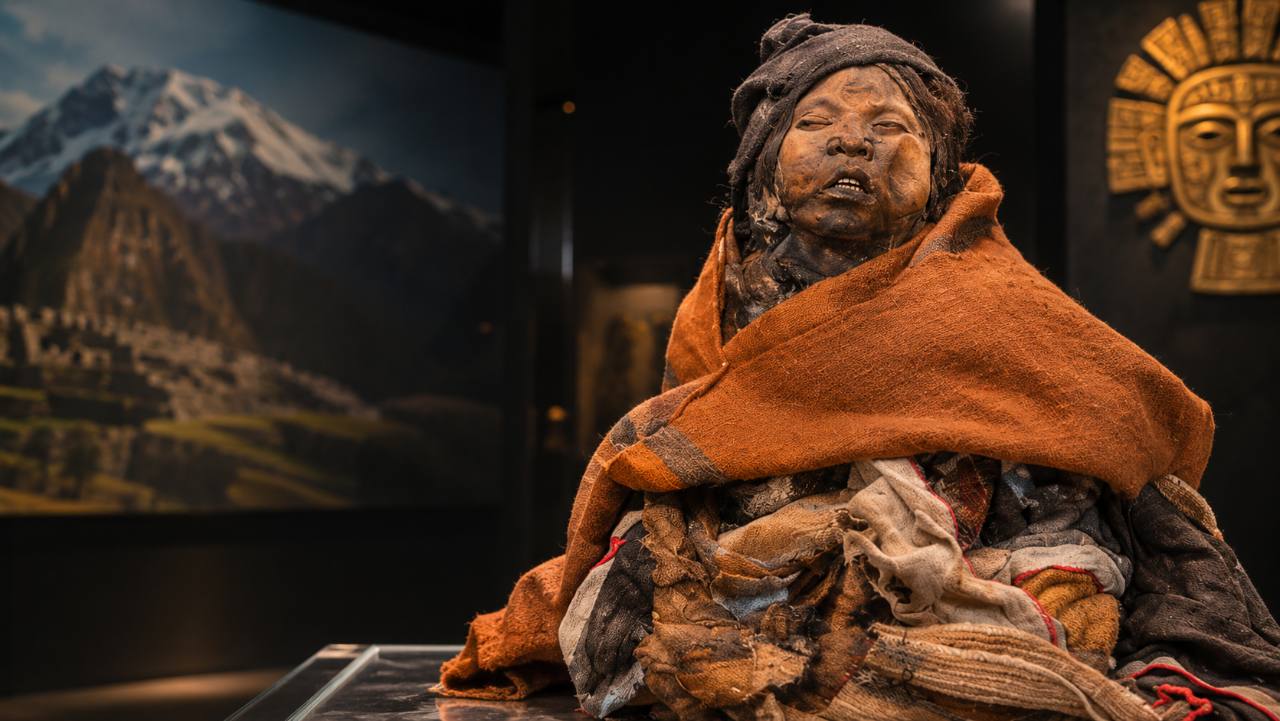
Original editorial visual supplied for PRESDA, preserved unchanged. The individual and museum setting are not authenticated as part of the eight-person study.
An analysis of eight frozen Inca mummies has identified evidence of coca consumption, alcohol-related chemistry in some individuals and harmine in one nail sample. Published in Antiquity on November 3, 2026, the study examines children and young women sacrificed in mountain rituals in present-day Peru and Argentina. Its findings reveal variation between individuals and sites. They do not establish that all the victims received the same drug mixture, hallucinated or experienced a painless death. Socha and colleagues: 2026 Antiquity toxicology study
The distinction begins with the material itself. Coca leaves naturally contain cocaine-related alkaloids, so detecting cocaine and its metabolite in ancient hair supports coca consumption, not the use of modern purified cocaine. Alcohol-related evidence requires a different chemical interpretation. Harmine, associated with certain plants used in ayahuasca preparations, raises a further question about plant use without identifying a complete recipe. Several different lines of evidence must therefore be kept separate before the ritual can be understood. Socha and colleagues: 2026 Antiquity toxicology study
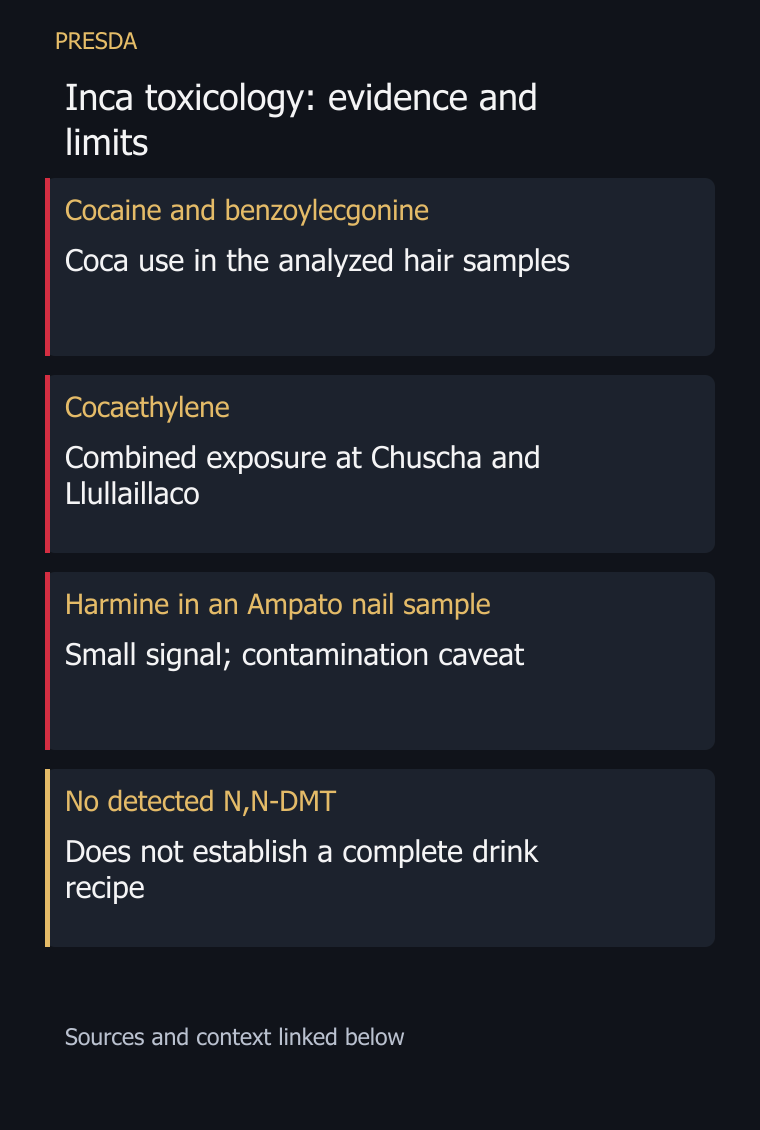
| Evidence | Careful interpretation |
|---|---|
| Cocaine and benzoylecgonine | Coca use in the analyzed hair samples |
| Cocaethylene | Combined exposure at Chuscha and Llullaillaco |
| Harmine in an Ampato nail sample | Small signal; contamination caveat |
| No detected N,N-DMT | Does not establish a complete drink recipe |
A new study across five Andean volcanoes
The team led by Dagmara Socha examined individuals associated with Ampato and Sara Sara in Peru, and Chuscha, Llullaillaco and Quehuar in Argentina. The material comprised six hair samples and two nail samples, tissues that can preserve chemical traces after the rest of a person’s life has disappeared from the archaeological record. The remains were recovered through different histories of excavation and collection. They are a research sample from particular mountain sanctuaries, not a representative survey of every Inca community. Socha and colleagues: 2026 Antiquity toxicology study
This is the latest stage of a longer investigation. A 2013 study of the Llullaillaco children combined biochemical, radiological and other archaeological evidence to examine changes before death. Earlier work on Ampato also explored coca and plant-derived compounds. The November 2026 paper revisits questions with sensitive toxicological methods and a broader set of individuals. It adds evidence to that history rather than announcing the first scientific discovery that coca existed in Inca ritual life. Wilson and colleagues: 2013 biochemical and radiological evidenceSocha and colleagues: earlier Ampato toxicology, 2022Socha and colleagues: 2026 Antiquity toxicology study
How hair and nails can preserve a chemical history
The researchers used liquid chromatography-tandem mass spectrometry, usually abbreviated LC-MS/MS. In simple terms, the method separates compounds in a prepared sample and helps identify them through their molecular characteristics. Hair and nails are composed largely of keratin, into which substances or their metabolites can become incorporated. Very small surviving quantities can therefore offer information about exposure or consumption that a visual examination of a mummy cannot provide. Socha and colleagues: 2026 Antiquity toxicology study
Detection does not read a person’s mind
A chemical result does not, by itself, identify a victim’s emotional state, consent or precise experience at death. Different tissues also provide different windows onto the past. Where sufficient hair survives, examining successive segments may reveal changes over an approximate period, but the result is not a minute-by-minute medical record. The strongest account combines the laboratory results with preservation, sampling and burial context instead of converting a molecule into an imagined final scene. Socha and colleagues: 2026 Antiquity toxicology studyWilson and colleagues: 2013 biochemical and radiological evidence
Coca, alcohol and harmine are different findings
Cocaine and benzoylecgonine, a principal metabolite, appeared in all the hair samples analyzed in the new study. That wording is important: the finding concerns the tested hair samples, not a claim that every tissue from all eight individuals produced identical results. At Chuscha and Sara Sara, positive results also changed the picture left by earlier negative tests. Improved methods can recover evidence that older analyses did not detect. Socha and colleagues: 2026 Antiquity toxicology study
Cocaethylene was found in the Chuscha and Llullaillaco individuals, supporting combined exposure to coca and alcohol. The study also identified harmine in a nail sample from Ampato #1, the individual often known as Juanita or the Ampato Maiden. These patterns show shared practices alongside important differences. A single statement that the victims were all given alcohol and ayahuasca would flatten the most informative part of the study. Socha and colleagues: 2026 Antiquity toxicology study
Inca toxicology: findings and their limits
What the ayahuasca connection does and does not prove
Harmine occurs in plants including Banisteriopsis species, associated with preparations commonly called ayahuasca. The researchers consider such plants a likely source, while acknowledging the difficulty of reconstructing the exact mixture. A finding of harmine is not equivalent to identifying every ingredient in a drink. Nor is it sufficient to demonstrate that a particular child experienced the effects associated with a modern ceremonial preparation. Socha and colleagues: 2026 Antiquity toxicology study
Negative results have limits too
The reported hair analyses did not detect N,N-DMT, mescaline or several other compounds sought by the team. The harmine-positive nail sample was also negative for the tested tryptamines. Non-detection does not prove that a substance was never consumed: preservation and incorporation into keratin affect what survives. The authors also report difficult interpretation of nail samples because of likely environmental contamination. The small harmine finding deserves that caveat. Medicinal or mood-related uses remain hypotheses, not a clinical diagnosis of ancient individuals. Socha and colleagues: 2026 Antiquity toxicology study
Capacocha connected religion, territory and political authority
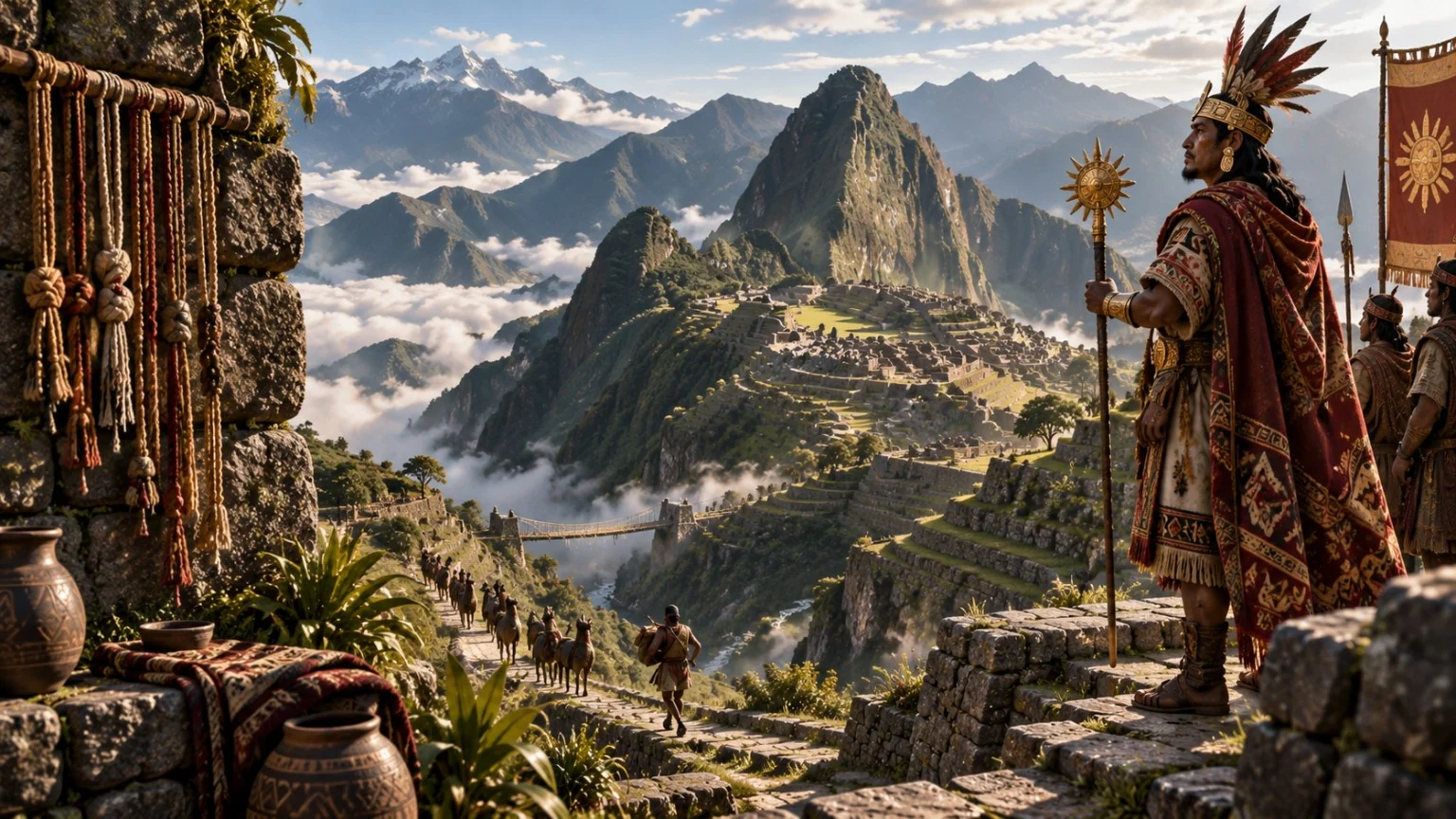
The sacrifices formed part of capacocha, an Inca ritual associated with offerings and the relationship between communities, deities and ancestors. Mountain sanctuaries gave the ceremonies a powerful geographical setting. The new paper emphasizes variation linked to local practices and mountain deities, rather than a single standardized ritual reproduced identically across the empire. Political and religious meanings could overlap without leaving a simple explanation for every individual burial. Socha and colleagues: 2026 Antiquity toxicology study
The broader Andean world also depended on routes connecting diverse landscapes. UNESCO’s account of Qhapaq Ñan describes an extensive road system that joined communities and ecological zones. That provides background for thinking about movement, exchange and state organization. It does not independently reconstruct the final journey of any one child in the toxicology sample. A road network is contextual evidence; an individual itinerary requires its own archaeological and scientific support. UNESCO: Qhapaq Ñan, the Andean road system
The people remain more important than the sensational headline
The analytical advances should not turn sacrificed children into props for a story about exotic drugs. Their remains preserve evidence of real lives subjected to ritual violence. The study’s own conclusion stresses that the ceremonies should be considered individually because the results do not reveal one clear pattern. The supplied hero is an editorial museum-style visual; its subject has not been authenticated as one of the eight individuals analyzed in the paper. Socha and colleagues: 2026 Antiquity toxicology study
PRESDA’s history of the Inca Empire explains the wider world of highland authority and infrastructure behind these mountain sanctuaries. The new chemistry adds a more intimate layer to that history, but it also sets limits. It can strengthen evidence for coca, alcohol-related exposure and particular plant compounds. It cannot recover every intention or sensation. The most revealing result is not a uniform drugged-sacrifice narrative, but the diversity of preparations and experiences that still have to be interpreted with care. Socha and colleagues: 2026 Antiquity toxicology study
FAQ
Frequently Asked Questions
Did the study find modern cocaine use?
No. Coca leaves naturally contain cocaine-related alkaloids. The ancient chemical evidence supports coca consumption, not modern purified cocaine use.
Were all eight individuals given the same substances?
No. Results varied by tissue, individual and sanctuary. Cocaethylene appeared in Chuscha and Llullaillaco, while harmine was identified in one Ampato nail sample.
Does harmine prove the victims drank modern-style ayahuasca?
No. It supports exposure to a relevant plant-derived compound, but the exact drink composition and effects cannot be reconstructed from that result alone.
When was the new study published?
The Antiquity paper was published online on November 3, 2026. It builds on earlier research rather than representing newly excavated mummies.
PRESDA Dispatch
Stay Informed. Stay Aware.
A sharp briefing across AI, gaming, sport, business, world affairs, paparazzi, and lifestyle.