Isaac Newton: Life, Gravity and the Laws of Motion
Discover Newton’s life, laws of motion, gravity, calculus and prism experiments, with the evidence behind the apple story and his scientific legacy.
Editorial illustration of Newton holding a prism; a reconstruction, not a historical photograph or an exact experimental diagram.
An apple falls. The Moon does not fall to the ground. Isaac Newton’s achievement was to recognize that these apparently different events could belong to the same physical story. The Moon continually changes direction as it moves around Earth; a falling object accelerates toward Earth. A mathematical account of attraction could connect both. Turning that insight into a theory required far more than a memorable moment beneath a tree.
Newton helped build a framework in which motion, gravity and light could be investigated quantitatively. His work transformed mathematics and natural philosophy, but his life also involved secrecy, religious inquiry, alchemical experiments and bitter disputes. The historical Newton is more interesting than the solitary genius of legend: he inherited ideas, developed extraordinary methods and fought fiercely over who deserved credit.
A childhood in a changing England
Newton was born at Woolsthorpe in Lincolnshire on 25 December 1642 under the Julian calendar then used in England, equivalent to 4 January 1643 in the Gregorian calendar. The two dates describe the same birth. His father died before he was born. After his mother remarried, much of his early upbringing was entrusted to his maternal grandmother. Schooling in Grantham eventually led toward Cambridge rather than the agricultural life initially envisaged for him. Newton Project chronology
He entered Trinity College in 1661. University teaching still drew heavily on older philosophical traditions, but Newton explored newer mathematics and natural philosophy through private study. His education was not a sudden revelation. Reading, notebooks, calculation and experimentation supplied the groundwork. When plague disrupted Cambridge in the mid-1660s, time away from the university became part of a productive period of investigation. Later summaries compress this development into a miraculous year; the surviving papers instead reveal ideas taking shape through sustained work.
Calculus: a language for change
Newton’s mathematics addressed quantities that vary continuously. Speed describes how position changes; acceleration describes how velocity changes. Differentiation provides a way to investigate such rates, while integration concerns accumulated quantities. The connection between these operations became central to calculus. Newton developed his method of fluxions in the 1660s, although his publication history was slow and complicated. The surviving mathematical manuscripts show a process of development rather than a finished textbook appearing all at once. Newton Project manuscripts
Gottfried Wilhelm Leibniz developed calculus independently and published before Newton’s full account appeared. His notation became especially influential. Their followers’ dispute about priority grew into accusations and institutional conflict. Modern historical credit belongs to both, with recognition of earlier mathematicians whose work made their advances possible. The episode illustrates a distinction still relevant in science: discovery, communication, publication and notation are related achievements, but they are not identical. Oxford scholarship on the calculus controversy
What Newton’s three laws actually explain
The first law identifies inertia: in an inertial reference frame, a body maintains rest or constant straight-line velocity unless a net external force changes that state. Motion itself does not need a continuous push. Everyday objects slow because friction and other interactions act on them. The second law relates net force to the rate of change of momentum. For constant mass, its familiar form is F = ma. The third law states that interacting bodies exert equal and opposite forces on one another. Those forces act on different bodies, so they do not simply cancel each body’s motion. NASA: laws of motion
These principles replace vague explanations with relationships that can be tested. A rocket accelerates as it expels material; a turning object requires an acceleration even if its speed remains constant. The laws work together with descriptions of particular forces and initial conditions. They do not, by themselves, specify every force in nature. Their extraordinary usefulness lies in providing a coherent structure for asking what changes, what remains conserved and what observations a proposed explanation must reproduce.
Gravity unites Earth and the heavens
Newton’s gravitational law describes an attraction proportional to the product of two masses and inversely proportional to the square of their separation. In its simplest point-mass form, F = Gm₁m₂/r². Combined with the laws of motion, it explains why an ideal two-body planetary system can follow a Keplerian orbit. The same framework connects falling bodies, moons, planets and comets. Newton did not discover that objects fall; he established a powerful mathematical account of how terrestrial and celestial motion belong together. NASA: planetary motion
An orbit is not an absence of gravity. An orbiting body is continually deflected from the straight path it would otherwise follow. Its sideways motion prevents it from simply dropping onto the central body. Real systems contain more than two objects, so gravitational interactions complicate their paths. Those complications became productive tests rather than reasons to abandon calculation. This union of observation and mathematical prediction helped change what an explanation of nature could be.
The apple: recollection, not instant proof
The apple story has a historical basis, but its familiar cartoon version goes beyond the evidence. William Stukeley recorded Newton’s recollection that seeing an apple fall prompted reflection on gravity. Stukeley’s manuscript dates from 1752 and concerns a conversation with Newton late in his life, long after the formative events. It is evidence for a remembered anecdote, not a contemporary laboratory record. The story does not establish that an apple struck Newton’s head or that the complete law was discovered in a single afternoon. Royal Society: the apple account
The distinction matters because the legend can hide the actual accomplishment. Noticing that a fruit falls is easy. Demonstrating that a quantitative law can account for celestial motion requires definitions, mathematical reasoning and comparison with observations. The apple is a useful doorway into Newton’s questions. It should not become a substitute for the years of work that made those questions scientifically transformative.
A prism reveals the complexity of white light
Newton used prisms to investigate how light is refracted and separated into colors. His crucial conclusion was that white light contains components with different refrangibility. The prism did not merely stain otherwise uniform light. By selecting and testing parts of the spectrum, he investigated whether their properties persisted through further refraction. His account appeared in 1672, and the broader book Opticks followed in 1704. Royal Society: light and color
The enduring discovery is the composite nature of white light, not the claim that every part of Newton’s optical theory survives unchanged. Modern physics describes light through electromagnetic theory and quantum mechanics. Newton also built a reflecting telescope, using a mirror to form an image and avoiding the particular color-separation problem of a simple refracting objective. Instruments and theory advanced together: the workshop was part of his intellectual life, not merely an illustration of conclusions reached on paper. Royal Society: Newton’s optical manuscript
Principia and the labor behind a landmark
Published in 1687, Philosophiae Naturalis Principia Mathematica presented Newton’s laws and a mathematical treatment of gravitation. Edmond Halley’s encouragement and practical support were important to its publication. The book was demanding, expressed largely through geometrical argument, and did not make every problem of astronomy easy. It established an extraordinarily fertile framework. Trinity College preserves Newton’s own annotated first edition, a reminder that even a landmark work remained open to correction and expansion. Trinity College: Principia
Its significance also rests on what it did not claim to settle. A successful mathematical description of gravity did not automatically identify its ultimate physical cause. Newton’s achievement was to connect phenomena through laws that could be used, challenged and refined. Science gained a method for making precise predictions while leaving deeper explanatory questions open. That combination of power and restraint is more valuable than the myth of a final answer to everything.
Controversy, belief and institutional power
Newton could be intensely defensive about his work. Disagreements with Robert Hooke over optics and gravitational ideas, and the later calculus controversy, show that the scientific revolution was also a human world of reputation and authority. As president of the Royal Society from 1703, Newton held influence as well as intellectual prestige. His involvement in the institution’s handling of the Leibniz dispute complicates any picture of a neutral process that simply settled priority. Newton Project: character and evidence
His unpublished interests also resist a tidy modern division between scientist and nonscientist. Newton studied theology, chronology and alchemy extensively. These investigations should not be treated as proof of secret modern discoveries, nor erased because they sit awkwardly beside the Principia. They belonged to the intellectual and religious questions of his time. Reading the surviving papers reveals a person seeking order across domains that later generations separated more sharply. The Newton Project
From the laboratory to the Royal Mint
In 1696 Newton became Warden of the Royal Mint, and in 1699 its Master. He took these responsibilities seriously, participating in the work surrounding the recoinage and investigating counterfeiting. This was a different kind of practical authority, involving administration, evidence and the coercive power of the state. His later life cannot be reduced to a scholar quietly contemplating the heavens. He died in 1727, after becoming one of Britain’s most celebrated intellectual figures. Royal Mint Museum
A theory’s limits do not erase its achievement
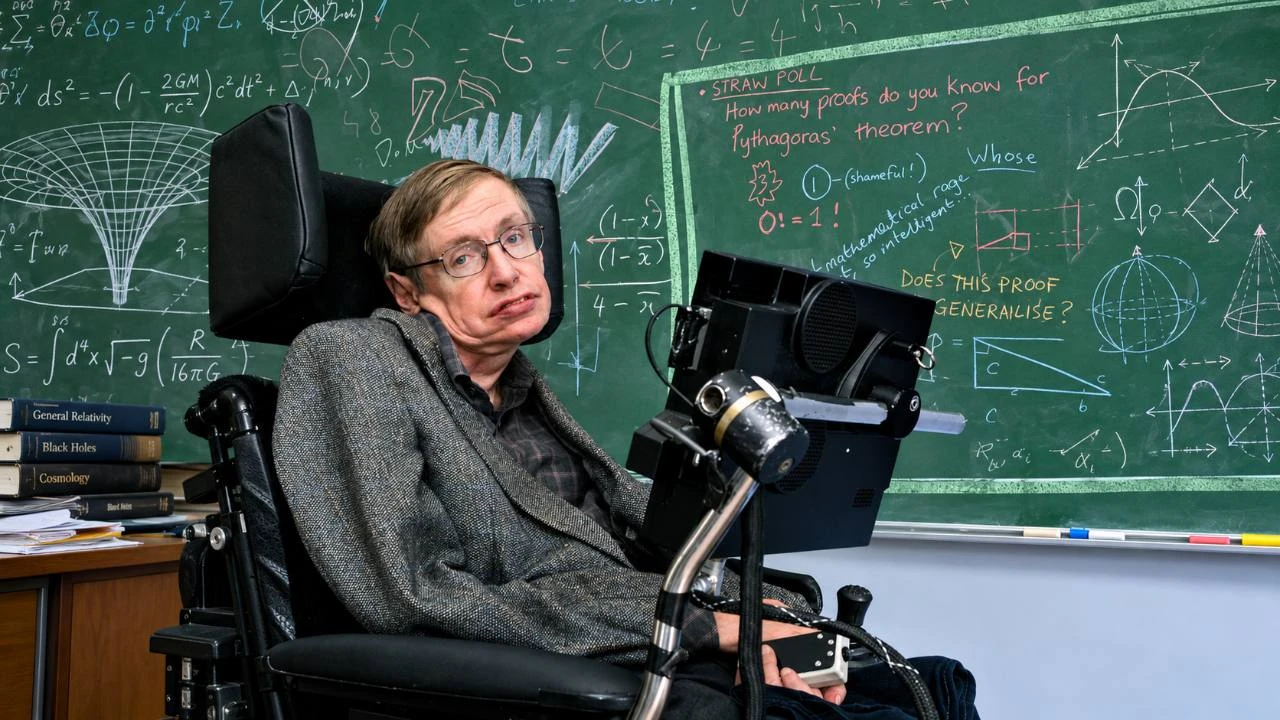
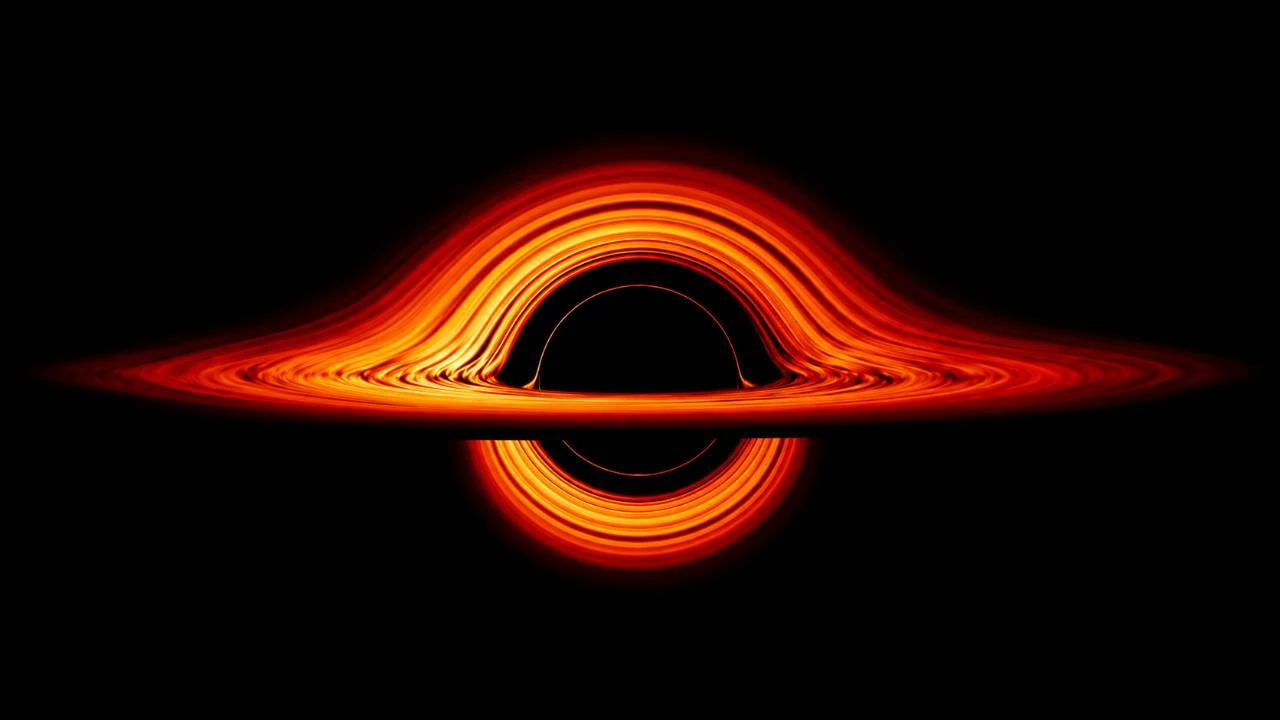
Newtonian mechanics remains exceptionally useful for ordinary speeds and many engineering and astronomical calculations. It is not the final description of nature. Relativity is needed for high speeds and strong gravitational effects, while quantum theory describes phenomena beyond classical mechanics. Einstein’s account of gravitation as spacetime geometry eventually opened questions explored by Stephen Hawking and the modern study of black-hole interiors.
Newton’s legacy is therefore not that his equations explain everything. It is that they made an enormous range of phenomena intelligible within a shared, testable structure. The path from a falling apple to planetary motion helped establish a scientific ambition that persists today: explain more with coherent principles, distinguish evidence from attractive stories, and recognize where even the most successful theory reaches its limits.
FAQ
Frequently Asked Questions
What is this PRESDA article about?
Discover Newton’s life, laws of motion, gravity, calculus and prism experiments, with the evidence behind the apple story and his scientific legacy.
Which category does this story belong to?
This story is part of PRESDA's Science coverage.
Who published this article?
Isaac Newton: Life, Gravity and the Laws of Motion was published by PRESDA Editorial on PRESDA.
PRESDA Dispatch
Stay Informed. Stay Aware.
A sharp briefing across AI, gaming, sport, business, world affairs, paparazzi, and lifestyle.