Stephen Hawking: Black Holes, Time and a Life in Science
Explore Stephen Hawking’s life, ALS, singularity theorems, black-hole radiation, cosmology, communication technology and lasting scientific legacy.
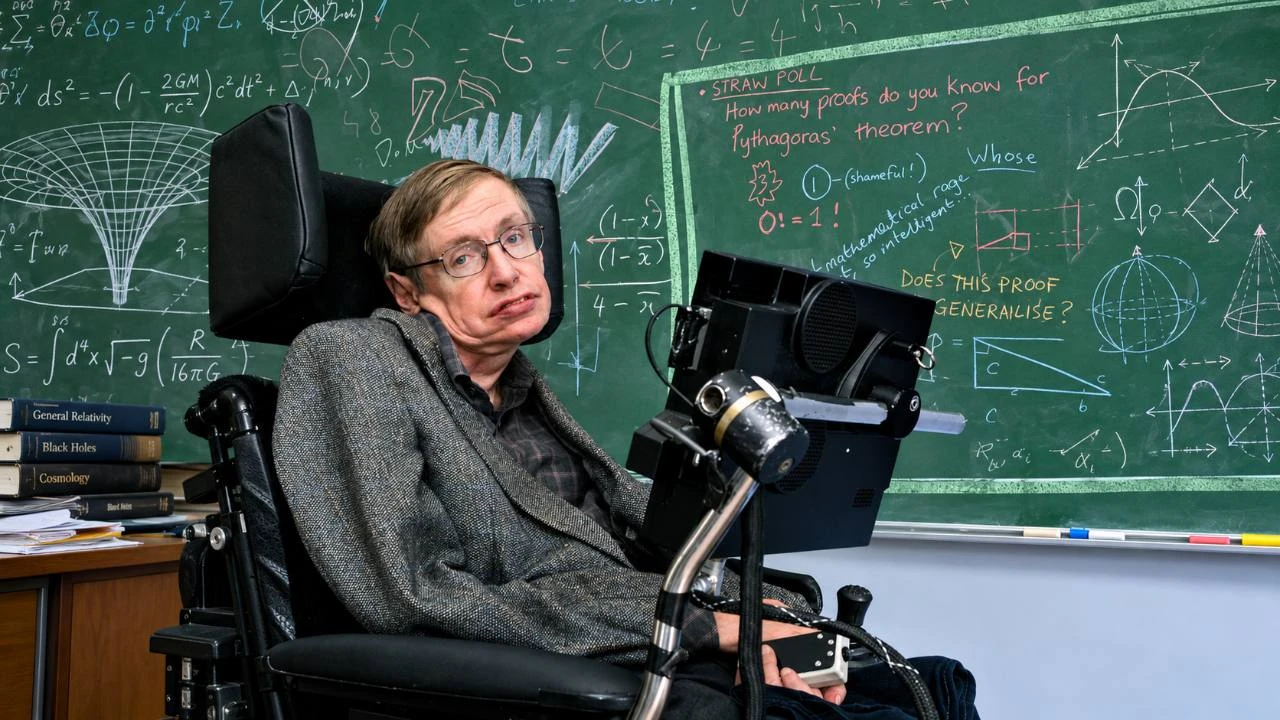
User-supplied editorial portrait of Stephen Hawking. The source, date and photographic provenance of this supplied image have not been independently established.
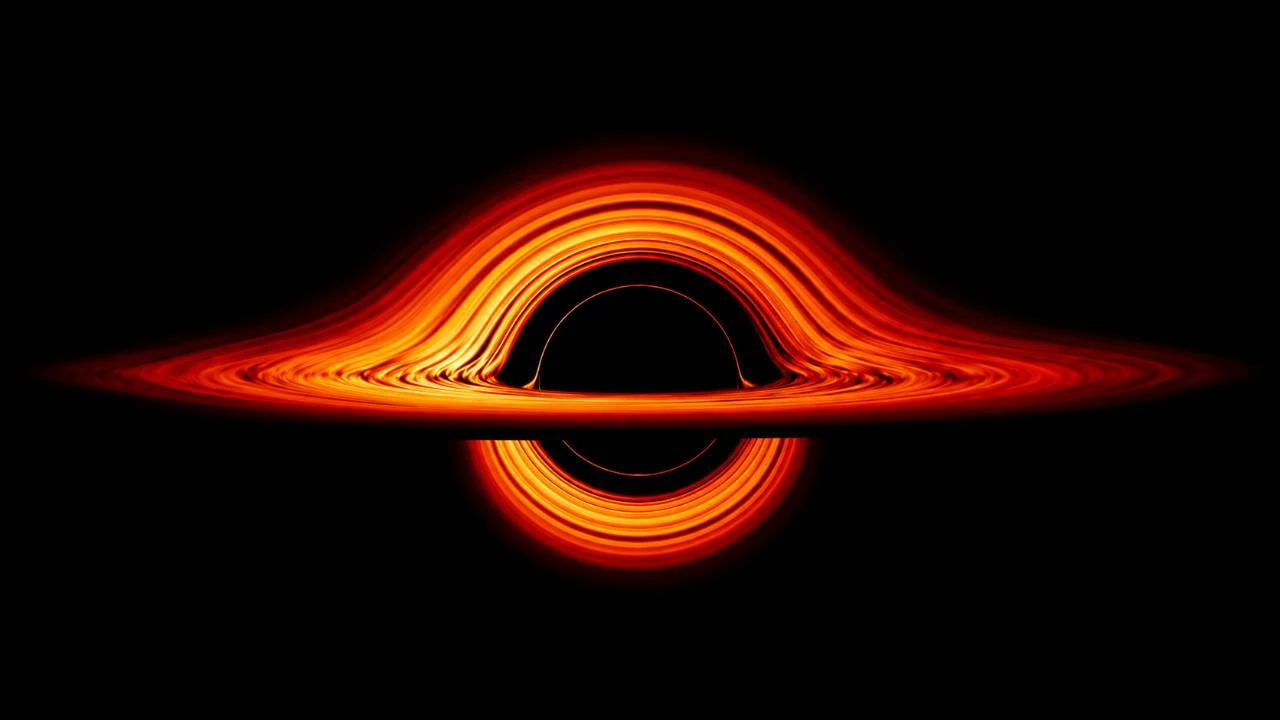
Stephen Hawking made black holes less simple and the universe more difficult to ignore. These objects had seemed to be nature’s final traps, places from which nothing could return. His calculations suggested that quantum physics changes the story: a black hole should have a temperature and emit radiation. A boundary that appeared to divide the knowable from the unknowable became a meeting place for gravity, heat and information.
His public life was equally striking, but it should not replace the science. A wheelchair and a synthesized voice became instantly recognizable symbols. Behind them was a working physicist who collaborated, argued, revised ideas and relied on an extensive network of care and technical support. Understanding Hawking means looking beyond the image of an isolated genius to both the mathematics and the human infrastructure that made his career possible.
From Oxford to questions about the beginning
Stephen William Hawking was born in Oxford on January 8, 1942. He studied natural sciences at University College, Oxford, then moved to Cambridge in 1962 for research in cosmology. His supervisor was Dennis Sciama, whose influence helped connect a young researcher with a community asking how Einstein’s theory of gravity could describe an evolving universe. Hawking completed his Cambridge doctorate in 1966. Cambridge’s account of his life
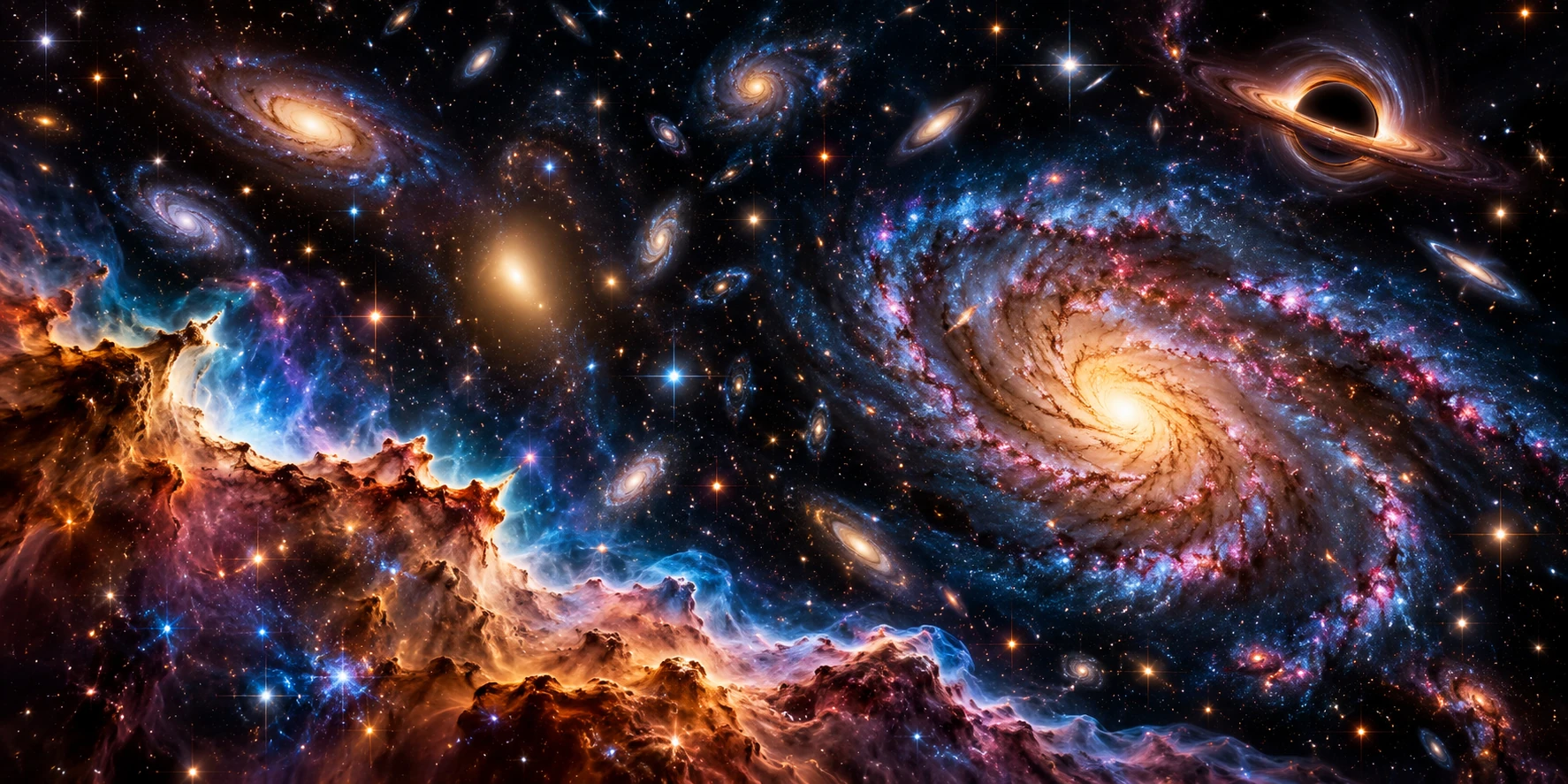
Cosmology was changing from broad speculation into a discipline increasingly constrained by observation. General relativity described gravity through the geometry of spacetime, but its equations admitted many possible universes. Hawking’s problem was not simply to draw an expanding cosmos. It was to ask whether certain features, including a breakdown of the classical description in the past, followed from general principles rather than convenient mathematical symmetry. His surviving papers preserve the labor behind those questions. Cambridge’s scientific archive
ALS, adaptation and the people around the physicist
Around the age of 21, Hawking was diagnosed with motor neurone disease, commonly described in his case as amyotrophic lateral sclerosis, or ALS. It progressively restricted his movement and later his ability to speak. His unusually long survival must not be treated as a typical prognosis for other people with the condition. Nor does his intellectual achievement establish that illness produces genius. A biography can recognize extraordinary persistence without turning disease into a gift. Cambridge archive biography
Family, assistants, nurses, colleagues and engineers made sustained work possible. Jane Wilde, whom he married in 1965, played a major role in his early family life and care; they had three children. The demands of disability were practical as well as emotional: moving, traveling, communicating and obtaining assistance required time and resources. The familiar portrait of a mind working independently of its body obscures these material conditions and the contributions of other people. Hawking’s official biography
What the singularity theorems actually established
Working with Roger Penrose and drawing on advances in relativity, Hawking helped show that singularities were not merely artifacts of overly simple models. Their joint 1970 paper established circumstances in which classical spacetime must be geodesically incomplete: some freely falling paths cannot be continued indefinitely within the mathematical description. Conditions on gravity, causal structure and trapped regions matter to the result. It is a theorem with assumptions, not a photograph of the universe’s first instant. Hawking and Penrose, 1970
The distinction changes the meaning of the word singularity. It marks a failure of the classical account to provide a complete continuation, not an experimentally confirmed point of literally infinite density. A quantum theory of gravity may alter the description where relativity reaches its limits. Hawking’s achievement was therefore both constructive and unsettling: he helped establish where a successful theory stops being sufficient, rather than supplying a finished account of what replaces it.
Black holes, area and the surprising connection to heat
In classical general relativity, Hawking showed under appropriate conditions that the total area of black-hole event horizons cannot decrease. This resembles the way total entropy does not decrease in ordinary thermodynamics. Jacob Bekenstein took the analogy seriously and proposed that black holes possess entropy related to their horizon area. The connection challenged a picture in which black holes were simply cold, featureless absorbers. Bekenstein’s 1973 paper
Hawking’s later quantum calculation gave that connection physical force. Temperature, entropy and gravity could no longer be treated as unrelated chapters. The resulting black-hole entropy is proportional to area rather than ordinary volume, an extraordinary clue that has influenced research into quantum gravity. Classical area increase and quantum evaporation are not contradictory claims made under identical assumptions. The latter introduces quantum effects absent from the former.
Hawking radiation: a prediction, not a detected glow
In 1974 Hawking published his prediction that quantum fields around a black hole produce a thermal flux observable far away. In the simplest nonrotating case, temperature decreases as mass increases. An isolated hole losing more energy than it absorbs would gradually lose mass. For a black hole with the Sun’s mass, the predicted temperature is only about sixty billionths of a kelvin, far below today’s cosmic microwave background. Hawking’s original Nature paper
The popular image of particle pairs appearing beside a horizon can be a mnemonic, but it is not a complete derivation. The calculation concerns quantum fields in curved spacetime, and the radiation is not a message escaping from an already trapped interior. Hawking radiation from astrophysical black holes has not been directly detected. Laboratory analogues investigate related mathematics in other physical systems; they do not amount to observing a real black hole evaporate. The theoretical importance is profound, while the observational distinction remains essential. Hawking’s detailed calculation
The information problem that would not disappear
Evaporation immediately raises another question. If different objects fall into a black hole and the hole ultimately disappears as apparently thermal radiation, what happens to the quantum information distinguishing those objects? Standard quantum evolution preserves information in a technical sense, even when recovering it is hopelessly impractical. Hawking’s analysis placed that expectation in tension with the semiclassical account of black holes. Hawking on predictability, 1976
Information here means the specification and correlations of a physical state, not a library of readable memories waiting inside a hole. Decades of work have produced powerful arguments that information can be preserved, especially in particular theoretical frameworks. That progress does not give astronomers an experimentally established account of an actual evaporating hole’s interior. The paradox remains useful precisely because it exposes assumptions that cannot all be accepted without further explanation.
A universe without an initial boundary?
With James Hartle, Hawking proposed a quantum description of the universe in 1983 now known as the no-boundary proposal. Rather than specifying an ordinary initial edge in time, their construction sought a wave function using suitably regular geometries. It was an attempt to formulate cosmology quantum mechanically, where treating time exactly like an everyday external clock may be inadequate. Hartle and Hawking’s original paper
This is a proposal, not an observed account of creation. Its interpretation and predictions depend on technical choices and remain subjects of research. It does not settle every question about why anything exists, nor does celebrity make one cosmological model uniquely correct. Hawking’s scientific boldness is better appreciated when the boundary between a mathematical possibility and an established description is kept visible.
A voice built through engineering
After a severe illness in 1985, a tracheostomy left Hawking without his natural speaking voice. Computer-based communication subsequently allowed him to select text and have it spoken by a synthesizer. The systems evolved as his movement became more restricted. Their purpose was to give him practical control over communication, not to translate thoughts directly from his brain. Hawking’s account of communication
Intel’s later work on the Assistive Context-Aware Toolkit, or ACAT, combined accessible interfaces with tools that helped users construct and communicate text. The wider lesson concerns design: intellectual participation depends on usable environments and adaptable technology. Hawking’s voice was recognizable worldwide, but its significance was also ordinary and immediate. It helped a person write, answer questions and take part in conversations. Intel on ACAT
A Brief History of Time and the public universe
Published in 1988, A Brief History of Time brought cosmology, black holes and the question of time to an enormous readership. Its success did not mean that every reader mastered relativity. It demonstrated that difficult scientific ideas could become subjects of public curiosity rather than remain restricted to specialist rooms. Hawking became a cultural figure as well as a researcher, a distinction that can illuminate his influence without confusing popularity with scientific proof. Institute of Physics obituary
The book also exemplifies the risks of compression. A vivid analogy can open a door while concealing technical qualifications. Readers should distinguish the observational evidence for an expanding universe, the mathematical results of relativity and the speculative proposals at the frontiers of quantum cosmology. Those categories coexist in a compelling science book, but they do not have the same evidential status.
A legacy of questions made sharper
Hawking held Cambridge’s Lucasian professorship from 1979 to 2009 and died on March 14, 2018. His influence belongs to a collaborative history, including Penrose, Sciama, Bekenstein, Hartle, George Ellis and generations of students. The research program outlived him because it joined problems that had once seemed separate: the beginning of the universe, the fate of collapsing stars and the nature of information. Royal Society scientific memoir
The connection to Isaac Newton’s transformation of gravity is a history of changing questions, not a simple contest between geniuses. Newton made celestial and terrestrial motion part of one mathematical system. Hawking helped reveal how classical gravity becomes incomplete when quantum effects matter. Our feature on what happens inside a black hole follows that unfinished boundary. His enduring achievement was not to make the universe familiar. It was to show, with unusual clarity, why it remains strange.
FAQ
Frequently Asked Questions
What is this PRESDA article about?
Explore Stephen Hawking’s life, ALS, singularity theorems, black-hole radiation, cosmology, communication technology and lasting scientific legacy.
Which category does this story belong to?
This story is part of PRESDA's Science coverage.
Who published this article?
Stephen Hawking: Black Holes, Time and a Life in Science was published by PRESDA Editorial on PRESDA.
PRESDA Dispatch
Stay Informed. Stay Aware.
A sharp briefing across AI, gaming, sport, business, world affairs, paparazzi, and lifestyle.