MARINA ABRAMOVIĆ’S RHYTHM 0: THE ARTIST WHO GAVE THE AUDIENCE CONTROL
What happened during Marina Abramović’s Rhythm 0 in Naples in 1974? The six-hour performance, 72 objects, eyewitness account and enduring questions.
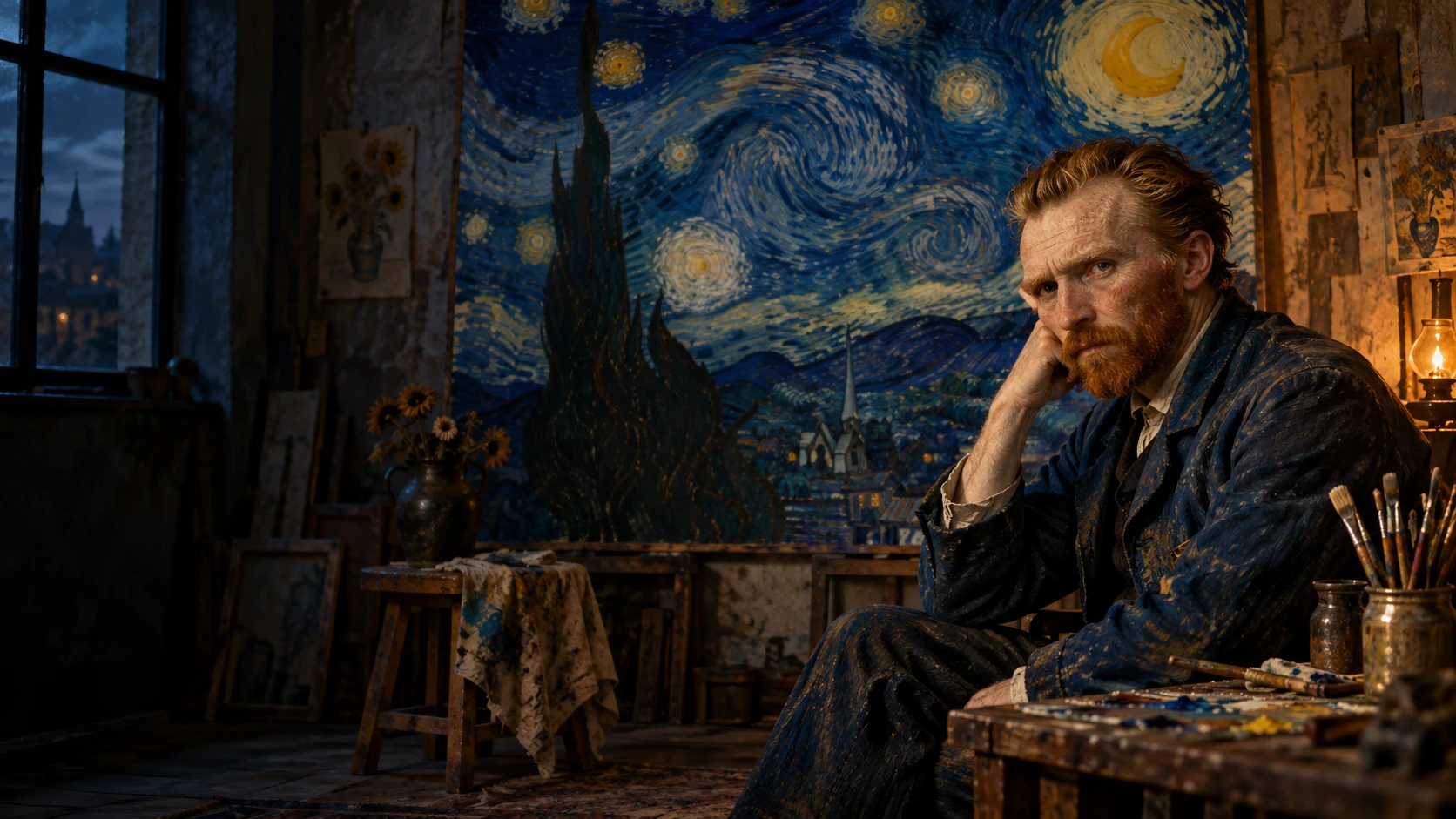
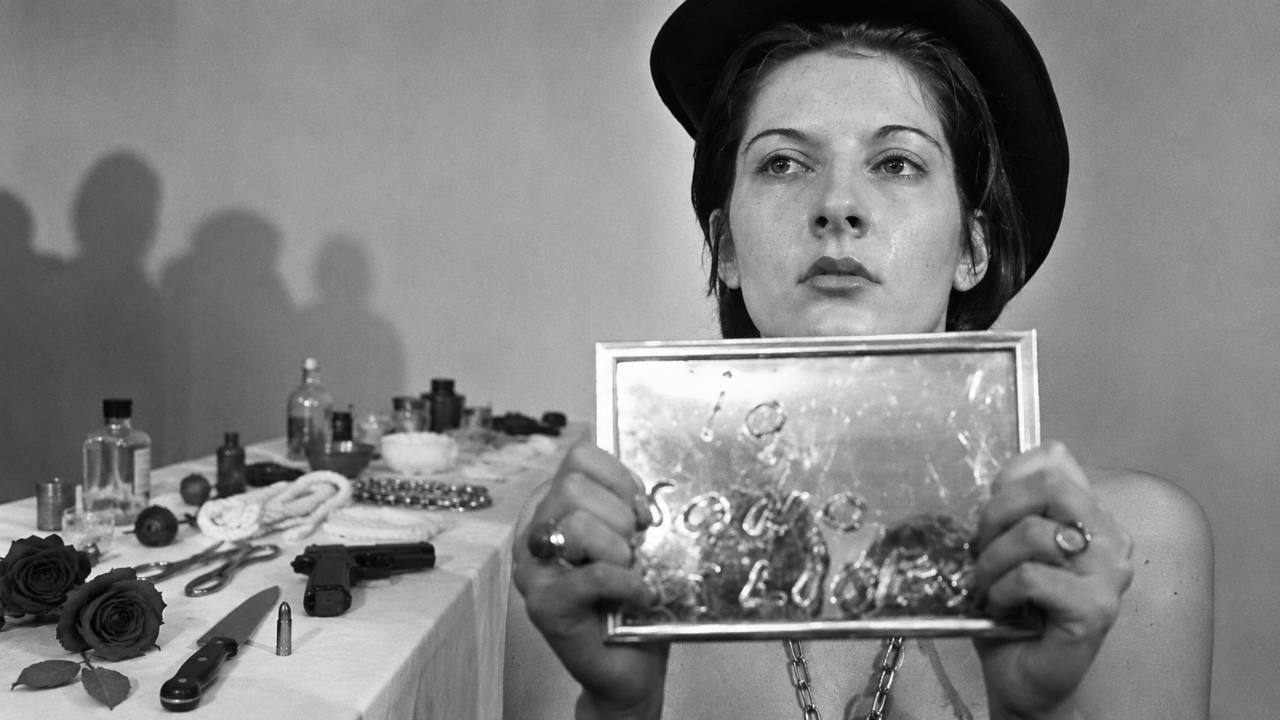
Original supplied editorial visual, preserved unchanged. It has not been independently authenticated as a photograph of the 1974 performance.
For six hours in Naples in 1974, Marina Abramović made an audience’s choices the substance of a performance. Rhythm 0 placed the artist beside a table of 72 objects that spectators could use on her. Some invited tenderness or ordinary contact; others could inflict injury. By remaining passive, she transferred the visible action to the people who had arrived to watch. MoMA: Abramović’s account of Rhythm 0IMMA: Rhythm 0 collection record
The work is often compressed into a disturbing anecdote about an artist who allowed strangers to do anything to her. That summary captures its danger but misses its structure. Rhythm 0 had a place, a duration, a selection of objects and a declared relationship between performer and audience. Its significance lies in how those conditions exposed responsibility, power and the limits of spectatorship.
| Question | Museum documentation |
|---|---|
| Artist | Marina Abramović |
| Place and date | Studio Morra, Naples, 1974 |
| Duration | Six hours |
| Structure | A passive performer and 72 objects available for audience interaction |
What happened at Studio Morra?
MoMA identifies the original performance as taking place at Studio Morra in Naples in 1974 for six hours. Its documentation describes a selection that included a rose, a feather, food, a whip, a scalpel, a gun and a bullet. Abramović’s body became the point at which the objects’ possible uses and the audience’s decisions met. MoMA: Abramović’s account of Rhythm 0
The Irish Museum of Modern Art’s collection record likewise describes a six-hour performance with 72 substances and objects, ranging from everyday materials to instruments capable of harm. This combination mattered. The audience was not simply presented with weapons or invited into a single prescribed action. It encountered an array of possibilities whose meaning depended on what people chose to do. IMMA: Rhythm 0 collection record
An instruction does not eliminate the person who gives it
Abramović’s decision to remain passive was an artistic act, not a disappearance of her personhood. That tension gives the work its force. Viewers were asked to encounter a living person under conditions that encouraged them to treat her as an object. The performance made the gap between those two ways of seeing impossible to ignore once the interaction became threatening.
The objects did not determine one inevitable outcome. A rose could become an offering, food could become care, and an everyday item could take on a different meaning through its use. The artistic structure made choices available. The choices themselves belonged to the people making them, which is why the audience cannot be treated as a neutral background to the event.
What the artist later recalled
In MoMA’s audio account, Abramović describes the public initially playing with her before becoming more aggressive. She recalls people cutting her clothing, injuring her and handling the gun in a threatening encounter. These are her retrospective descriptions, presented by the museum as an account of the performance. They should be attributed rather than expanded into an invented minute-by-minute reconstruction. MoMA: Abramović’s account of Rhythm 0
IMMA’s record also describes escalation from contact and play to stripping, cutting and a firearm threat. Those details establish the danger without requiring an embellished catalogue of violence. A responsible account can explain that the work exposed real bodily vulnerability while resisting the temptation to make the most disturbing fragment its only meaning. IMMA: Rhythm 0 collection record
Why the ending matters
Abramović told MoMA that, once the performance ended and she began moving toward the audience as herself again, people left. The change was fundamental: the still figure they had been authorized to act upon became an active person approaching them. Her account gives the ending a different kind of force from the preceding threat, shifting attention toward recognition and accountability. MoMA: Abramović’s account of Rhythm 0
A performance’s ending can change how everything before it is understood. The six-hour boundary did not undo what happened, but it changed the relationship in the room. The audience could no longer rely on the same arrangement of passivity and permission. The return of movement and direct encounter exposed how fragile that arrangement had been.
A work of art, not a controlled psychology experiment
Rhythm 0 is sometimes presented online as proof that all human beings become cruel when given power. The performance cannot establish such a universal scientific conclusion. It did not use a controlled sample or a research design capable of measuring every audience’s behavior. It was an artwork creating a particular situation, with an artist accepting consequences that were not fully scripted.
That limitation does not diminish its insight. Art can make a problem vivid without solving it as an empirical study. The work invites questions about what people permit themselves to do, how a group changes an individual’s sense of responsibility and what happens when ordinary limits are suspended. Those are interpretations the performance supports, rather than laboratory findings it proves.
Permission, agency and responsibility
One way to read Rhythm 0 is as a test of the distance between being permitted to act and choosing how to act. An instruction can create a situation, but it cannot make every action ethically equivalent. The performance’s power comes from leaving viewers with that unresolved burden rather than supplying a reassuring conclusion in advance.
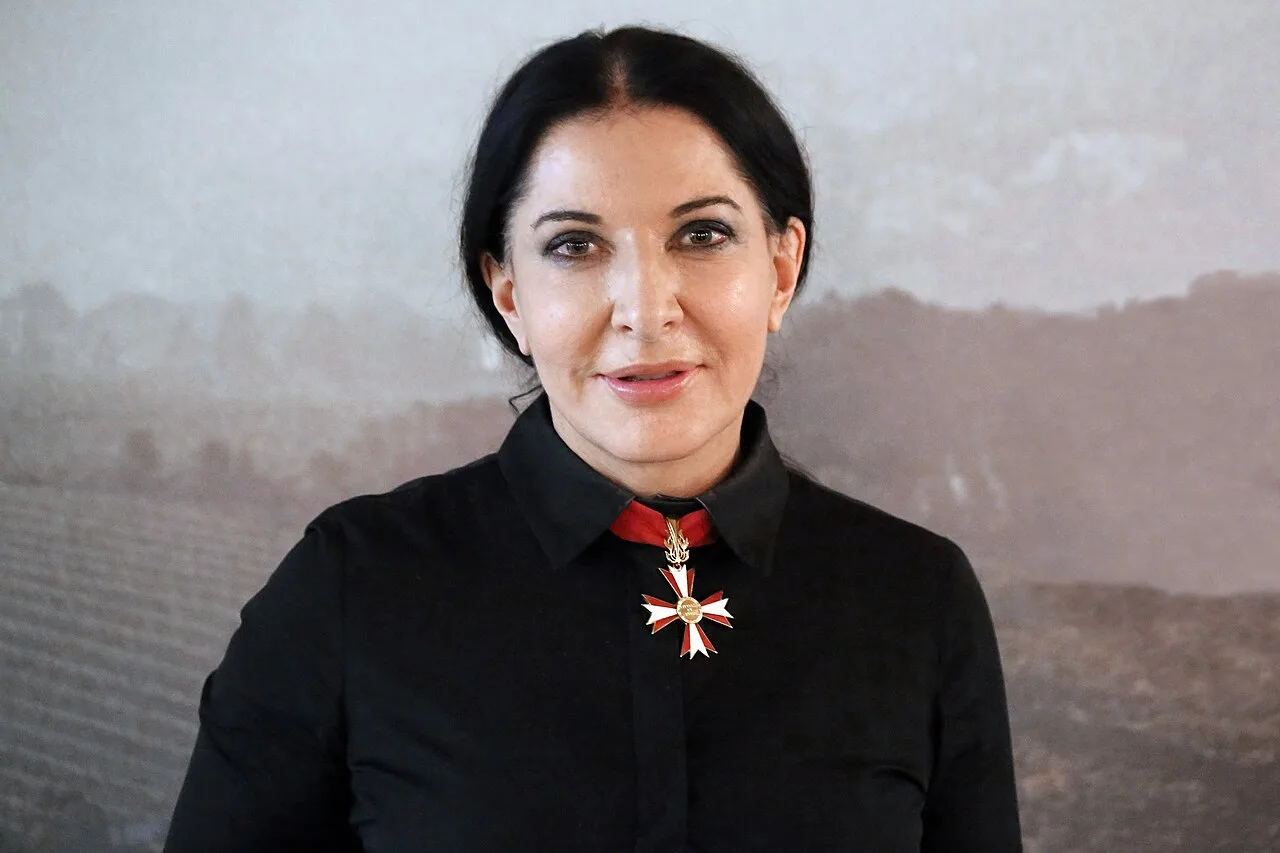
Marina Abramović at the Viennale, October 26, 2012. This genuine later portrait is not documentation of Rhythm 0 in Naples in 1974. Museum records linked in the article preserve the work’s historical documentation.
Another reading concerns the gendered body presented to public judgment. Abramović’s stillness turned spectators’ attention into a material force. The body on display was exposed to interpretation as well as physical contact. The work continues to provoke because it asks the viewer to consider the position of the person being watched, as well as the freedom of those doing the watching. Tel Aviv Museum of Art: Rhythm 0 exhibition contextSALT: Rhythm 0 documentation and context
How an event becomes a museum work
The original six hours cannot be recovered simply by displaying a photograph. Museums preserve documents, objects, images and accounts that allow later audiences to study what occurred. IMMA’s collection includes a framed photograph and a text panel; MoMA’s retrospective documentation identifies slide projection and objects. These are forms of transmission, not the original event happening again. MoMA: Abramović’s account of Rhythm 0IMMA: Rhythm 0 collection record
That distinction is essential when an image circulates by itself. A still can show an object, an expression or a moment, but it cannot reveal the entire sequence, the atmosphere over six hours or every spectator’s actions. A caption and a source are therefore part of responsible viewing. They place the image inside a documented work rather than allowing it to stand as a self-explanatory spectacle.
PRESDA’s feature on Van Gogh’s life and artistic legacy examines another case in which a memorable biographical story can eclipse the work. Rhythm 0 presents a different artistic problem, but the same need for context applies: the most arresting anecdote should open an investigation rather than close it.
The place of Rhythm 0 in a longer practice
Abramović continued to investigate duration, presence and the relationship with an audience. MoMA’s 2010 retrospective, The Artist Is Present, ran from March 14 to May 31 and brought together work spanning four decades. Its presentation also raised questions about how time-based art could be documented and made accessible through live performance by other people. MoMA: The Artist Is Present, March 14–May 31, 2010
Her discussion of Seven Easy Pieces, performed in 2005, addresses another part of that problem: returning to earlier performance works through research, permission and re-performance. Rhythm 0 belongs within this broader history of how actions can become art and how an event that ends can remain available to later audiences without pretending that documentation is identical to experience. MoMA: Abramović on Seven Easy Pieces, 2005
Reading the visuals honestly
The supplied hero is preserved as an editorial image and is not independently authenticated as a photograph from the 1974 performance. The supporting portrait is a genuine, credited photograph of Abramović at the 2012 Viennale screening of The Artist Is Present. Its date prevents it from being mistaken for a scene at Studio Morra. Original performance documentation can be consulted through the museum references.
Rhythm 0 endures because it changed the audience’s role from observation to action and made that action consequential. Its strongest question is not whether a shocking story can still attract attention. It is what responsibility belongs to a person who discovers that the situation allows them to act, and who must decide what kind of participant to become.
FAQ
Frequently Asked Questions
What was Rhythm 0?
A 1974 performance in which Marina Abramović remained passive while an audience could interact with her using 72 objects placed on a table.
Where and how long did it take place?
MoMA identifies Studio Morra in Naples and a duration of six hours.
Did the performance become dangerous?
Abramović’s MoMA account and IMMA’s collection record describe escalating aggression, injuries and a threatening encounter involving a gun.
Was it a scientific experiment proving human nature?
No. It was a performance artwork. It can support interpretations about power and responsibility without establishing a universal psychological finding.
PRESDA Dispatch
Stay Informed. Stay Aware.
A sharp briefing across AI, gaming, sport, business, world affairs, paparazzi, and lifestyle.