NAPOLEON: THE TRUTH BEHIND THE SHORT EMPEROR MYTH
Napoleon was around 1.68–1.69 metres tall. Discover how French measurements, military imagery and political cartoons helped shape the short-emperor myth.
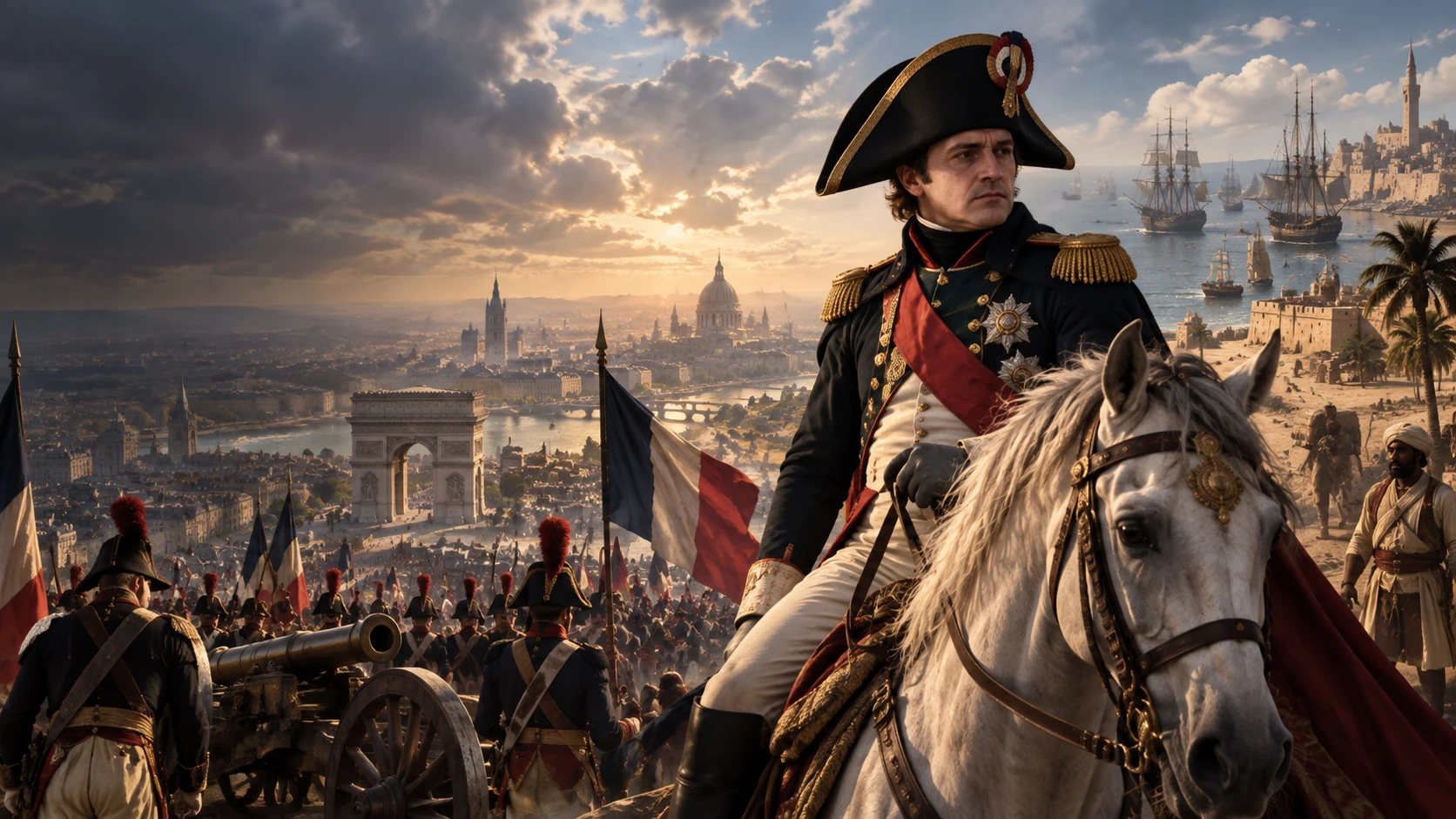
Supplied conceptual portrait of Napoleon with imagined troops and imperial symbols. It is not an authenticated period portrait, a documented battle scene or evidence of his height. Editorial image supplied for PRESDA. Original creator and reuse licence not provided.
Napoleon is remembered as a man who towered over Europe while supposedly standing far below everyone around him. The second part of that image is misleading. The best-known historical measurements place him around 1.68–1.69 metres tall, broadly ordinary for a man of his era. The interesting question is therefore not how a miniature emperor conquered so much territory, but how measurements, visual comparison and hostile political storytelling made smallness part of his identity.
How tall was he?
Historian Thierry Lentz, writing for the Fondation Napoléon, gives the recorded measurement as five feet, two inches and three lines in the old French system, equivalent to about 1.686 metres. This is an estimate transmitted through historical measurement conventions, not a modern clinical examination. Rounding it to about 1.68 or 1.69 metres is more sensible than treating the last millimetre as certain. Lentz’s central point is comparative: Napoleon was not unusually short among men of his own time. Thierry Lentz, Fondation Napoléon: was Napoleon small?
Why five feet two can mislead
A French foot and a British foot were not interchangeable units. Reading an old French figure as a modern English measurement produces a much shorter person. First-hand descriptions collected by the Napoleon Series include Corvisart’s explicit distinction between French and English measures. They also contain impressions that vary with the observer and the moment. Such accounts are valuable, but adjectives like short or slight are not calibrated instruments. The measurement and the person describing it must both be understood in context. The Napoleon Series: first-hand descriptions
The men standing beside him
Comparison also shaped appearances. Lentz notes that Napoleon was often pictured alongside imposing soldiers, including tall guardsmen wearing high headgear. A ruler can look smaller beside a selected military elite without being unusually small in the general population. The nickname petit caporal is part of the story too, but a nickname is not a height record. Correcting the myth does not require replacing it with another exaggeration that Napoleon was exceptionally tall. Ordinary proportions are enough to undermine the caricature. Thierry Lentz, Fondation Napoléon: was Napoleon small?
Political cartoons made size an argument
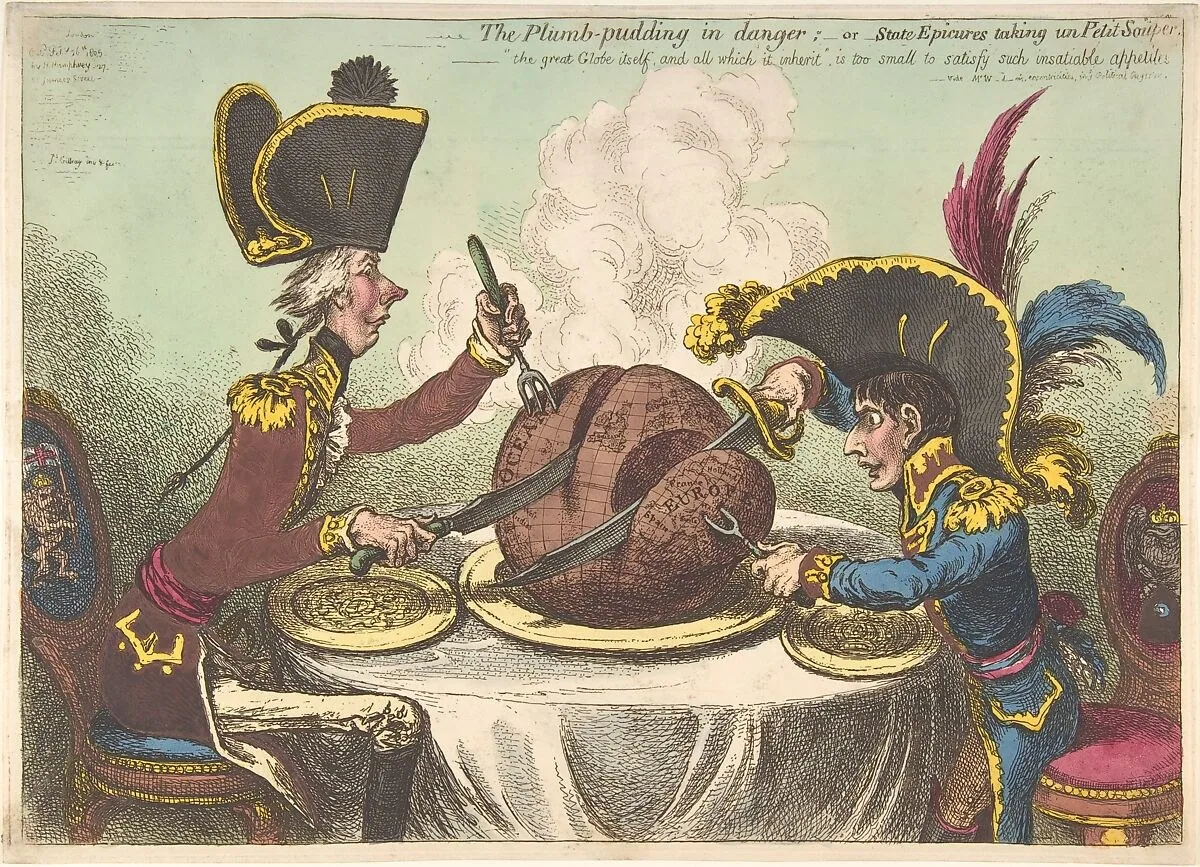
James Gillray’s 1805 print The Plumb-Pudding in Danger offers a concrete example. The Metropolitan Museum describes Napoleon and William Pitt dividing a globe-shaped pudding: Napoleon takes Europe while Pitt carves the ocean. Napoleon’s diminutive figure helps deliver the political joke. The print is evidence of how a political opponent could be represented, not evidence for his literal body size. Its visual force explains why a simplified image can outlive the circumstances that first made the joke intelligible. Metropolitan Museum: Gillray’s 1805 political print
A nickname is not a psychological diagnosis
The familiar Napoleon complex turns the stereotype into a theory of personality. That is a separate claim, and a historical height estimate cannot establish it. Explaining wars or political ambition through presumed insecurity about stature substitutes a simple story for evidence about institutions, strategy and power. Correcting the height myth does not excuse Napoleon’s policies or make his imperial project harmless. It removes one weak explanation so that the more serious historical questions can receive attention.
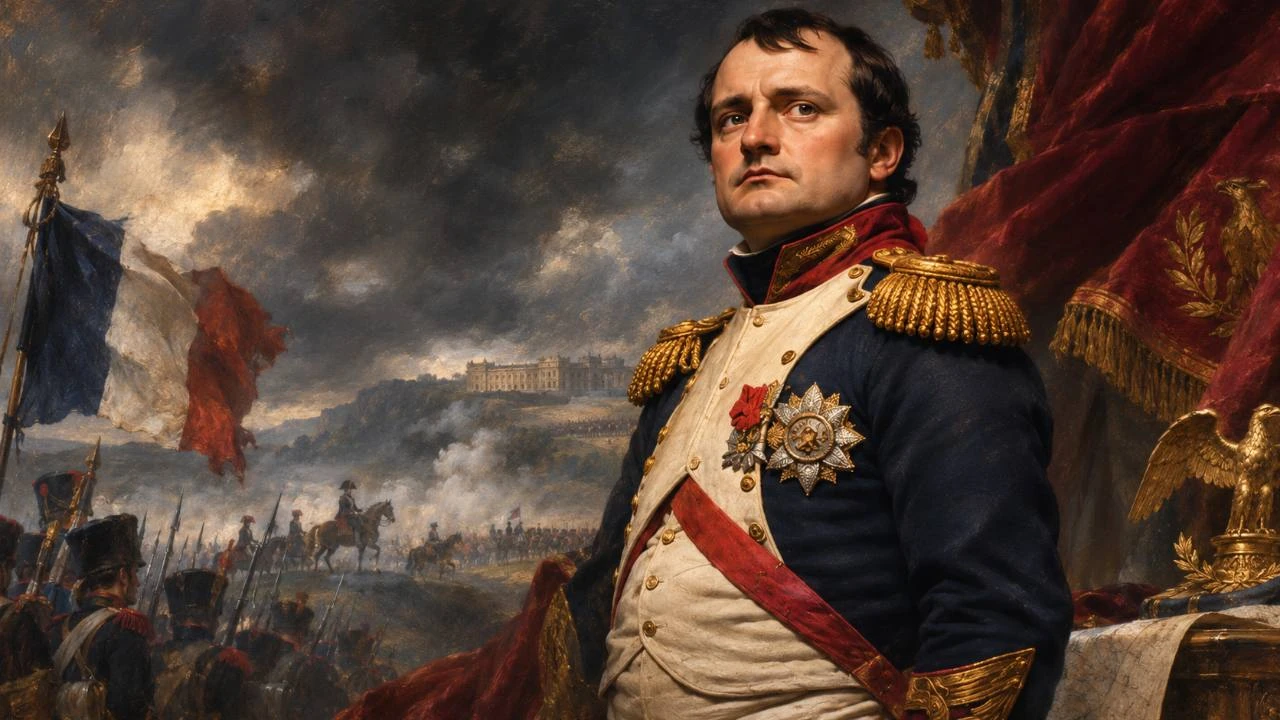
The truth is less spectacular and more revealing than the myth: an emperor of approximately ordinary height became a durable symbol of smallness. Units mattered, observers compared him with unusually tall men, and satire gave the contrast a memorable form. The approved hero is an imaginative imperial composition; the documentary print shown in this article is a period source. Keeping those kinds of image separate is the same discipline that keeps a good historical story from becoming another myth.
Related reading: The wider history of France’s empires.
FAQ
Frequently Asked Questions
How tall was Napoleon?
The familiar historical measurement converts to about 1.686 metres, usually rounded to 1.68–1.69 metres. Exact millimetre precision is not warranted.
Was he five feet two in modern English units?
No. The often-quoted figure used old French feet and inches, which were different units.
Do cartoons prove he had a height complex?
No. They document political representation. A caricature or a height estimate cannot diagnose personality.
PRESDA Dispatch
Stay Informed. Stay Aware.
A sharp briefing across AI, gaming, sport, business, world affairs, paparazzi, and lifestyle.