The Nazca civilization: Peru’s desert culture and its mysterious lines
Explore Nazca origins, Cahuachi, desert geoglyphs, ceramics, religion, irrigation and the changes that reshaped Peru’s south coast.
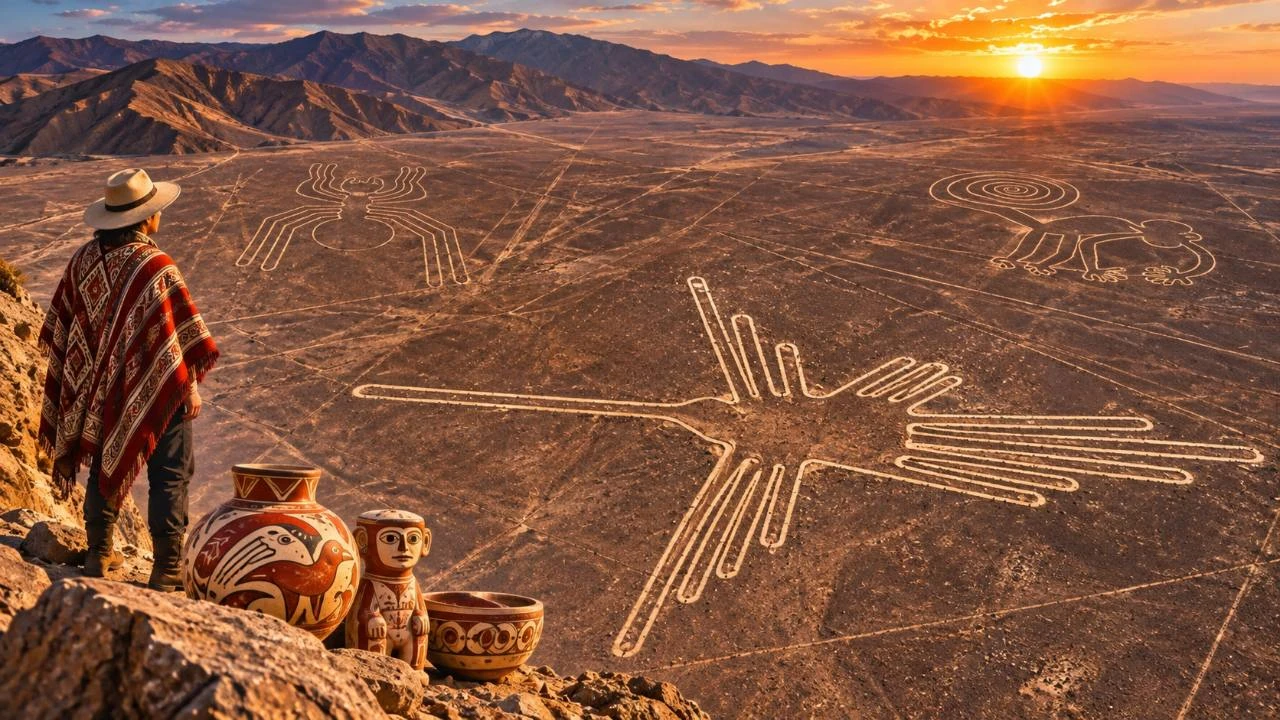
AI-generated editorial illustration supplied for PRESDA. The scene is imagined.
On Peru’s southern coast, between the Andes and the Pacific, dark stones cover expanses of pale desert soil. Moving those stones exposed a surface bright enough to trace straight lines, trapezoids and figures such as birds. The marks are the best-known legacy of Nazca, but their makers also left ceramics, textiles, monumental architecture and works that helped communities live with scarce water. UNESCO: Lines and Geoglyphs of Nasca and Palpa
Origins and timeline on Peru’s south coast
Archaeologists use Nazca, also spelled Nasca, for a pre-Inca culture in the river valleys of southern Peru. Its beginnings are usually placed in the last centuries BCE, following the Paracas tradition, and late Nazca phases extend into roughly the seventh or eighth century CE. Dates vary by site and by what is being classified. The chronology of pottery styles covers a different question from the dating of the desert drawings. University of Missouri Museum of Art and Archaeology: Nazca culture
From Paracas traditions to a recognisable style
Early communities inherited ways of making textiles and representing people, animals and composite beings. Painted vessels give archaeologists a particularly useful record of change. A vessel’s shape and decoration help date its context and trace connections across valleys. Ceramic phases are modern research categories, rather than names that ancient potters used for themselves. University of Missouri Museum of Art and Archaeology: Nazca culture
Cahuachi, religion and ceremonial life
Cahuachi was a major ceremonial centre, especially in the early centuries CE. Adobe platforms and open spaces made it a place where people could gather on a scale beyond that of a single settlement. Excavated fragments of painted walls show that colour belonged to the architecture as well as to portable objects. The material evidence supports a ritual role, while the extent of Cahuachi’s political authority remains harder to establish. Heritage Science: Excavated Cahuachi murals
Reading beliefs through objects
Nazca imagery includes animal-human beings and detached heads. Their repetition on vessels and other objects suggests a shared visual vocabulary. The scenes can support interpretations about ritual and power, but the objects do not tell us the precise names of supernatural figures or what a particular gathering meant to every participant. University of Missouri Museum of Art and Archaeology: Nazca culture
How the Nazca Lines were made and used
The UNESCO site includes geoglyphs from both Paracas and Nazca phases. The designs vary from large forms laid out on the pampa to smaller figures on slopes. Dry conditions helped preserve the contrast made by displacing stones. The size of some designs is striking from above, but their construction and use took place on the ground. UNESCO: Lines and Geoglyphs of Nasca and Palpa
A field survey published in 2024 used AI to prioritise candidate images and verified 303 newly identified figurative geoglyphs. The researchers distinguished smaller relief figures often near paths from larger line figures associated with networks of lines. Pilgrimage and ritual are plausible for some settings. The diversity of designs and locations argues for examining different uses rather than assigning every line one purpose. PNAS: Geoglyph field survey
Water engineering, craftsmanship and farming
The puquios of the Nasca region include channels and underground galleries that capture and carry water. Peru’s submission to UNESCO’s Tentative List links much of their construction to early and middle Nasca development, while precise dating remains a research question. Their significance is practical. In a desert valley, access to water determines where farming can persist. Painted pottery, textiles and monumental adobe show expertise in other materials and in organising work. UNESCO Tentative List: Nasca Aqueducts
Why Nazca declined
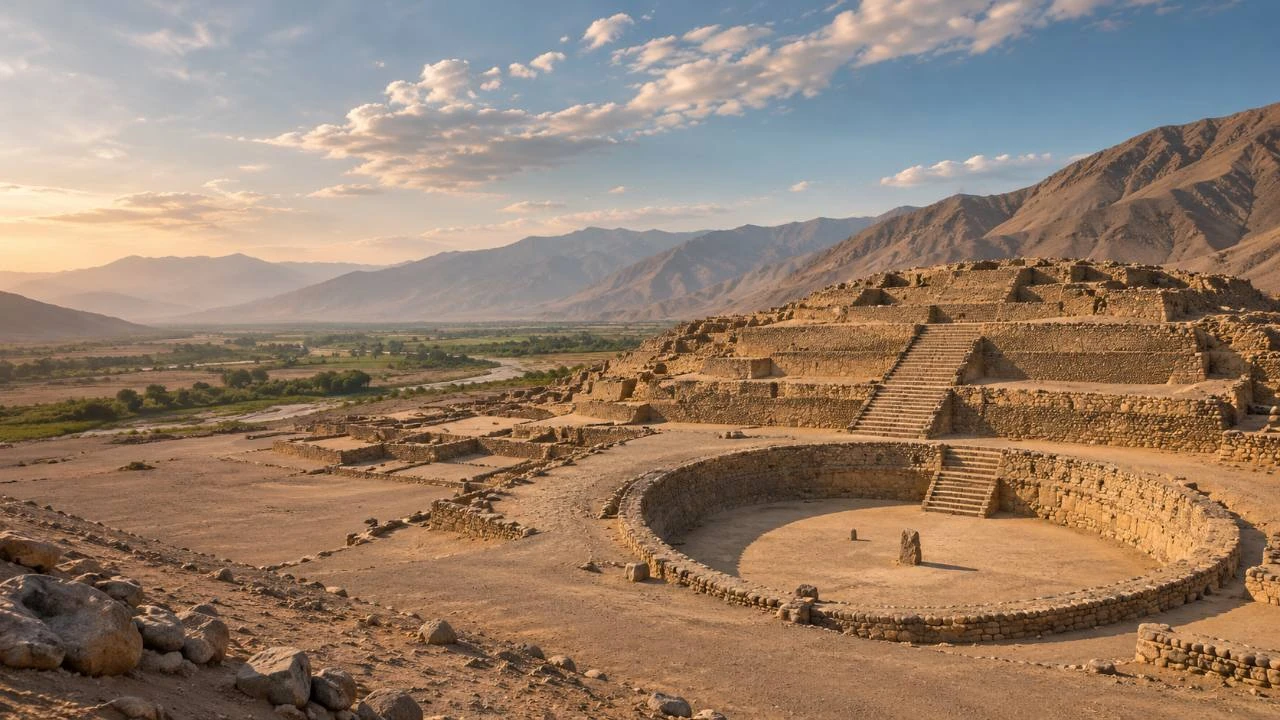
Cahuachi’s reduced role, later changes in settlement and the spread of Wari influence describe different processes across centuries. One environmental hypothesis links the loss of local huarango woodland to greater vulnerability to erosion and flooding in parts of the south coast. Evidence from one valley cannot supply a single explanation for the whole region. Later communities continued living in the landscape even as the styles archaeologists identify as Nazca changed. For a much earlier period in Peru, explore the much earlier city of Caral. Archaeological research: Regional settlement and Wari influence
FAQ
Frequently Asked Questions
Who made the Nazca Lines?
Several ancient societies of Peru’s south coast contributed. UNESCO identifies Paracas and Nasca phases.
Was Nazca part of the Inca Empire?
Nazca developed many centuries before the Inca Empire.
What was Cahuachi?
It was a major Nazca ceremonial centre with adobe platforms and spaces for gatherings.
PRESDA Dispatch
Stay Informed. Stay Aware.
A sharp briefing across AI, gaming, sport, business, world affairs, paparazzi, and lifestyle.