THE NIGHT WITCHES: THE WOMEN WHO TERRIFIED NAZI PILOTS
Who the Night Witches were, how their Po-2 biplanes operated and what the 588th regiment’s missions, crews and wartime losses reveal.
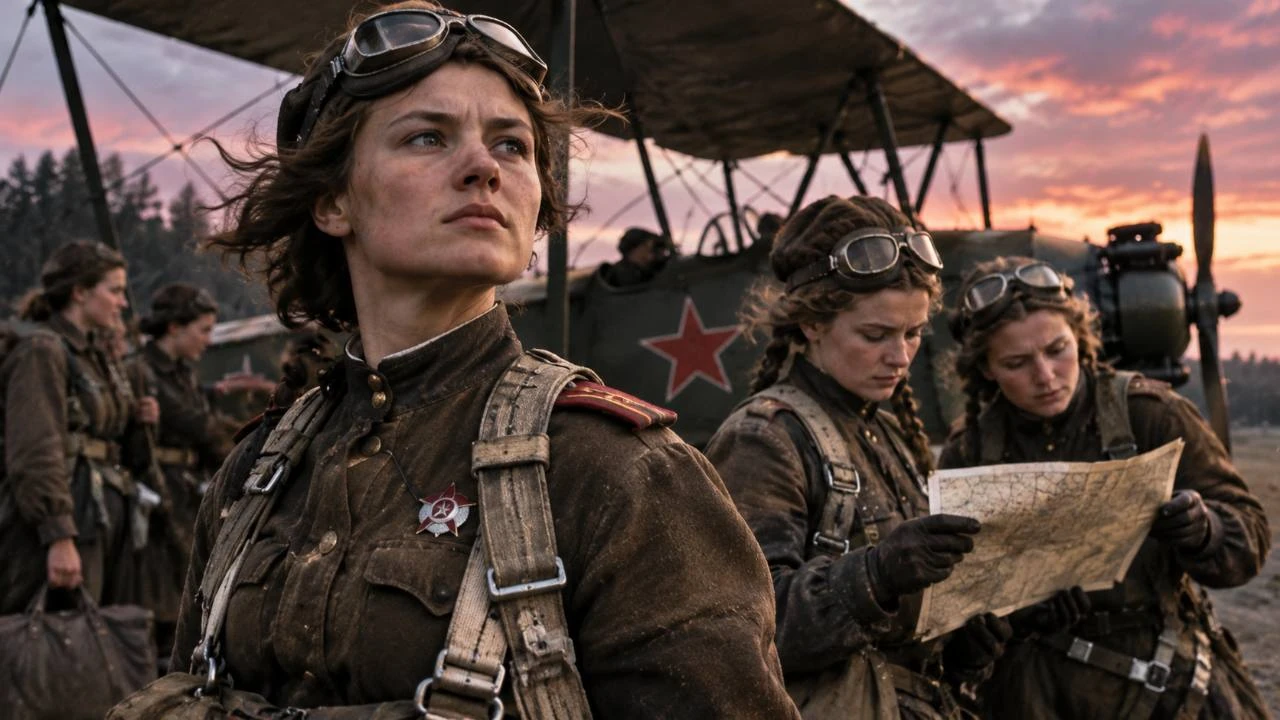
Editorial illustration supplied for PRESDA.
The “Night Witches” were Soviet women who flew repeated night-bombing sorties against German forces during the Second World War. Their regiment used slow, lightly equipped Polikarpov biplanes and depended on pilots, navigators, mechanics and armourers working as one system. The famous nickname belongs to the 588th Night Bomber Regiment, later the 46th Guards. Its main story is sustained combat against targets on the ground, rather than a series of aerial duels. National WWII Museum history of the regiment Pacific Air Forces historical chronology
Who were the Night Witches?
| Date or period | Milestone | What it establishes |
|---|---|---|
| October 1941 | Three women’s aviation regiments authorised | Their fighter, bomber and night-bomber roles differed |
| Mid-1942 | 588th operating against German forces | Beginning of its combat period in PACAF’s chronology |
| 1943 | 588th becomes the 46th Guards | A new designation for the same regiment |
| 1945 | Operations continue to the war’s end | Campaign totals count repeated operational flights |
The Soviet Union created three women’s aviation regiments after Nazi Germany invaded in June 1941. Marina Raskova, already a celebrated navigator, helped secure official support for women’s military flying. The units had different roles: the 586th was a fighter regiment, the 587th a bomber regiment and the 588th a night-bombing regiment. The 588th remained an all-women unit, including its ground personnel, through the war. Its commander was Yevdokiya Bershanskaya. Raskova’s organising role should be distinguished from the command of this regiment. Pacific Air Forces historical chronology Marine Corps University Press research on women’s wartime service
Training was part of the achievement
Recruits had to become military crews under the pressure of an invasion. Flying ability was only one requirement. Navigation, bombing procedures, aircraft servicing and coordination with an airfield all had to become repeatable work. An experienced civilian aviator still needed to learn the tasks of a combat unit. The women also faced doubts about their ability to serve in roles that the military had treated as male. Training was therefore both technical preparation and a struggle for recognition. Museum of Flight account of the women’s aviation units
Why did they fly small wooden biplanes?
The Polikarpov aircraft, commonly called the Po-2, had been developed as a trainer and was made largely from wood and fabric. Its open cockpit offered little protection from cold and wind. It was much slower and carried far less than the large bombers familiar from strategic bombing campaigns. Those limitations shaped the regiment’s mission. It could make short attacks against positions and supply targets, return, reload and fly again. Night operations reduced some of the disadvantages of its modest performance. Museum of Flight account of the women’s aviation units Aeroseum aviation museum account
Slow flight offered possibilities and serious risks
A slow aircraft gives its crew time to observe, but also keeps it exposed for longer. Its handling at low speed could make it difficult for a much faster fighter to match its movement, yet that did not make it immune to attack. Searchlights, antiaircraft fire, weather and obstacles remained dangerous. A general performance figure for a Po-2 also depends on variant and load. Speed alone cannot explain success; the conditions and purpose of a flight matter just as much. Aeroseum aviation museum account
How did a night mission work?
A pilot flew the aircraft while a navigator helped determine the route and release the bombs. The crew needed to find the target and return to an airfield in darkness, often using limited equipment. Accounts describe low approaches and a quieter final glide after reducing or cutting engine power. Air moving past the aircraft’s bracing still made sound. The familiar comparison with a witch’s broom comes from descriptions of that final approach, when an aircraft could be heard only shortly before an attack. National WWII Museum history of the regiment Museum of Flight account of the women’s aviation units
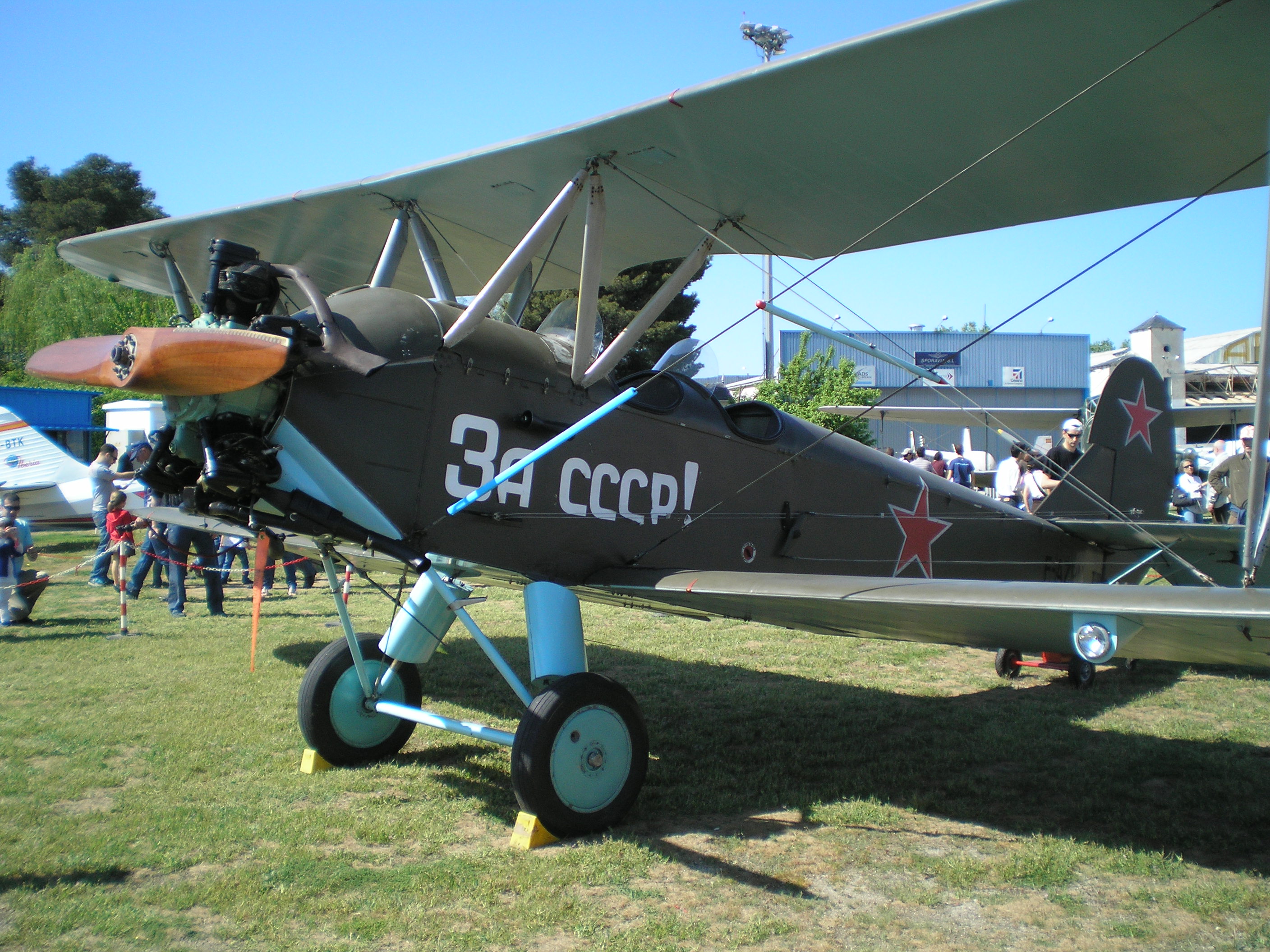
A preserved Polikarpov Po-2 photographed by Carlos Delgado in 2010. It illustrates the aircraft type, rather than a wartime sortie by the regiment.
Why the glide did not remove the danger
A quieter approach could make detection harder, but a gliding aircraft still needed enough height and speed to complete its flight. The crew had to manage a limited margin and then regain power or reach a safe landing. Darkness concealed the attacker while concealing hazards from the attacker as well. The skill involved was therefore not simply making an engine quiet. It was carrying out a sequence reliably while navigating, identifying a target and surviving the return.
What were the raids intended to achieve?
Night attacks could damage supplies, transport and positions while denying soldiers sleep. Repeated disruption mattered even when one aircraft carried only a small load. A depot or road under intermittent attack could require extra guards, repairs and changes to movement. The National WWII Museum emphasises the impact on morale as well as material targets. That objective explains why the unit’s contribution should be assessed through the pattern of operations, rather than a comparison with the bomb load of one large aircraft. National WWII Museum history of the regiment
The number of sorties needs a definition
A sortie generally counts one aircraft’s operational flight. A crew returning several times in a night could therefore contribute several sorties, even over the same general area. PACAF’s historical summary gives more than 23,000 sorties for the regiment, while the National WWII Museum describes more than 24,000 missions. The summaries use different totals, so attaching the source is more accurate than pretending to an exact universal number. Neither figure counts enemy aircraft shot down or distinct targets destroyed. Pacific Air Forces historical chronology National WWII Museum history of the regiment
What happened between each flight?
Bombs and fuel had to be replenished, damage assessed and aircraft kept serviceable. Navigators prepared for another route while ground personnel worked in the same darkness and weather as the returning crews. A repeated-sortie campaign depended on that turnaround. The prominence of a pilot in a photograph can obscure the work that made the next takeoff possible. The regiment’s all-women identity included those people on the ground, not only the figures seated in the cockpits. Pacific Air Forces historical chronology Marine Corps University Press research on women’s wartime service
Why fatigue belongs in the history
Flying again after landing changes the meaning of a “successful mission.” The crew had to recover enough attention to navigate and make decisions on another flight. Ground personnel also had to keep working as aircraft returned at different times. Repetition can make a task efficient, but fatigue can erode its safety. Thinking about a night as a sequence of departures, arrivals and maintenance helps explain the human effort behind a campaign total. It also gives the routine work its place alongside exceptional acts.
Why did the regiment’s name change?
In 1943, the 588th received Guards status and became the 46th Guards Night Bomber Regiment. These are successive identities of the same unit, rather than two separate groups of Night Witches. The change matters when reading captions, service histories and awards. A photograph labelled “46th Guards” can belong to the history of the unit initially formed as the 588th. A chronology should follow that continuity instead of adding the two units’ totals together. Marine Corps University Press research on women’s wartime service
Honours did not cancel the losses
The unit received major distinctions, and individual members became Heroes of the Soviet Union. Its operations also cost lives. PACAF’s summary records 30 combat deaths, a figure that should retain its definition and source when quoted. Other commemorative counts may frame losses differently. Whatever total is used, combat service involved people who did not return, as well as survivors who carried the experience afterward. A celebratory nickname should not make those risks disappear. Pacific Air Forces historical chronology
Where does the nickname end and the history begin?
“Nachthexen” means “Night Witches.” Museum accounts attribute the term to German forces reacting to the night raids. Repetition has made the nickname more familiar than the unit’s formal name. Popular retellings sometimes add claims about supernatural abilities, universal fear or guaranteed rewards for shooting down an aircraft. Each additional claim needs its own evidence. The documented operation is remarkable without embellishment: women repeatedly flew demanding combat missions in aircraft whose limitations they understood and worked around. National WWII Museum history of the regiment Museum of Flight account of the women’s aviation units
A photograph is evidence of a moment
The supplied hero is an editorial reconstruction. Its uniforms, decorations and faces do not identify an actual crew at a documented briefing. The archival supporting photograph has a date and source and can be read within that narrower frame. Captions are especially important where images of different Soviet women’s units circulate under the same nickname. A fighter pilot’s portrait and a night bomber crew can both belong to women’s wartime aviation while documenting different service.
Why their work still matters
The regiment challenges an account of the air war organised only around famous male aces and advanced machines. It shows how purpose, training and maintenance could turn an unglamorous aircraft into a useful wartime tool. It also belongs to a broader history of women’s service whose roles differed across countries and units. For another account of how military effects depended on organisation and perception, read PRESDA’s feature on the Ghost Army’s battlefield deception. The connection lies in adapting available means to a specific wartime task.
FAQ
Frequently Asked Questions
Who were the Night Witches?
The women of the Soviet 588th Night Bomber Regiment, later the 46th Guards, who conducted night attacks during the Second World War.
Was Marina Raskova their commander?
She helped organise the women’s aviation units. Yevdokiya Bershanskaya commanded the night-bombing regiment.
What aircraft did they fly?
Polikarpov biplanes commonly known as Po-2s, originally developed for training and adapted for light night bombing.
How many missions did they fly?
PACAF gives more than 23,000 sorties, while the National WWII Museum uses more than 24,000 missions. These campaign counts are not totals of enemy aircraft destroyed.
Why were they called Night Witches?
Museum accounts connect the German nickname to the sound of their quieter night approaches, compared with a witch’s broom.
PRESDA Dispatch
Stay Informed. Stay Aware.
A sharp briefing across AI, gaming, sport, business, world affairs, paparazzi, and lifestyle.