OTA BENGA: THE AFRICAN MAN EXHIBITED IN A ZOO
The documented history of Ota Benga, the Black ministers who challenged his exhibition, his life in Virginia and the Bronx Zoo’s institutional reckoning.
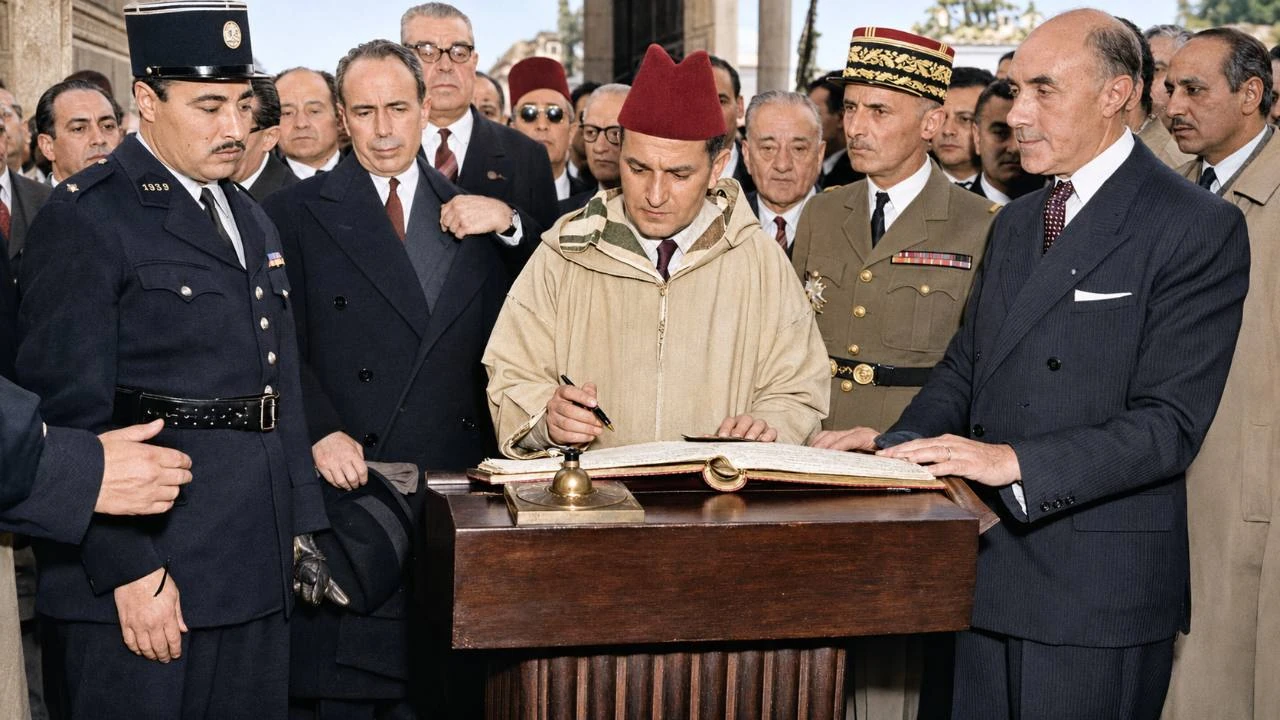
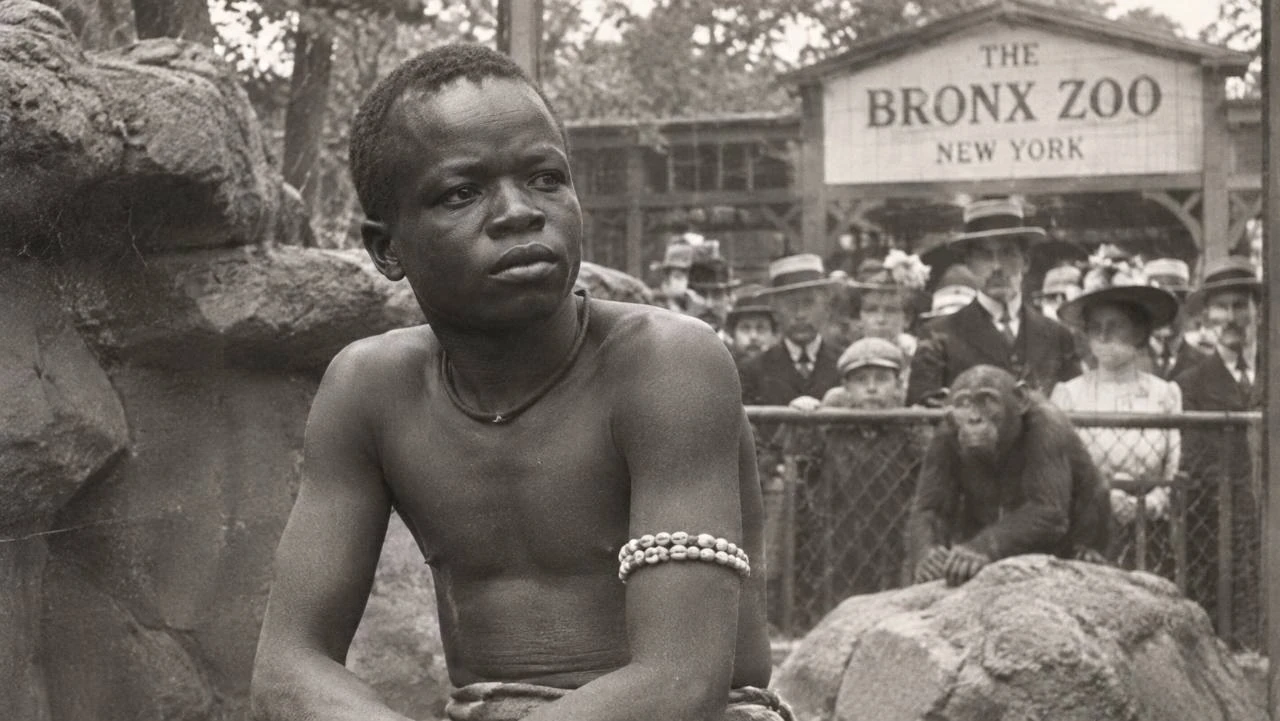
Editorial reconstruction supplied for PRESDA. This is an illustration, not an archival photograph of Ota Benga.
In September 1906, the Bronx Zoo in New York exhibited Ota Benga, a man from Central Africa, in its Monkey House. Black ministers challenged the exhibition, and the Reverend James Gordon helped arrange his departure. The episode reveals how racial prejudice could be presented to the public under the authority of an institution, and how people resisted it at the time. Wildlife Conservation Society historical account and records Bronx Zoo institutional timeline
Who was Ota Benga?
| Date | Event | Evidence and qualification |
|---|---|---|
| 1904 | Taken to the St Louis World’s Fair | The accounts of his earlier life remain uneven and contested |
| September 1906 | Exhibited at the Bronx Zoo; Black ministers protest | WCS identifies the week of 8 September |
| 1910–1916 | Lives in Lynchburg; dies on 20 March 1916 | Local records and historical research document this period |
| June 2020 | WCS issues an apology | A later institutional acknowledgement of the abuse |
Ota Benga came from the Congo region and is generally identified in the historical literature as Mbuti. His birth is usually placed around 1883, although certainty about his early life is limited. The historian Ted Delaney’s biography for Virginia Humanities begins with an essential qualification. Benga left no account of his life, and much information about his early years comes through conflicting statements by Samuel Phillips Verner, the American who brought him to the United States. Virginia Humanities biography by Ted Delaney
Why the gaps in his biography matter
The surviving record gives far more space to people who described, managed or displayed Benga than to Benga’s own explanations. A report of what someone said about him is evidence of that person’s actions and attitudes. It cannot automatically be treated as his consent or his testimony. Keeping those distinctions visible helps recover his history without filling the gaps with invented dialogue, motives or scenes. Even an exact date in an official letter may establish only what its writer knew or chose to record.
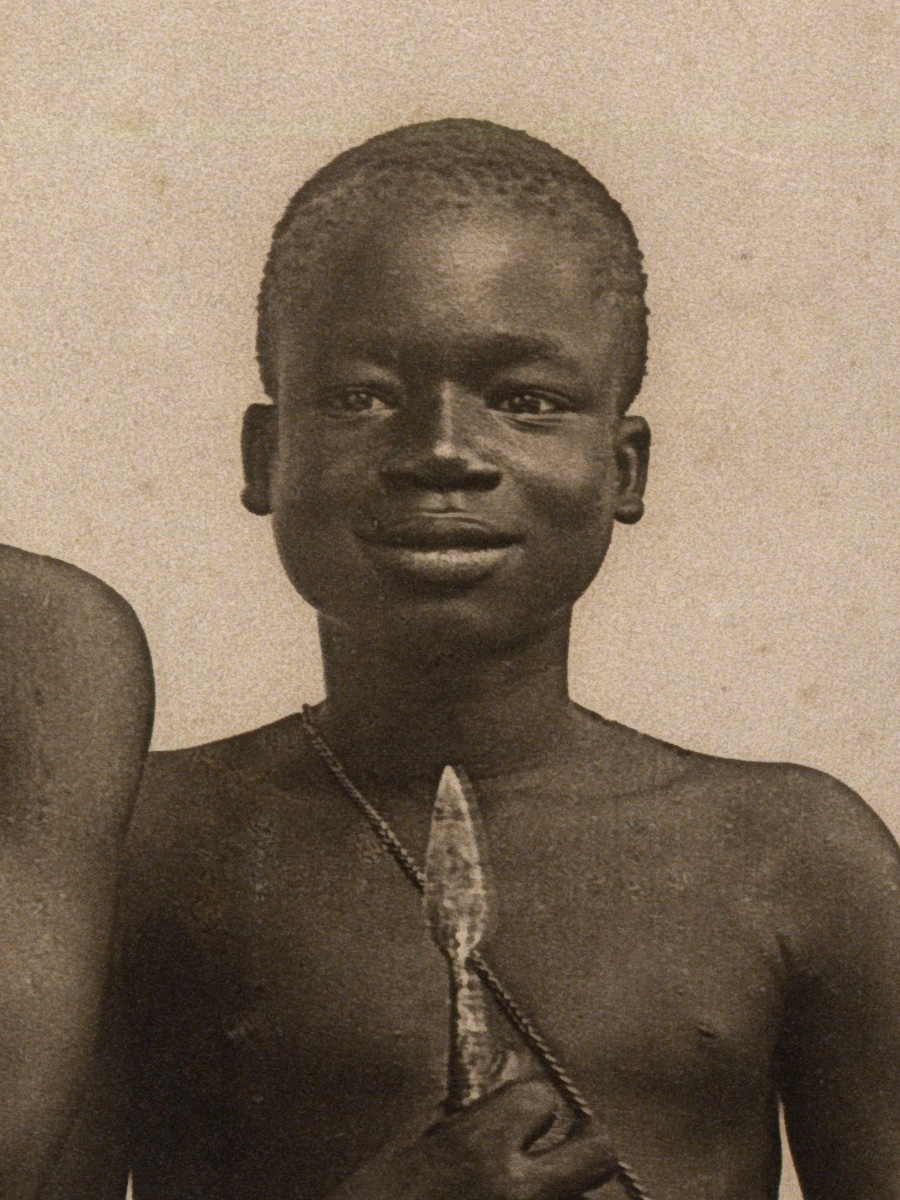
Ota Benga at the 1904 St Louis World’s Fair, in a portrait extracted from a group photograph by the Gerhard Sisters. This photograph predates the Bronx Zoo exhibition.
How did he come to the United States?
Verner brought Benga and other people from Central Africa to the 1904 St Louis World’s Fair. The event presented living people as ethnological attractions, placing them inside a hierarchy shaped by white supremacy. WCS, the institution that operates the Bronx Zoo today, describes Benga as having been forcibly brought to the United States. Verner’s accounts about acquiring and “rescuing” him need to be understood in light of Verner’s own role in arranging the exhibition. Wildlife Conservation Society historical account and records Virginia Humanities biography by Ted Delaney
The fair and the claim to educate
World’s fairs offered visitors technology, architecture, commercial promotion and staged encounters with people from other societies. A display could be called educational while giving its subjects little control over the way they were represented. The central problem was the unequal power to define the encounter. Visitors were invited to look, classify and judge, while the people displayed were made to carry the labels imposed on them. The setting gave a demeaning performance the appearance of institutional knowledge.
What happened at the Bronx Zoo in 1906?
WCS identifies the week of September 8, 1906, as the period in which zoo officials, led by director William Hornaday, put Benga on display in the Monkey House. The location placed a human being alongside the zoo’s presentation of other primates and encouraged a racist comparison. The institution’s present account acknowledges that harm. Its description of several days of exhibition should also be distinguished from the longer period during which Benga was associated with the zoo. Wildlife Conservation Society historical account and records WCS June 2020 letter and apology
Why the setting was itself part of the abuse
A cage, a label, the route through a building and the expectation of a paying audience all influence how an exhibition is read. In Benga’s case, the setting denied the ordinary relationship between a person and the visitors looking at him. The degrading inference did not require a scientifically valid argument. It gained force from the place and from the officials who authorised it. Explaining the arrangement shows how an institution could promote racial hierarchy through the organisation of a public visit.
Who opposed the exhibition?
Local Black ministers protested and demanded that Benga be treated as a human being entitled to dignity. James Gordon, who directed an orphanage in Brooklyn, helped secure another place for him to live. These actions are central to the history. Opposition arose during the exhibition itself, which means that contemporary objections belong alongside the decisions of the zoo’s officials. A narrative that calls the event merely typical of its time leaves out the people who challenged it. Wildlife Conservation Society historical account and records Bronx Zoo institutional timeline
What changed when he left the zoo
Ending the exhibition removed an immediate public abuse. It did not restore the life from which Benga had been separated or put control over his future fully into his own hands. The arrangements made for him still involved adults, institutions, money and choices constrained by his circumstances. His transition into another setting therefore deserves attention in its own right. The day a display ended and the years a person needed to rebuild his life are different parts of the same history.
His later life in Virginia
After time in New York, Benga moved to Lynchburg, Virginia, in 1910. Delaney’s account describes connections with the Virginia Theological Seminary and College and with members of the local Black community, including the poet Anne Spencer. This part of his biography gives him relationships and activities beyond the scene for which he became notorious. It also locates his later years within a segregated American society, where the practical possibilities of work, education and travel were restricted. Virginia Humanities biography by Ted Delaney
Why a fuller biography needs more than the cage
To remember only the exhibition is to let the institution’s staging determine the whole account of a person. Letters, community records and later research allow historians to ask other questions. Who offered help? Where did he live? Which relationships continued? Which claims can be checked independently? These questions do not erase the abuse. They make room for a life that extended before and after it, while preserving uncertainty about experiences the record cannot recover.
His death and what the evidence establishes
Benga died by suicide in Lynchburg on March 20, 1916. The historical record documents the death and funeral, but it does not give direct access to every thought or motive behind it. His displacement, exploitation and constrained prospects form part of the context. A responsible account avoids turning those circumstances into an invented final statement. It also avoids graphic detail that adds nothing to understanding the biography. Virginia Humanities biography by Ted Delaney
Burial and the difference between a record and a tradition
The documented burial was at Lynchburg’s Old City Cemetery. A persistent oral history places a later reburial at White Rock Cemetery, but Delaney notes the absence of documentation confirming that move. The distinction matters because repeating a later story as a settled location would change the evidence. It is possible to acknowledge a community tradition and explain its status at the same time. Memorialisation can preserve a connection even when the physical history of a grave remains uncertain. Virginia Humanities biography by Ted Delaney
What the institution has acknowledged
In June 2020, WCS issued an apology and condemned the treatment of Benga. It has also made historical materials available and includes the episode in the Bronx Zoo’s institutional timeline. Such actions allow readers to compare what officials wrote at the time with the institution’s account today. An apology is a later act, while the archive is evidence about earlier conduct. Both need their dates and authors to be understood properly. Wildlife Conservation Society historical account and records WCS June 2020 letter and apology
Why opening the records matters
Access to correspondence lets researchers investigate who made decisions, what objections reached officials and how the officials responded. An archive can also reveal what was omitted from an earlier public account. It remains uneven. People with administrative power produced and preserved many of the documents. Reading across sources, including community history and historical scholarship, helps prevent the institution’s own paperwork from becoming the only voice in the narrative.
Art, remembrance and human dignity
The Smithsonian’s Hirshhorn Museum discusses Simone Leigh’s White Teeth (For Ota Benga), made in 2001–2004, as an artwork addressing his history and the practices of display. It offers an example of later artistic remembrance, with its own materials and purposes. An artwork can respond to archival violence without pretending to be an eyewitness document. For a different history of how communities preserve memory through material objects, see PRESDA’s feature on Ghana’s fantasy coffins. Smithsonian Hirshhorn account of Simone Leigh’s memorial artwork
The hero is an illustration, not an archival photograph
The supplied black-and-white image is an editorial reconstruction. Its apparent period style does not establish the identity of a face, the layout of the Monkey House or the presence of particular people and animals together. The supporting archival image has a separate source, date and credit. Keeping those labels visible is essential in a story where photographs and exhibition practices helped others control how Benga was seen. An illustration introduces the subject; documentary claims depend on identified records.
FAQ
Frequently Asked Questions
Who was Ota Benga?
A man from Central Africa, generally identified as Mbuti, who was brought to the United States and subjected to exploitative exhibitions.
When was he exhibited at the Bronx Zoo?
In September 1906. WCS identifies several days during the week of September 8 for the Monkey House exhibition.
Who helped end the exhibition?
Local Black ministers protested. The Reverend James Gordon helped arrange for him to live elsewhere.
What happened after he left New York?
He moved to Lynchburg, Virginia, in 1910 and formed connections within the Black community. He died there in 1916.
Did the zoo apologise?
The Wildlife Conservation Society, which operates the zoo, issued an apology in 2020 and has made historical records available.
PRESDA Dispatch
Stay Informed. Stay Aware.
A sharp briefing across AI, gaming, sport, business, world affairs, paparazzi, and lifestyle.