OUARZAZATE: HOW MOROCCO BECAME AFRICA'S HOLLYWOOD
How Ouarzazate became a film production centre, from Atlas Studios and local crews to location work, Morocco’s rebate and the heritage of Aït Ben Haddou.
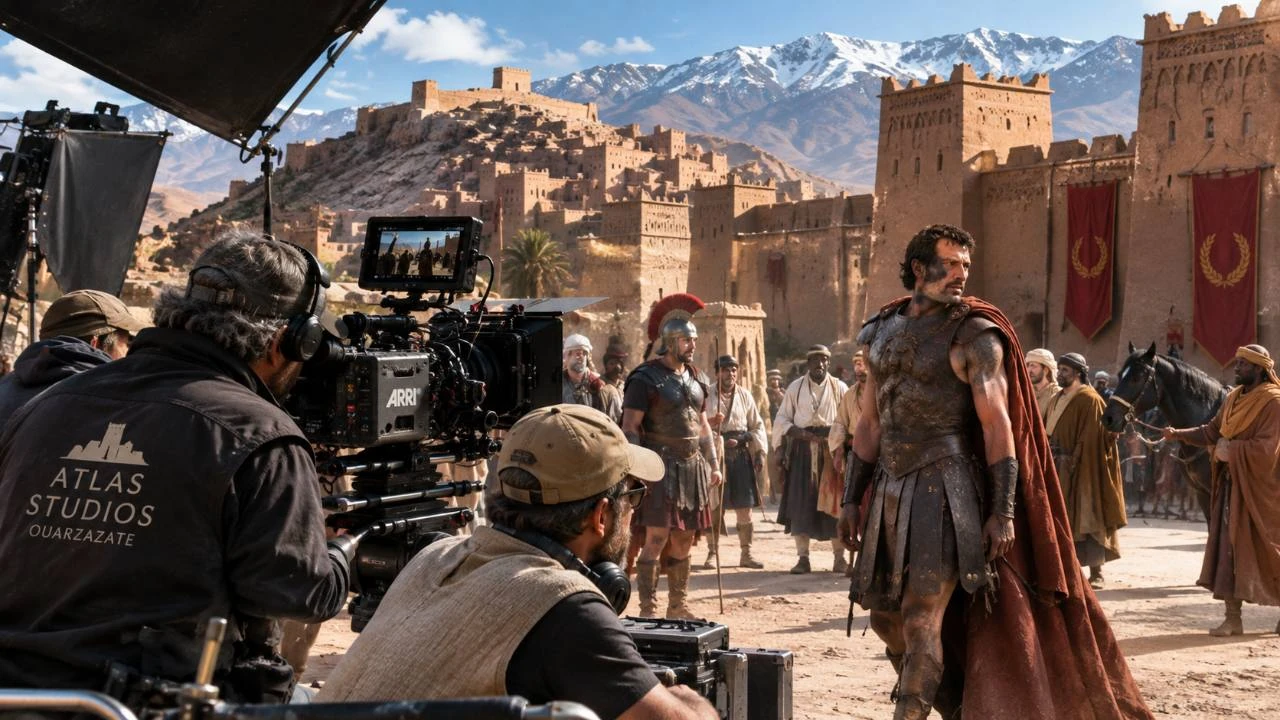
Editorial illustration supplied for PRESDA.
Ouarzazate’s place in world cinema rests on more than desert scenery. Studios, workshops, local crews, transport and a system for organising large productions turned part of southern Morocco into a place where filmmakers could repeatedly return. The nickname “Africa’s Hollywood” describes that international visibility, while the work behind the camera explains how the industry functions. Moroccan National Tourism Office Ouarzazate guide Moroccan National Tourism Office cinema destinations
Why did filmmakers choose Ouarzazate?
| Date or period | Milestone | Why it matters |
|---|---|---|
| 1962 | Lawrence of Arabia among regional productions | International filming preceded the permanent studios |
| 1983 | Atlas Studios established | A base for recurring production work |
| 1987 | Aït Ben Haddou inscribed on the World Heritage List | The settlement’s heritage has its own significance |
| From 28 March 2022 | 30% rebate on eligible expenses under CCM rules | Conditions and accepted costs determine support |
The city stands on the southern side of the Atlas Mountains, with access to landscapes, fortified settlements and expanses that can be adapted for different stories. The national tourism office’s history identifies films such as Lawrence of Arabia among the region’s earlier international productions. It also lists later work including Kundun, Gladiator and Kingdom of Heaven. These are examples of location work in and around the region, each with its own combination of exterior sites and constructed scenery. Moroccan National Tourism Office Ouarzazate guide
A location has to work for an entire crew
A director may choose a view, but the production must bring people, equipment, costumes and supplies to it every day. A camera position needs space for the crew and control over what enters the frame. Hotels, roads, catering and local coordination become part of the decision. Once several productions have solved those problems in one area, their experience creates an advantage for the next project. The landscape supplies the image; an organised network makes it possible to obtain the image on schedule.
When did Atlas Studios become part of the story?
The Moroccan tourism office dates the establishment of Atlas Studios to 1983. That is a milestone in permanent production infrastructure, several decades after international filming had already begun in the region. A studio site can hold workshops, working space, props and standing sets. Unlike a temporary exterior location, it can be adapted for successive projects and support tasks that need to continue away from the camera. Moroccan National Tourism Office Ouarzazate guide
Atlas, CLA and the surrounding locations
The tourism office distinguishes Atlas Studios from CLA Studios and describes constructed environments at both. Visitors may recognise scenery associated with films such as Gladiator or Kingdom of Heaven, but a studio tour does not reproduce the whole geography of a finished film. A production can combine several sites, interior work and visual effects. The name Ouarzazate often serves as shorthand for that wider production area. Checking a specific set’s identification is more useful than assuming every famous Moroccan scene was filmed on the same lot. Moroccan National Tourism Office cinema destinations
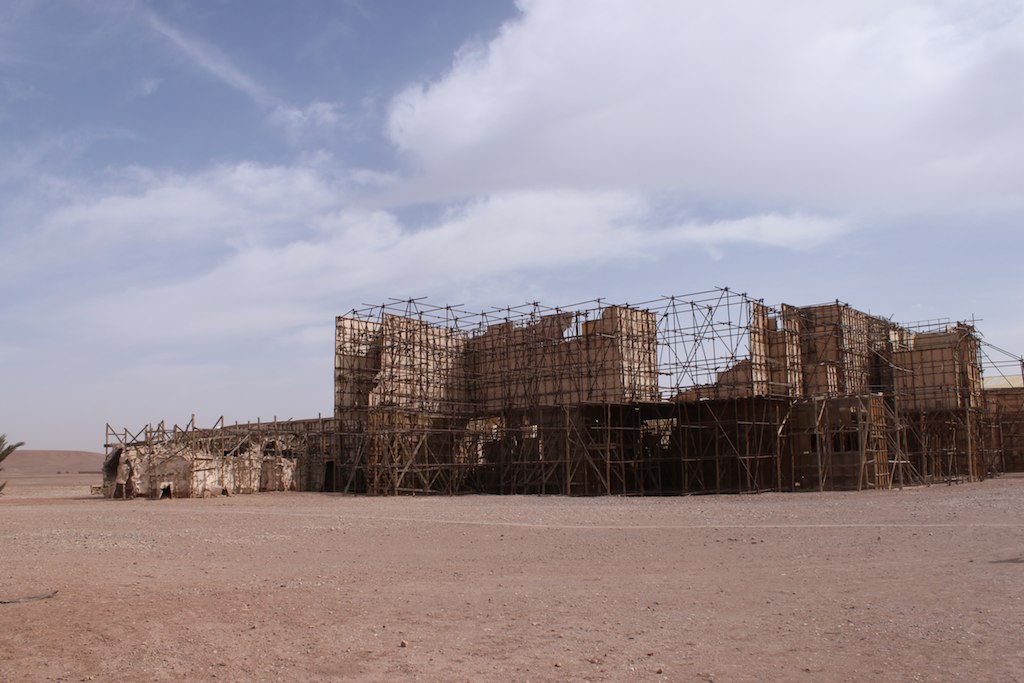
Atlas Studios in Ouarzazate, photographed by Richard Allaway in February 2011.
How one place can represent many worlds
A film set is built around what the camera will show. A wall can conceal a modern road, an entrance can lead to a much smaller space than the story suggests, and a painted surface can resemble another material. Costume, props, sound and editing complete the transformation. This explains why a place associated with Roman drama can also serve stories set elsewhere. The constructed setting provides the view required by the shot, while the film creates the wider imaginary world around it.
The finished image hides the joins
Imagine a scene assembled from an exterior gate, a courtyard and an interior filmed separately. Consistent light, costume and screen direction allow the viewer to read those spaces as one location. This is a general filmmaking technique, rather than a claim about a particular Ouarzazate production. Recognising it improves a studio visit. A surviving facade shows how one image was made, even if the screen geography depended on several places. It also gives the set builders and continuity teams their share of the story.
The Moroccan professionals behind the screen
The tourism office describes local training in production management, sets and machinery, props, costume, makeup and special effects. Those skills explain how location work can become a continuing industry. A complicated shoot requires people who can build, repair, coordinate and maintain objects under time pressure. Knowledge stays in a place through the people who return to these tasks, teach others and adapt techniques for each new production. Moroccan National Tourism Office Ouarzazate guide
What the rules say about local participation
The Moroccan Cinematographic Centre, or CCM, publishes requirements for Moroccan technicians and trainees across different types of production. The table distinguishes departments and project categories, including foreign productions. This framework shows that local participation is part of the formal production system. The percentages concern particular categories of technicians and conditions. They should not be added together or presented as a single percentage of every film crew. A department’s requirement answers a narrower question than the nationality of everyone on set. CCM Moroccan technicians and trainees requirements
How Morocco’s 30% production rebate works
The CCM describes a reimbursement of 30% of eligible Moroccan expenses for qualifying productions after March 28, 2022. Its published criteria include at least 10 million dirhams in spending in Morocco and at least 18 days of work, including set construction. The term “eligible” matters. Certain costs count under the rules, and a production must apply and provide documentation. The headline percentage therefore cannot simply be multiplied by a film’s total global budget. CCM official production support requirements
A worked example without promising a grant
If a qualifying project had 10 million dirhams of expenses accepted as eligible, 30% of that base would be 3 million dirhams. That calculation illustrates the percentage only. Actual support depends on the applicable conditions, examination of the file and the expenses accepted. The published rules also distinguish the total investment in Morocco from the part eligible for support. Producers need the current CCM guidance and their own project records to establish the amount. CCM official production support requirements
What happens before the camera rolls?
The CCM’s permit procedure requires material such as a synopsis, information on the project and the production’s administrative documents. Its published processing periods are tied to a complete application. This helps explain why filming a major scene involves preparation that tourists never see. The production needs an authorised framework as well as a suitable landscape. A permit process, a support application and permission to use a particular property answer different practical questions and have to be coordinated. CCM film production permit requirements
Why a rebate is not a measure of local prosperity
A film’s spending can reach hotels, builders, drivers and other services, but a headline budget alone cannot establish lasting jobs or household income in Ouarzazate. Some work is temporary, some equipment comes from elsewhere, and the distribution of payments matters. Assessing local benefit would require figures on employment, duration, procurement and the people receiving the money. The infrastructure and professional skills are visible elements of the industry. Their economic effects deserve measurement at the right scale.
Aït Ben Haddou has a history beyond film
UNESCO lists the Ksar of Ait-Ben-Haddou as an example of southern Moroccan earthen architecture. Houses cluster inside defensive walls, and the property reflects the forms of a pre-Saharan settlement. Its World Heritage significance is independent of the films associated with the area. A ksar is a fortified settlement, while “kasbah” is often used for a fortified building or compound. Keeping that distinction in view helps visitors understand what existed before any production arrived. UNESCO Ksar of Ait-Ben-Haddou listing
Conservation and filming have different timescales
A shoot is organised around a limited period, whereas an earthen building needs continuing care. Rain, drainage, surface repairs and the movement of people all affect the fabric. A useful visit therefore attends to how people constructed and maintained the settlement as well as recognising screen locations. PRESDA’s account of the Republic of Bou Regreg and Rabat–Salé offers another view of Moroccan places whose histories extend well beyond their most familiar modern image.
How to look at a studio visit
The national tourism office notes that visits depend on shooting activity. Access to a working set can therefore differ from access to a museum display. Check the operator’s current arrangements and ask which structures belong to which production. A weathered set can reveal the construction behind an illusion, while a preserved prop tells only part of the story without its label and provenance. This is also why a location guide and a film’s production record are different kinds of evidence. Moroccan National Tourism Office cinema destinations
The supplied hero is a reconstruction
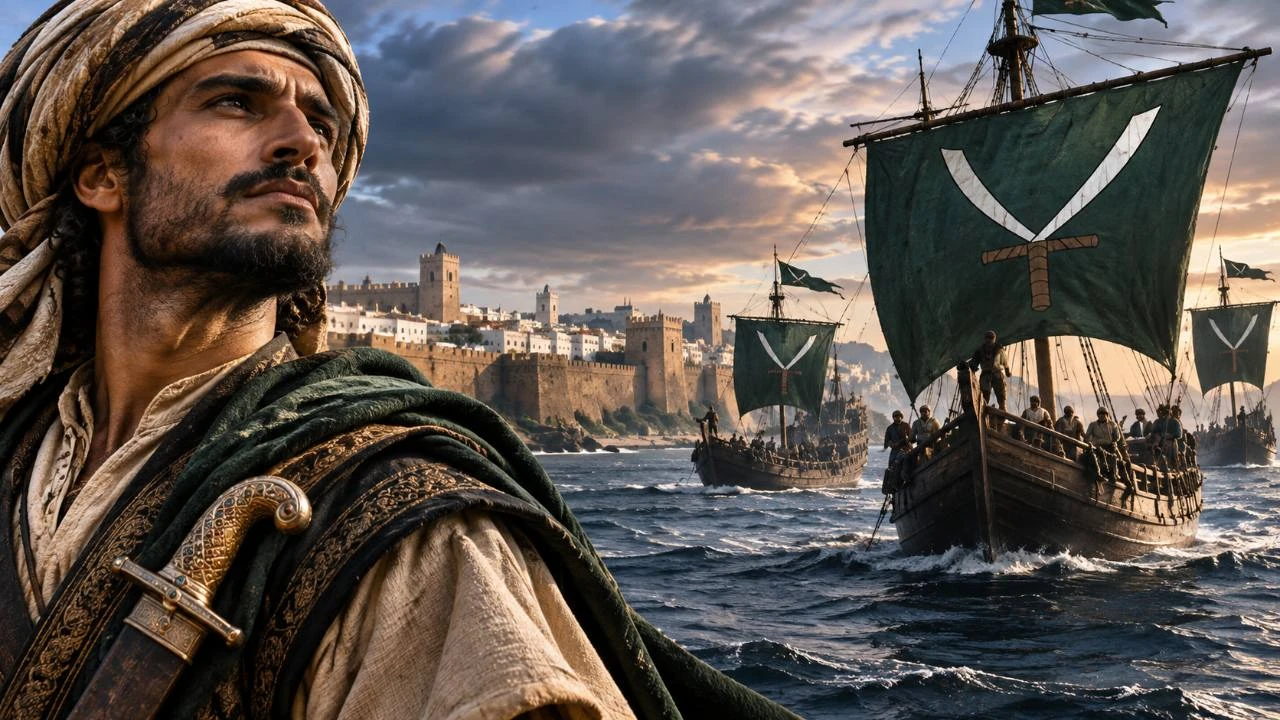
The opening image illustrates a fictional shoot. Its crew, performers and camera arrangement do not document a particular film or establish that an actor worked at the location shown. The supporting documentary image records an actual setting with a source and credit. The distinction allows the article to explain the craft vividly while preserving the difference between an imagined production scene and evidence about a named film.
FAQ
Frequently Asked Questions
Why is Ouarzazate called Africa’s Hollywood?
It became an internationally recognised base for location work and studio production, supported by Moroccan crews, workshops and services.
When did Atlas Studios open?
The Moroccan tourism office dates its establishment to 1983. Filming in the region began earlier.
Which films are associated with the region?
Official tourism material lists Lawrence of Arabia, Kundun, Gladiator and Kingdom of Heaven among others. Individual scenes used different combinations of locations and sets.
Does Morocco pay 30% of every film budget?
The CCM describes reimbursement of 30% of eligible Moroccan expenses for qualifying projects, subject to conditions. This is a different calculation from the total worldwide budget.
Is Aït Ben Haddou a movie set?
It is a historic fortified settlement recognised by UNESCO. Its architecture and heritage existed independently of its use as a film location.
PRESDA Dispatch
Stay Informed. Stay Aware.
A sharp briefing across AI, gaming, sport, business, world affairs, paparazzi, and lifestyle.