RJUKAN: THE NORWEGIAN TOWN THAT INSTALLED ARTIFICIAL SUNLIGHT
How Rjukan’s mountainside heliostats redirect natural sunlight, why the town lies in winter shade and what the 2013 installation actually changes.
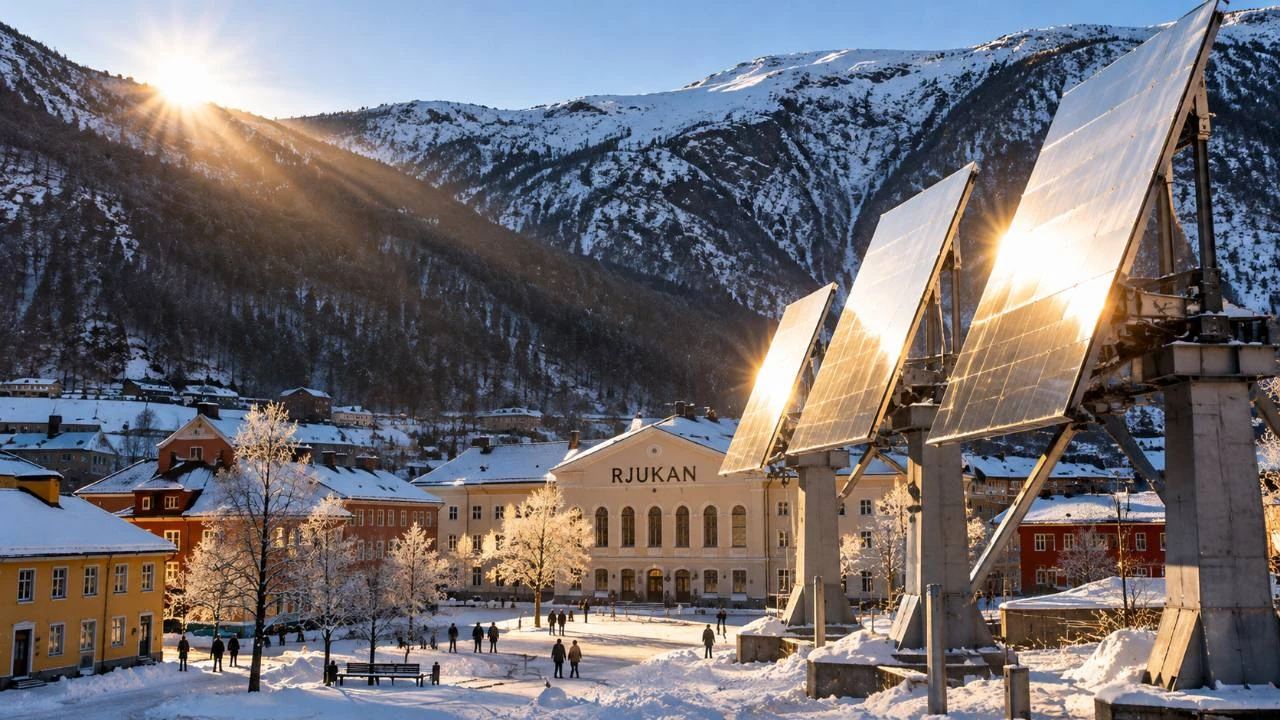
Editorial illustration supplied for PRESDA. The real sun mirrors stand on the mountainside above the town.
Rjukan’s winter sun mirrors redirect natural sunlight from a mountainside to the town square below. The installation opened in 2013, realising an idea discussed a century earlier. The effect can look like an artificial sunbeam, but the light itself comes from the sun. Computer-controlled mirrors change its path so that people can stand in a patch of direct light where the surrounding mountains would otherwise cast shade. VisitRjukan official sun mirror description Hydro account of the 2013 project
Why does Rjukan lose direct winter sunshine?
| Date | Milestone | Meaning |
|---|---|---|
| 1913 | Early mirror proposal associated with Kittilsen and Eyde | The local problem predates the modern technology |
| 1928 | Krossobanen cable car opens | Residents could travel up towards winter sun |
| 2005 | Martin Andersen revives the mirror idea | Start of the modern project’s development |
| 30 October 2013 | Three-mirror system unveiled | Natural sunlight redirected towards the square |
The Norwegian town occupies a deep valley with mountains that block the low winter sun. VisitRjukan describes shade from roughly mid-October to mid-March at the valley bottom. That is a local horizon problem. The sun still rises, and higher slopes can receive light while buildings below remain in shadow. The exact experience varies by position and date, which explains why the return of sunlight moves across different parts of town rather than occurring everywhere at one instant. VisitRjukan official sun mirror description
Daylight and direct sunshine are different
A place in shadow can still receive light scattered by the sky. Direct sunshine is the beam that reaches a surface along an unobstructed path from the sun. A mountain can block that path without making the whole day dark. This distinction explains both the problem and the solution at Rjukan. The mirrors provide a new path for some direct sunlight, while the town continues to receive ordinary diffuse daylight according to the weather.
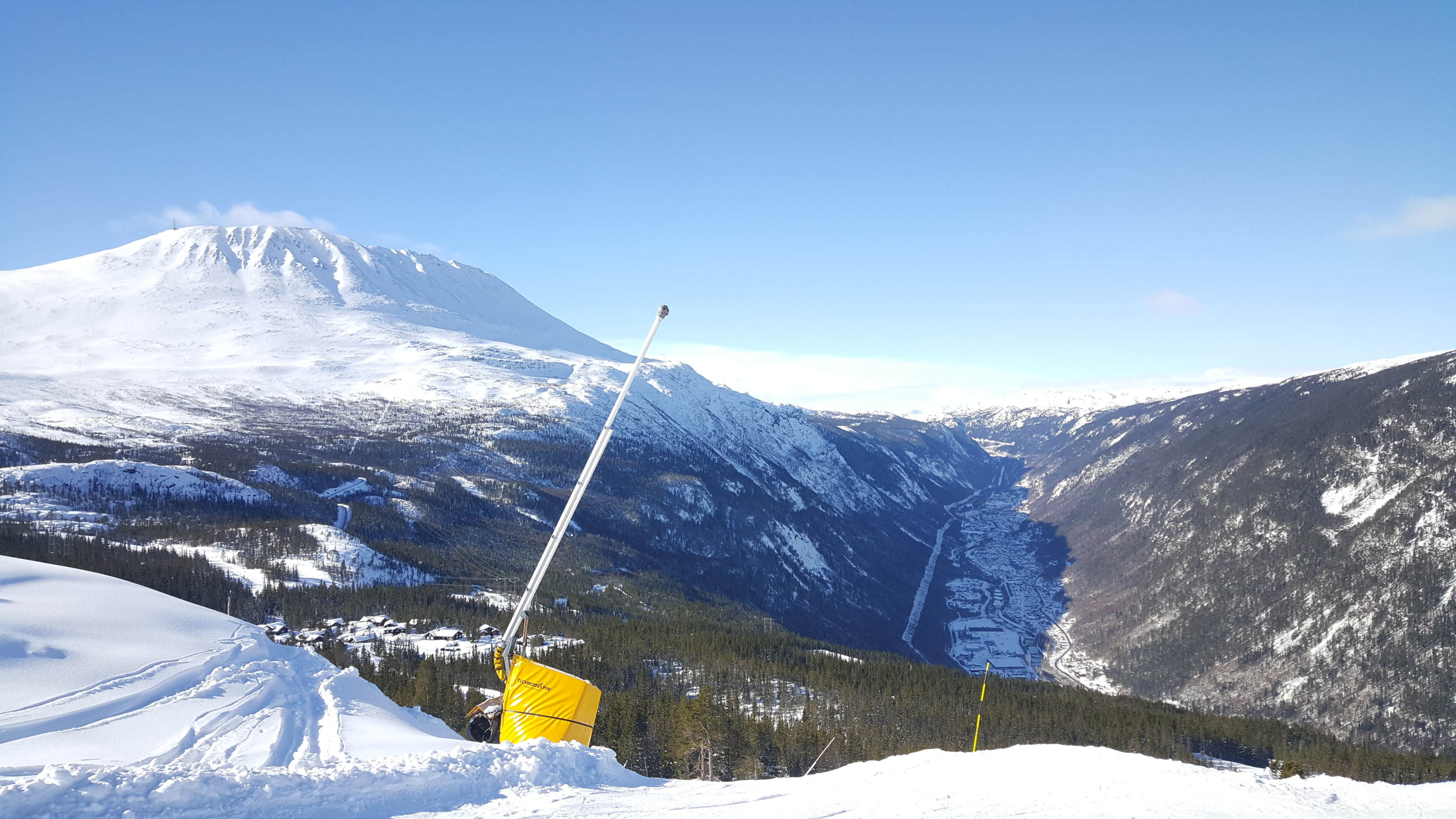
Rjukan’s valley seen from Gausta on 16 March 2019. The winter landscape explains the mountain shade; this wide view does not show the mirrors themselves.
Where are the real mirrors?
The three mirrors stand on the mountainside above Rjukan, at a location with access to winter sun. They reflect light down to a chosen area of the square. The supplied hero imagines large mirrors beside the town’s buildings; it is labelled as an illustration. Its arrangement should not be used to locate the actual installation. Documentary photographs of the real mountainside system provide the geographic evidence. The difference is central to understanding why the project works. VisitRjukan official sun mirror description
Why a mirror in the shade would not solve the problem
A mirror can redirect a beam that reaches it. If it stands in the same mountain shadow as the square, it lacks the direct sunlight the project is intended to deliver. Choosing a sunny installation point and a clear route to the receiving area therefore comes before tracking and control. The design uses the valley’s geometry to connect a sunlit surface above with a shaded public space below.
How do the heliostats follow the sun?
A heliostat is a mirror system that changes orientation to keep reflected sunlight directed towards a chosen target. The sun’s apparent position changes through the day and the seasons. A fixed mirror would sweep a moving patch across its surroundings; a tracking system adjusts the reflecting surface instead. At Rjukan, computer control keeps the reflected light aimed at the square within the operating conditions. The engineering report in Optica describes technology associated with solar installations adapted to this public-space project. Optica engineering report
The basic geometry behind the beam
Reflection follows the relationship between the incoming ray, the mirror’s surface and the outgoing ray. As the incoming direction changes, the surface has to turn if the target is to remain fixed. That adjustment is why a heliostat needs more than a shiny panel. It also requires a mount, movement, control and a structure capable of holding its orientation. The mechanism can guide sunlight; the available light still depends on the sun reaching the mirrors.
How much of the square receives light?
VisitRjukan lists each mirror as 17 square metres and describes an approximately 600-square-metre elliptical illuminated area on the square. These are different measurements: the collecting mirror surface and the patch of light below. The footprint depends on geometry and conditions, and the installation does not supply direct sun to every street or home. A person can move into the illuminated part of the square while nearby places remain in the mountain’s shadow. VisitRjukan official sun mirror description
An illuminated area is not an energy-efficiency rating
Square metres describe area. They cannot by themselves tell us how much light arrives per square metre, how bright the patch feels or the system’s energy efficiency. Reflection, angle and the size of the footprint influence the result. Photographs may also be taken at a time chosen to show the effect clearly. A useful explanation therefore keeps surface area, brightness and electricity consumption separate. The mirrors direct light rather than turning the square into an electrically illuminated outdoor room.
Who first proposed the idea?
VisitRjukan credits bookkeeper Oscar Kittilsen with proposing a sun mirror in 1913 and describes support from Sam Eyde, a founder of the industrial town. Visit Norway and Hydro foreground Eyde’s ambition to bring winter sunshine to the population. Those accounts describe different contributors within the early history. The local explanation is more informative than reducing a century-long project to a single inventor. An idea also needs technology, financing and a decision to make it work in a particular place. VisitRjukan official sun mirror description Visit Norway sun mirror history Hydro account of the 2013 project
The cable car was another historical response
In 1928, Krossobanen provided a way to take residents up to winter sunshine. This approach moved people towards light instead of redirecting the light down to them. Its history shows that the desire for sunshine was part of life in the industrial valley long before the mirrors opened. The cable car and the heliostats belong to different moments in that history, with different engineering and practical requirements. Visit Norway sun mirror history
How did the modern installation happen?
Artist and resident Martin Andersen revived the mirror idea in 2005. The project developed into the three-mirror installation unveiled on October 30, 2013. SKF’s engineering account describes heliostats on the steep mountains above the town, while Optica reports a project cost of five million Norwegian kroner. That is a historical nominal project figure, not a current annual operating bill. Equipment, supporting structures, installation and control formed part of turning a visual idea into a working system. SKF account of the heliostat installation Optica engineering report
Why it is also discussed as public art
The system changes a shared place and invites people to gather in the resulting light. Its public effect is therefore more than a technical measurement. Andersen has described the work as an art project, a framing retained in the local tourism account. That does not replace the optical explanation. It adds a question about how a town chooses to alter its surroundings and what an ordinary experience such as standing in sunshine can mean collectively. VisitRjukan official sun mirror description
What links the mirrors to Rjukan’s industrial history?
Rjukan formed part of the industrial landscape built around hydroelectric power and fertiliser production. UNESCO’s Rjukan–Notodden Industrial Heritage Site recognises the relationship between power generation, industry, transport and workers’ settlements. The sun mirrors are a later project, rather than the reason for that World Heritage listing. They belong in an account of a town whose environment repeatedly prompted engineering responses. The setting explains both the industrial opportunity and the winter shade experienced by its residents. UNESCO Rjukan–Notodden Industrial Heritage Site
Different ways of using natural energy
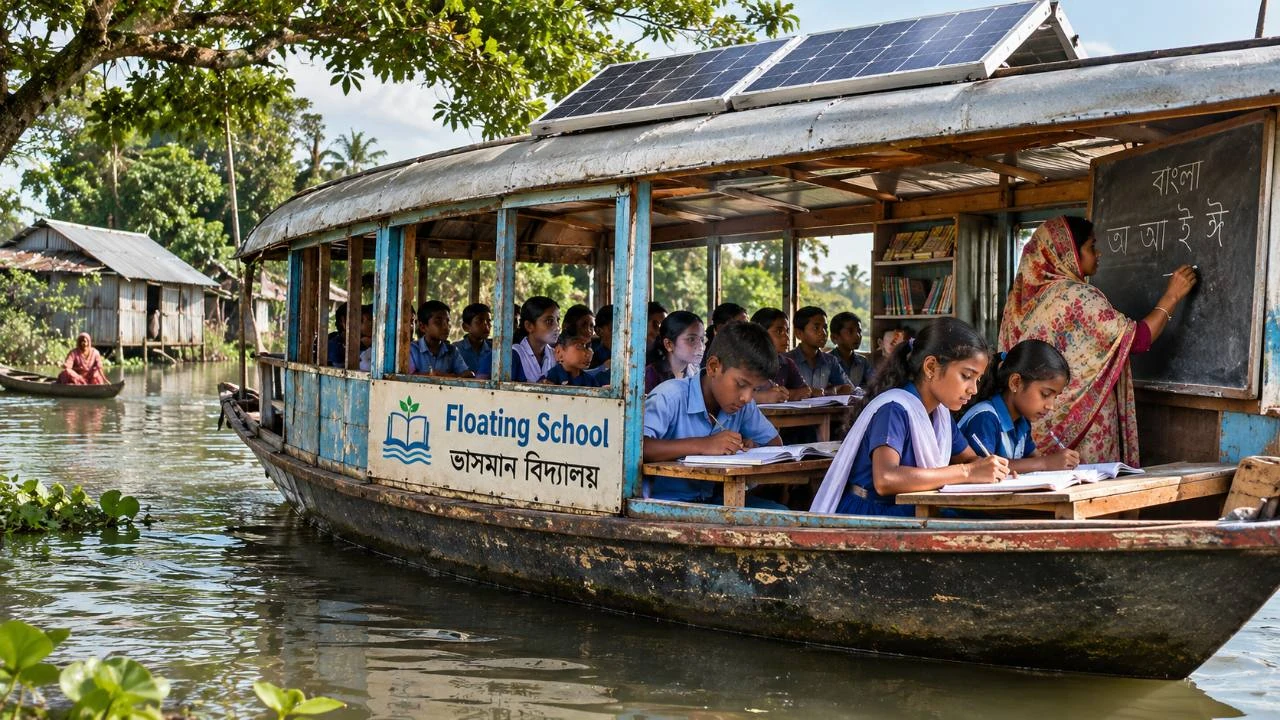
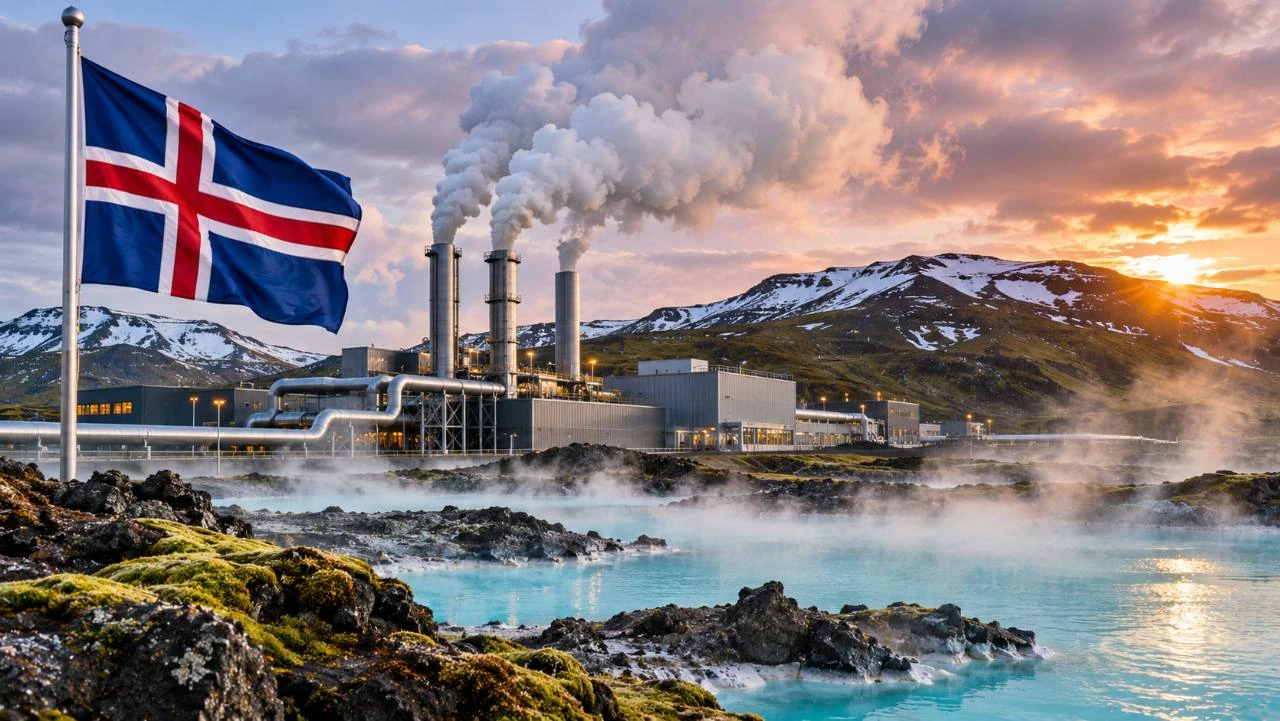
Hydropower, redirected sunlight and solar electricity involve different physical processes. A mirror changes the direction of light. A photovoltaic panel converts some incoming solar energy into electricity. Keeping these functions distinct helps make sense of photographs that show superficially similar flat panels. PRESDA’s feature on Bangladesh’s solar-equipped floating schools explores electricity used for learning, while its account of Iceland’s geothermal heating networks follows heat used in homes.
What are the practical limits?
Cloud cover can reduce or remove the direct beam, and the sun’s position determines when the installation can operate usefully. Snow, the condition of reflective surfaces, moving parts and control equipment all matter to maintenance. The project adds light to a selected place within those constraints. It does not change the valley’s climate or establish a medical treatment. A bright photograph documents an effect under particular conditions; it is not a promise of identical light on every winter day.
What a visitor can actually look for
The informative comparison is between the illuminated patch and the surrounding shadow, together with the mountainside location of the mirrors. That shows the path the project creates. Current local information is the appropriate source for operation and access, since weather and maintenance can affect the experience. Understanding the mechanism makes the sight more interesting: the light in the square has travelled along an engineered route from an otherwise inaccessible winter sun.
FAQ
Frequently Asked Questions
Is Rjukan’s sunlight artificial?
The light is natural sunlight. The engineered part is the system that reflects and directs it.
Where are the mirrors?
On the mountainside above town, where they can receive winter sunlight and redirect it to the square.
How many mirrors are there?
Three computer-controlled mirrors. VisitRjukan lists each as 17 square metres.
Does the system light the whole town?
It directs sunlight to a selected area of the square. The surrounding valley can remain shaded.
Does it work in cloudy weather?
Its useful direct beam depends on sunlight reaching the mirrors, so weather affects the visible result.
PRESDA Dispatch
Stay Informed. Stay Aware.
A sharp briefing across AI, gaming, sport, business, world affairs, paparazzi, and lifestyle.