Can eating less protein slow aging? What a review with 361 references found
Some animals lived longer on lower-protein diets. Human research mainly measured short-term metabolic changes. Here is what the review can establish.
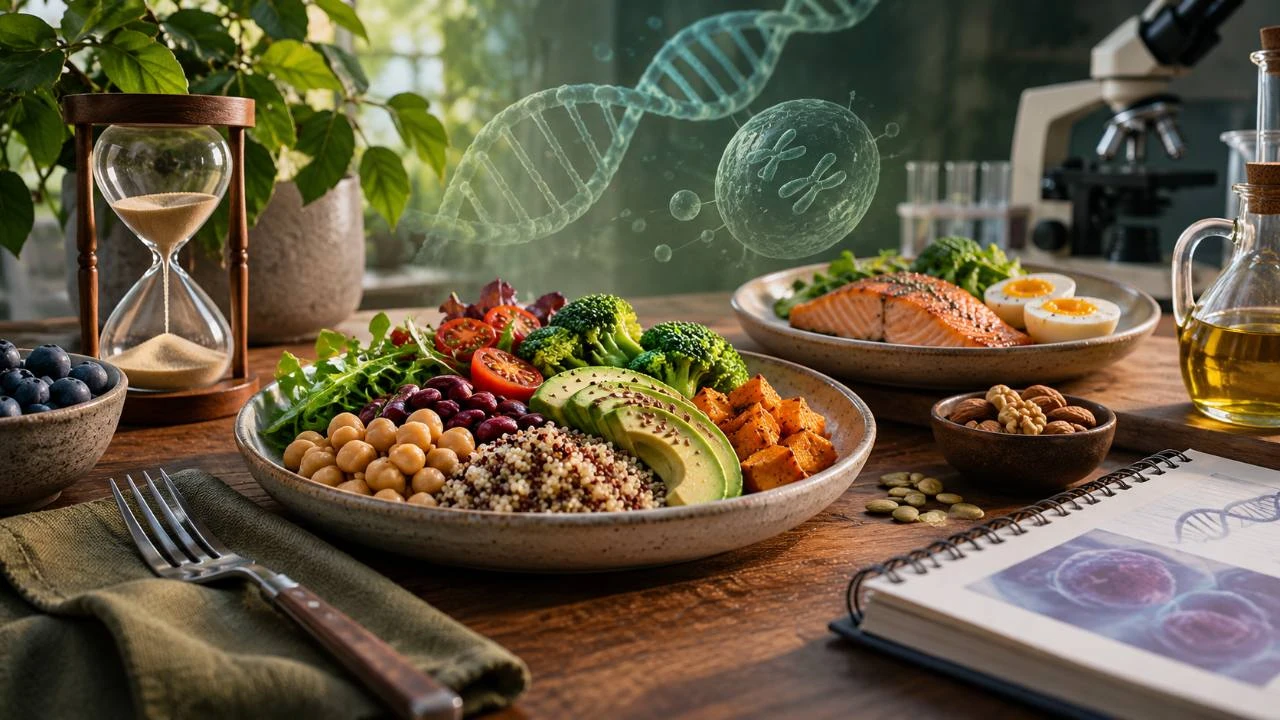
Editorial illustration supplied to PRESDA.
A mouse lifespan study can follow a group of animals to the end of their lives while a short human trial can record how a hormone responds to a new diet. Both belong in a review of protein restriction, but they answer different questions. The Cell Metabolism review draws on 361 references and finds that lower protein intake extended life in some animal models. No trial in the review establishes that reducing protein extends human lifespan. Cell Metabolism review
What the animal studies show
Experiments can change total protein, the ratio of protein to carbohydrates, or the amount of a particular amino acid. Those are separate interventions. Studies of methionine or isoleucine restriction, for example, can reveal which parts of a diet drive a response. Outcomes depend on the species, diet and experimental conditions. Cell Metabolism review
Why researchers track FGF21
FGF21 is a hormone involved in the response to nutrient availability. In one line of mouse research, animals lacking that hormone did not get the lifespan benefit seen under protein restriction. The review also discusses how cells sense amino acids through pathways that include mTORC1 and GCN2. These experiments help test causal mechanisms in animals. Cell Metabolism review
What researchers measured in people
A Nature Metabolism study in lean men found higher circulating FGF21 and a change in the energy needed to maintain body weight during protein restriction. A metabolic response over a short period cannot establish whether participants will stay healthy for longer, develop fewer diseases or live longer. Human trials designed around those outcomes would need much longer follow-up. Nature Metabolism human trial
Why this does not set a protein target
Protein also helps maintain muscle and physical function. Age, activity, health and what replaces the protein in a diet can change the trade-offs. A useful next test would track physical function and longer-term health alongside biomarkers. For now, the review frames a research question and offers no universal intake target for aging. European Food Information Council
Why the comparison diet matters
Reducing protein in a laboratory diet raises a second question: what replaces it? A diet can change in several ways at once, including its total energy and the balance of carbohydrate and fat. Researchers also distinguish diets with less total protein from diets that restrict a particular amino acid. Those interventions can test different mechanisms, so a result from one cannot automatically be assigned to the other. The review discusses them separately. Source · pmc.ncbi.nlm.nih.gov
From a biological mechanism to a human outcome
An intervention may change a hormone or a metabolic measurement during a study. That can show how the body responds under those conditions. To establish a benefit for aging in people, researchers would need outcomes that measure a lasting change in health or survival, with enough follow-up and a comparison capable of separating the intervention from other causes. The animal findings and measured human responses therefore belong at different levels of evidence. Source · pmc.ncbi.nlm.nih.gov
What would show slower aging in people?
A blood marker can indicate that the body responded to a diet. To establish slower aging, a trial would need to show that meaningful outcomes, such as physical function or age-related disease, changed over enough time to distinguish an enduring effect from a short-term response. Even a reproducible result for one marker does not tell researchers whether the same diet helps older adults maintain strength. Source · Cell Metabolism review Source · Nature Metabolism human trial
What replaces the protein matters
A diet with a lower share of calories from protein necessarily changes something else. Researchers must ask what replaced it, whether participants ate the same total calories and whether the diets matched in other respects. Comparing diets also requires attention to individual amino acids. An experiment that changes one amino acid tests a narrower question than replacing a whole food, which can also change fibre or fat intake. Source · Cell Metabolism review
| Study design | What it measures |
|---|---|
| Animal lifespan study | Survival in the study species on specific diets |
| Short human diet trial | Responses measured over the intervention period |
| Long human follow-up | Whether health or functional outcomes differ over time |
For another example of how a scientific number depends on what researchers measured, see PRESDA’s guide to comparisons of human DNA.
FAQ
Frequently Asked Questions
Did the review test 361 diets in people?
No. It cites 361 references across animal, laboratory and human research.
Did the review prove longer life in people?
Human studies mainly measured shorter-term metabolic outcomes. Human lifespan benefits remain unproved.
PRESDA Dispatch
Stay Informed. Stay Aware.
A sharp briefing across AI, gaming, sport, business, world affairs, paparazzi, and lifestyle.