THE SELJUK EMPIRE: THE TURKIC DYNASTY THAT RESHAPED THE MIDDLE EAST
Explore the Great Seljuks, Alp Arslan, Manzikert, Malik Shah and Persian culture, with a sourced timeline and a clear distinction from the Sultanate of Rum.
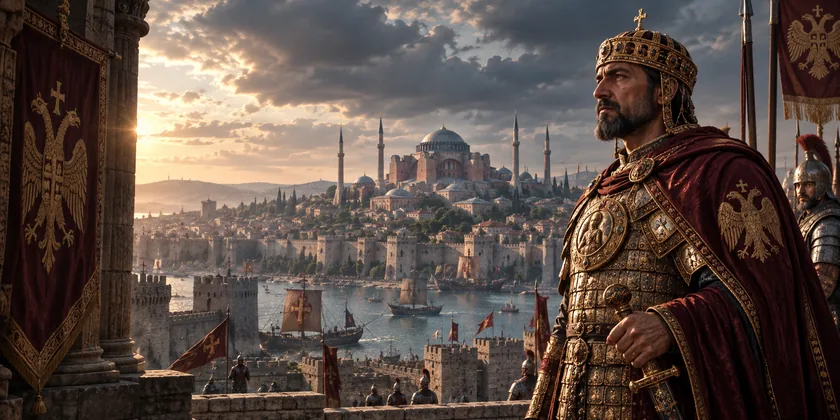
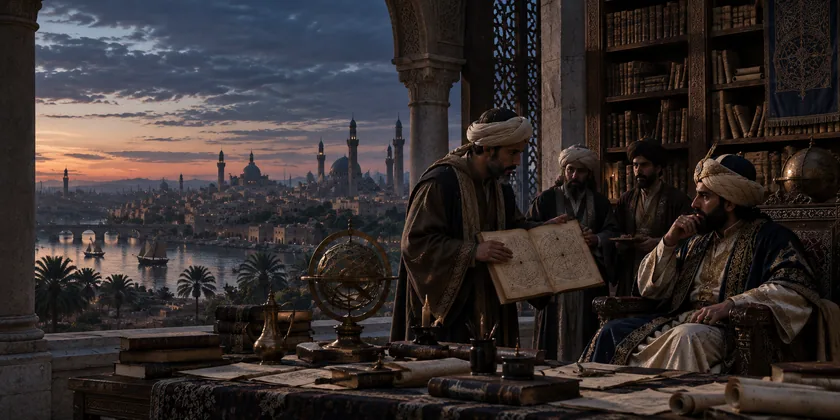
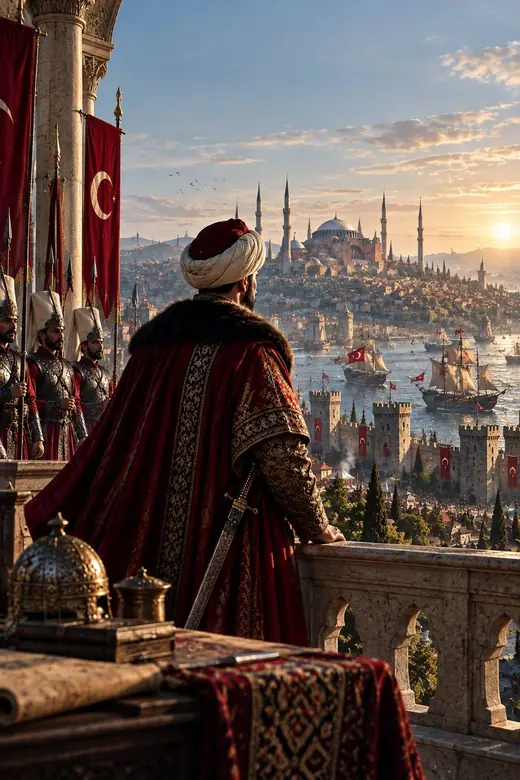
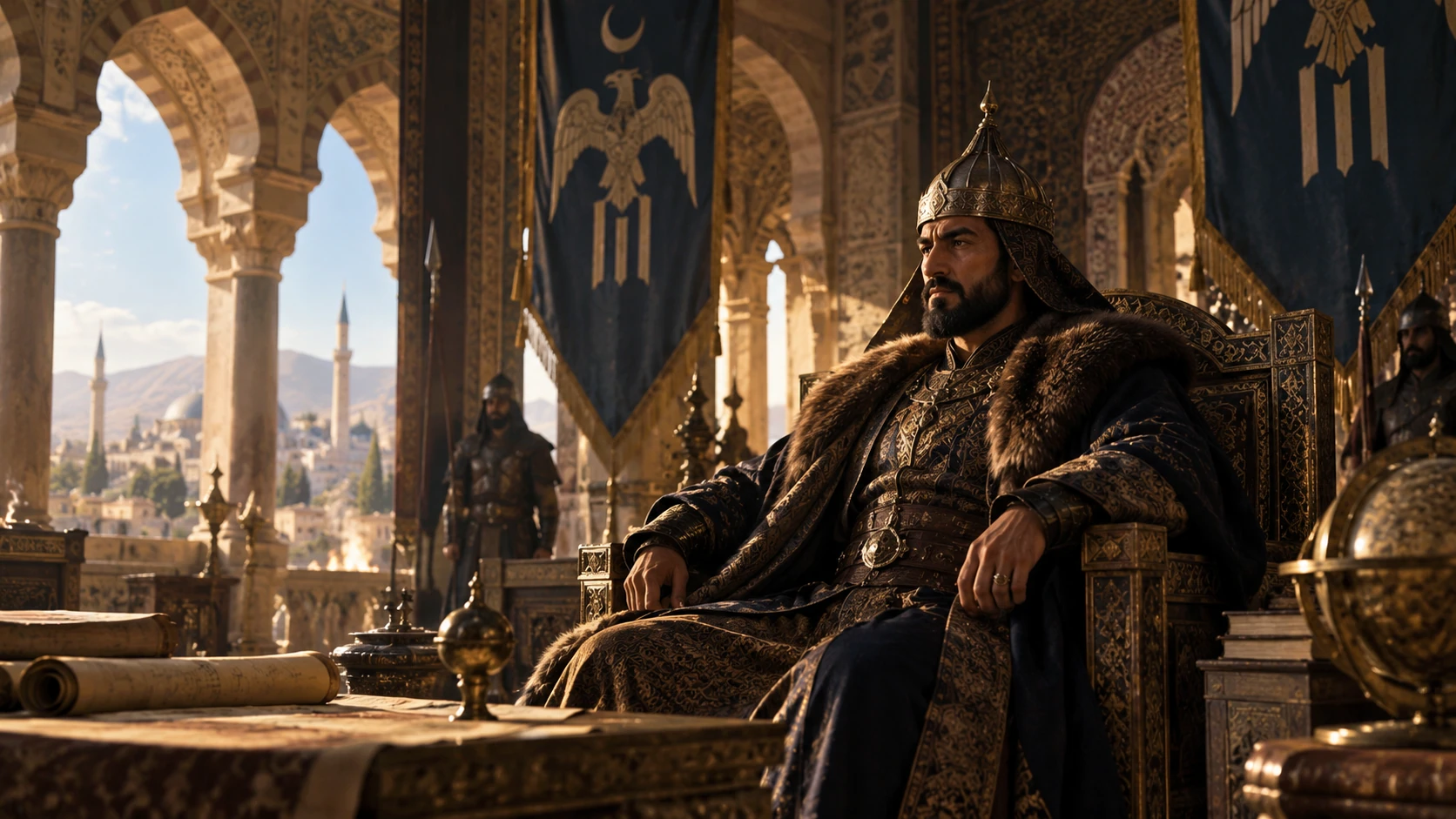
AI-generated historical reconstruction. The ruler is not an authentic portrait of Alp Arslan or another identified historical person.
The Seljuks were an Oghuz Turkic dynasty whose eleventh-century expansion transformed Iran, Iraq and neighboring regions. Their victories established a new military order around the Abbasid caliphate, while Persian administrators, scholars and builders helped shape imperial life. The Great Seljuk Empire and the later Sultanate of Rum were related but distinct states. Neither was the Ottoman Empire under an earlier name.
Their story is often compressed into a horseman, a bow and one famous battle. The fuller history is more compelling: pastoral families becoming imperial rulers, a caliph negotiating with a sultan, cities sustaining mobile courts, and an empire powerful enough to reward its commanders yet unable to settle succession peacefully. Its achievements and its fragility grew from the same difficult task of governing diverse people across immense distances.
Oghuz origins: from Seljuk Beg to his grandsons
The dynasty took its name from Seljuk Beg, an Oghuz leader associated with the lower Syr Darya frontier. Traditions link the family’s movement toward the Muslim world with conversion to Islam, but its early history survives through accounts containing legendary elements. Iranica’s entry on Jand explicitly places the town within those semi-legendary origin narratives. A polished founding story should not be mistaken for a contemporary family archive.
Seljuk’s grandsons Tughril Beg and Chaghri Beg built the durable political breakthrough. Claude Cahen’s account of Chaghri describes migration into Khorasan, conflict and negotiation with established rulers, and the search for pasture. These were not movements through empty land. Farmers, towns, governors and rival pastoral groups already competed for resources. The brothers’ success depended on organizing followers and finding a place within an existing regional order before overturning parts of it.
Dandanaqan, 1040: defeating the Ghaznavids
At Dandanaqan in 1040, near Merv in present-day Turkmenistan, Seljuk forces defeated the Ghaznavid army of Masud I. C. Edmund Bosworth’s historical entry emphasizes the Ghaznavids’ supply difficulties amid drought and famine. The victory secured the Seljuks’ position in Khorasan. It did not destroy the Ghaznavid dynasty, which retained other territories. Nor does a dramatic medieval army figure become a reliable modern headcount merely by being repeated.
This was a contest over how an army could move, feed and fight, not proof that one weapon always defeated another. The brothers divided responsibilities: Chaghri remained important in the eastern lands, while Tughril expanded westward. Their partnership reminds us that imperial formation was a family enterprise with multiple centers. Dandanaqan is a useful starting point for the empire, although Tughril had already established authority at Nishapur in 1038.
PRESDA DATA GRAPHICS
The Seljuk world: distinct turning points
- 1038Tughril establishes authority at Nishapur
- 1040Dandanaqan: Ghaznavid defeat in Khorasan
- 1055Tughril enters Baghdad
- 26 August 1071Manzikert: Romanos IV defeated and captured
- 1072–1092Malik Shah’s reign and maximum imperial extent
- 1092Deaths of Nizam al-Mulk and Malik Shah; succession crisis
- 1097First Crusade: Nicaea and Dorylaeum; Rum branch
- 1118Sanjar becomes senior sultan
- 1141Sanjar defeated at Qatwan
- 1153Sanjar defeated and captured by rebellious Oghuz
- 1157Sanjar dies; conventional eastern endpoint
- 1194Western Seljuk line ends after Tughril III’s defeat
Events and reigns, not a scale of imperial strength. Rum continued separately into the early 14th century.
Sources: Iranica · Chronology · Malik Shah
Baghdad, 1055: a sultan beside a caliph
Tughril entered Baghdad in 1055, ending Buyid control there and presenting himself as a protector of the Abbasid caliphate. The Metropolitan Museum’s historical overview identifies this as a defining change in the political setting. Military supremacy belonged increasingly to the sultan; the caliph retained religious prestige and a crucial role in legitimizing rule. The relationship was negotiated and sometimes strained, rather than a simple transfer of every kind of authority.
Calling this a restoration requires specifying what returned. It did not recreate the early Abbasid empire’s centralized command. Recognition, ceremonial honors and dynastic ties helped connect different institutions whose interests could diverge. Baghdad also contained scholars, merchants and communities with their own influence. The Seljuks had to govern through those relationships. PRESDA’s Abbasid history explains why the caliphate’s political weakness did not make its symbolic and institutional importance disappear.
Alp Arslan: expansion beyond a single battlefield
After Tughril’s death in 1063, his nephew Alp Arslan emerged as sultan. His conventional reign dates are 1063–1072. He campaigned in the Caucasus and confronted rivals in both western and eastern frontier regions. Iranica’s scholarly biography situates Manzikert within that broader career. An account focused solely on Byzantium misses the sultan’s concerns elsewhere, including the political importance of Syria and competition within the Seljuk family.
The Byzantine emperor Romanos IV Diogenes, who ruled from 1068 to 1071, sought to restore security on the eastern frontier. Raids and disputed fortresses placed pressure on an empire whose resources and political loyalties were under strain. Both rulers operated within complicated strategic environments. Their meeting at Manzikert was consequential because it connected those pressures to the capture of an emperor, not because either side possessed a predetermined destiny to conquer or vanish.
Manzikert, 1071: victory, capture and contested explanations
On 26 August 1071, Alp Arslan defeated Romanos near Manzikert, modern Malazgirt in eastern Türkiye, and the emperor was captured. Mobile Seljuk cavalry and archery pressured Byzantine formations, while confusion and failures of coordination became central to accounts of the defeat. Details of deployments, withdrawals and commanders’ intentions differ across sources. This feature therefore gives no exact army totals, casualty percentages or supposedly verbatim dialogue between the sultan and his prisoner.
Georgios Theotokis’s study of the campaign challenges the older picture of total military annihilation and stresses the political consequences. Romanos was released, but his authority at home collapsed and civil conflict followed. Carole Hillenbrand’s source-based scholarship also examines how later Muslim accounts turned the battle into a powerful symbol. Victory is established; every memorable scene attached to it is not equally secure evidence.
PRESDA DATA GRAPHICS
Manzikert: result and consequences
Battle, 1071
Alp Arslan defeats and captures Romanos IV
Release
Romanos leaves captivity; this did not restore his authority at home
Political aftermath
Byzantine civil wars and contested leadership
Longer transformation
Migration, settlement and multiple states; no instant replacement of Anatolia’s population
Secure outcome and analytical sequence. No exact troop totals, casualty rates, invented dialogue or verified unit-by-unit battle plan is implied.
Anatolia changed gradually, not in one afternoon
Turkic movements into Anatolia preceded Manzikert. Afterward, civil wars, alliances with Turkish leaders, migration and competing principalities widened opportunities for settlement. Andrew Peacock’s history of Rum emphasizes this uneven, poorly documented formative period. Byzantine officials and communities did not disappear everywhere in 1071. The landscape changed through overlapping processes of military control, pastoral movement, urban government, language and religion, at different speeds in different places.
Turkification is therefore not a synonym for instantaneous population replacement. Greek, Armenian and other communities remained part of Anatolia’s history, while Turkish-speaking populations established increasingly durable political and social roots. Conquest could bring violence and displacement, but coexistence, employment and negotiation also mattered. A battle can create an opening without determining everything that follows. PRESDA’s Byzantine feature places these losses alongside later imperial recovery and a much longer history.
Malik Shah I and the meaning of a golden age
Malik Shah I ruled from 1072 to 1092, and the empire reached its greatest extent during his reign. Its center lay in Iran, with authority extending through Iraq and parts of Syria and with tributary relationships farther east. David Durand-Guédy’s biography makes an essential distinction: commanders, relatives and vassals governed different territories under different arrangements. A single-colored modern map can conceal the difference between direct control, dynastic affiliation and acknowledged overlordship.
Isfahan was especially important under Malik Shah, but imperial government remained mobile. The court, military camp and urban administration did not always occupy the same place. Stability depended on rewarding commanders and maintaining expansion as well as appointing officials. The phrase golden age captures patronage and relative strength, but is also a retrospective judgment. It should not suggest equal prosperity for every farmer or the absence of repression, rivalry and insecurity beneath the success of the court.
PRESDA DATA GRAPHICS
Malik Shah’s world at its late 11th-century height
Scroll horizontally to inspect the full graphic or table.
- Approximate Iranian–Iraqi–Khorasani core
- Northern Syrian extension, especially 1086–1087
- Transoxiana: suzerainty after 1089
- Rum: related branch, separate political history
Interpretive geographic map, not a surveyed medieval border. Areas are generalized and omit smaller dependencies; control varied by locality and date. City coordinates locate places, not the precise boundaries of their authority. Rum is not colored as a directly administered imperial province.
Sources: Iranica · Rum · Natural Earth
Nizam al-Mulk: administration, advice and schools
The Persian vizier Nizam al-Mulk served Alp Arslan and Malik Shah and became a central figure in Seljuk statecraft. His influence connected bureaucratic experience, patronage networks and relations with learned urban society. Neguin Yavari’s scholarship shows why later exemplary biographies cannot be read uncritically. The capable minister belongs to documented history, but the perfectly wise counselor whose every saying foretells the future also belongs to a literary tradition about rulers and their advisers.
His associated Nizamiyya schools supported Sunni learning and legal scholarship in cities including Baghdad and Nishapur. They were influential institutions, not the invention of education or a modern national university system. The Siyasatnama, also called Siar al-moluk, offers advice about justice, taxation, officials and military discipline. As a prescriptive political text with a debated transmission history, it reveals concerns and ideals. It is not proof that every recommendation was implemented throughout the empire.
PRESDA DATA GRAPHICS
Key rulers: distinguish office and territory
Scroll horizontally to inspect the full graphic or table.
| Ruler | Date / reign | Authority |
|---|---|---|
| Seljuk Beg | 10th-century origins | Eponymous ancestor; no invented imperial reign |
| Tughril Beg | 1038–1063 | Early authority from 1038; imperial breakthrough in 1040 |
| Chaghri Beg | 1040–1060 in Khorasan | Eastern co-founder, not a later sole imperial successor |
| Alp Arslan | 1063–1072 | Great Seljuk sultan |
| Malik Shah I | 1072–1092 | Great Seljuk sultan; maximum extent |
| Sanjar | 1118–1157 as senior sultan | Khorasan ruler from 1097 |
| Romanos IV | 1068–1071 | Byzantine emperor, not a Seljuk ruler |
Dates identify particular offices. Tughril’s early state-building and Sanjar’s earlier eastern rule are distinguished from later imperial authority.
Sources: Iranica · Chronology · Malik Shah
Sunni legitimacy in a diverse religious world
Seljuk rulers promoted Sunni institutions and drew legitimacy from connections with the Abbasids. This placed them in competition with the Fatimid caliphate and other sources of political and religious authority. Yet Sunni Islam itself contained different legal and theological traditions, and the territories they governed contained Shi‘i Muslims, Christians and other communities. Religious identity shaped patronage and conflict, but cannot by itself explain every alliance, tax decision or succession struggle.
Mosques, madrasas and charitable endowments linked learned elites to rulers and local society. Their influence depended on resources, appointments and personal networks, as well as doctrine. Criticism of opponents in court literature is evidence of political language, not a neutral description of entire communities. Reading these institutions carefully helps avoid two opposite mistakes: imagining a religiously uniform empire or treating religious legitimacy as mere decoration added to military rule.
Science, literature and Persian cultural influence
Persian administrative and literary traditions flourished under Turkic rulers, while Arabic remained important in religious learning and scholarship. Iranica’s survey of Seljuk literature describes patronage across courts rather than a single centrally directed cultural program. Poets and scholars sought sponsors, and their works could praise generosity, criticize circumstances or preserve competing understandings of power. Turkic origins and Persian cultural influence were compatible parts of this world, not mutually exclusive identities.
Omar Khayyam’s work illustrates the scientific dimension. His mathematical and astronomical career included association with Malik Shah’s calendar project, conventionally linked to the Jalali reform of 1079. The scholarly biography of Khayyam distinguishes historical evidence from later stories. Scientific achievement depended on expertise and patronage, not solely on a ruler’s brilliance. Nor should every verse later attributed to Khayyam be treated as a securely dated statement from the Seljuk court.
Architecture: building on an older urban world
The Friday Mosque of Isfahan is a particularly tangible legacy. Its Seljuk expansion developed the four-iwan courtyard and remarkable domed spaces, according to UNESCO’s site account. The monument includes earlier and later phases; it is not one intact building created at a single moment by one sultan. Its continued religious use matters alongside its place in architectural history, demonstrating how institutions and buildings outlive the governments that sponsored major transformations.
Brickwork, carved decoration, ceramics and metalwork offer further evidence of skilled production and varied patronage. Academic art-historical analysis cautions that a dynastic label does not precisely delimit an artistic period. Objects called Seljuk may come from different workshops and political settings, including successor territories. Their makers and users participated in networks extending beyond court boundaries. The architectural imagination of the supplied hero should therefore remain separate from the evidence of surviving monuments and collections.
PRESDA DATA GRAPHICS
Monuments and cultural achievements
Scroll horizontally to inspect the full graphic or table.
| Achievement | Evidence | Limit |
|---|---|---|
| Isfahan Friday Mosque | Seljuk expansion of an older complex; four iwans and major domes | Earlier and later phases remain part of the monument |
| Nizamiyya schools | Patronage of Sunni learning and jurisprudence | Not the invention of education or a modern national university system |
| Khayyam and the Jalali project | Astronomical and mathematical work; reform associated with 1079 | Later anecdotes and attributed verses require separate verification |
| Ceramics and metalwork | Skilled workshops and patronage across connected regions | A dynastic art label does not authenticate every object’s exact political context |
Comparison of institutions and surviving evidence, not photographs of a reconstructed palace.
Sources: UNESCO · Iranica · Khayyam · Nizam al-Mulk
Trade, farming and the fiscal foundations of power
Caravans and cities connected Iran and Iraq with Central Asian and Mediterranean routes, but agriculture supplied the revenue and food on which armies and urban life depended. Irrigation, access to water, pastoral movement and cultivation required continual negotiation. A commercially connected empire was not automatically a peaceful one. Campaigns, requisitioning and struggles over revenue could burden producers even when merchants and patrons benefited from wider routes and successful cities.
The iqta was an important but varied arrangement involving grants and revenue rights. A. K. S. Lambton’s analysis warns against assuming that every use of the term meant the same thing. Such assignments could support military service or officials without being identical to ownership of land in every case. No dependable empire-wide GDP, annual trade total or universal tax rate is available here. Institutional explanation is more useful than converting uncertain medieval revenues into invented modern dollar values.
Cavalry, archery and a changing military organization
Turkmen mounted archery supplied mobility and tactical flexibility, but Seljuk forces were more diverse than a single nomadic horde. Professional troops, military retainers and commanders with different origins became crucial to imperial power. Bosworth’s survey of armies describes the move toward standing, mixed forces supported by salaries and revenue assignments. Discipline, remounts, forage and leadership mattered alongside weapons. Tribal followers and professional soldiers could be allies while also competing for rewards and influence.
Byzantine armies likewise combined cavalry, infantry, archers and contingents of different origins. Their capabilities included fortified positions and established logistical institutions, not simply heavy men too slow to fight horse archers. At Manzikert the strategic situation, separated forces and coordination problems mattered as much as a generic comparison of equipment. The accompanying table compares military organization and tactical possibilities qualitatively. It is not a numerical simulation or proof that either army always fought in one fixed way.
PRESDA DATA GRAPHICS
Military comparison without invented headcounts
Scroll horizontally to inspect the full graphic or table.
| Aspect | Seljuk forces | Byzantine forces |
|---|---|---|
| Composition | Turkmen followers and increasingly important professional forces | Cavalry, infantry, archers and varied contingents |
| Mobility | Mounted archery and flexible movement | Cavalry capabilities alongside mixed formations |
| Resources | Forage, remounts, pay and revenue assignments | Supply, pay, fortifications and coordination |
| Campaign limits | Tribal and professional interests could compete | Separated forces and political tensions could undermine command |
Qualitative comparison. Both armies changed over time; equipment alone does not explain Manzikert or guarantee victory.
Society, women and the people below the court
Imperial society included cultivators, pastoral households, merchants, craftspeople, scholars, soldiers and people subjected to enslavement or coercive service. Their interests differed. The sources are much fuller about rulers than about the daily choices of ordinary families, so a definitive feature must also acknowledge uneven visibility. A luxurious surviving object or a palace scene does not establish what most people owned, wore or experienced. Elite culture provides a window, not a representative census.
Women also participated in dynastic politics and patronage. Terken Khatun, Malik Shah’s wife, played an important role in succession maneuvering after his death. Court accounts may portray politically active women through hostile conventions, making attribution and context essential. Recognizing their power does not prove uniform freedom for women across social classes. The family remained a political institution, with marriage, competing maternal households and the ambitions of princes shaping government alongside formal offices and military command.
Byzantium, Fatimids and neighboring powers
Seljuk strategy changed across frontiers. The Ghaznavids remained relevant in the east; Qarakhanid rulers, Caucasian powers and regional dynasties complicated any simple westward conquest narrative. In Syria, Seljuk princes and commanders confronted Fatimid influence, local rulers and one another. Control of a city could differ from control of its countryside. Overlordship could be recognized in one year and challenged in another, making the empire’s political geography a changing set of relationships.
The scholarly survey of medieval Iran places these shifts within regional dynastic history. Diplomacy, marriages and negotiated settlements could accompany warfare. The Seljuks and Byzantines were opponents, but Muslim rulers and Christian rulers did not form two permanently unified camps. Alliances served immediate interests. PRESDA’s history of Georgia offers another perspective on the Caucasus, where local rulers pursued their own strategies rather than merely reacting to imperial expansion.
The succession crisis after 1092
Nizam al-Mulk and Malik Shah both died in 1092. Competition among sons, relatives, households and commanders then weakened the coherence of imperial rule. Barkiyaruq and Muhammad Tapar belonged to the principal struggles over the western sultanate, while Sanjar built an eastern power base. Succession was not governed by an uncontested automatic rule that everyone accepted. Recognition depended on military support and alliances, and rival courts could claim authority at the same time.
Decentralization also had institutional roots. Princes governed territories, and atabegs, originally associated with guardianship of young rulers, could build substantial local power. Regional Seljuk branches and other dynasties developed different trajectories in Kerman, Syria, Iraq and Anatolia. The map did not simply break into equal pieces on one day. Some rulers kept dynastic titles while losing practical authority; others retained or rebuilt strong states. Fragmentation changed the distribution of power without ending every Seljuk institution immediately.
Crusades: a fragmented political landscape
The First Crusade entered a region already shaped by these rivalries. Its capture of Nicaea in 1097, with Byzantine participation, and victory at Dorylaeum struck the Anatolian Seljuks. Events in Syria and Palestine involved another set of rulers and conflicts. It is misleading to describe every opponent of the crusaders as one unified Great Seljuk army. Jerusalem was under Fatimid control when the crusaders took it in 1099, not simply the capital of a cohesive Seljuk front. Cambridge’s history of the Fatimids documents the city’s change of rulers.
Peacock’s account of Rum shows how the Anatolian state survived losses and gradually rebuilt its position. Byzantium also recovered territory, while later rulers in the Muslim world assembled new coalitions. The Crusades cannot be explained exclusively as a response to Manzikert, and they did not cause Sanjar’s much later eastern defeat. Understanding the geography separates related histories that popular summaries often compress into a single continuous war between two civilizations.
Sanjar: eastern strength and a broken settlement
Sanjar governed Khorasan from 1097 and held senior sultanic authority from 1118 until his death in 1157, with Merv central to his rule. The history of Khorasan describes both the region’s flourishing and its vulnerability. In 1141, the Qara Khitai defeated him at Qatwan. The setback weakened his authority beyond the Oxus and encouraged challenges from dependent rulers. It did not immediately erase his ability to campaign or exercise influence.
In 1153, rebellious Oghuz groups defeated and captured Sanjar, and Khorasan suffered destructive upheaval. His death in 1157 conventionally marks the end of the eastern Great Seljuk empire. Yet a western Seljuk line continued until 1194, when Tughril III was defeated by the Khwarazmshah. Different endpoints describe different political formations. The academic chronology helps keep those distinctions visible rather than presenting the whole dynasty as disappearing with one ruler.
Rum and the Ottoman connection: inheritance without identity
The Sultanate of Rum arose in Anatolia under a related branch associated with Suleiman ibn Qutalmish. Its beginnings are conventionally placed in the late eleventh century, but precise founding dates vary with the event chosen. Its development around Konya, expansion, architectural patronage and later Mongol domination belong to a separate history extending into the early fourteenth century. It outlived Sanjar and the western Seljuks. Rum’s name evoked the former Roman lands, not a modern national border.
The Ottomans emerged later among Anatolian principalities under Osman and his successors. Seljuk-era urban, religious and political traditions formed part of the wider environment they inherited, but the Seljuks did not found Osman’s dynasty. The Ottoman story involves new frontier coalitions and its own institutions. Connecting histories is valuable when it explains influences; it becomes misleading when it turns related regional developments into one dynasty with an uninterrupted succession.
The Seljuk legacy remains visible across Türkiye, Iran and the wider Middle East in monuments, institutions, languages of political culture and historical memory. Its significance lies in the connections it made between pastoral military power and urban societies, and in the way those connections survived changing borders. The empire reshaped its world, but that world was never exclusively the creation of its sultans. Remembering the people and institutions around them makes the achievement more comprehensible and the decline less mysterious.
The hero is an AI-generated historical reconstruction of an imagined Seljuk palace. The ruler on the right is not an authenticated portrait of Alp Arslan, Malik Shah or another named individual, and the setting is not documentary evidence of a particular court.
FAQ
Frequently Asked Questions
Who were the Seljuks?
The Seljuks were a dynasty of Oghuz Turkic origin. Their Great Seljuk empire combined Turkic military leadership with Persian administrative and cultural traditions and Sunni Islamic institutions.
What happened at Manzikert in 1071?
Alp Arslan defeated and captured Byzantine emperor Romanos IV on 26 August 1071. The defeat was important, but subsequent civil wars and migration helped transform Anatolia over time.
Was the Sultanate of Rum the same as the Great Seljuk Empire?
No. Rum was an Anatolian state ruled by a related branch, with a separate political history and sometimes hostile relations with the Great Seljuks.
Who was Nizam al-Mulk?
He was the influential Persian vizier associated with Alp Arslan and Malik Shah, administrative statecraft and the Nizamiyya schools. His writings require contextual reading, not treatment as a neutral government archive.
When did the Great Seljuk Empire end?
Sanjar’s death in 1157 conventionally marks the end of the eastern Great Seljuk empire. Related western Seljuk rule continued until 1194, and Rum survived much longer.
Did the Seljuks found the Ottoman Empire?
No. Osman’s dynasty emerged later in a different Anatolian political setting. Seljuk institutions and cultural traditions formed part of that wider inheritance, not a direct foundation by Alp Arslan.
PRESDA Dispatch
Stay Informed. Stay Aware.
A sharp briefing across AI, gaming, sport, business, world affairs, paparazzi, and lifestyle.