TUTANKHAMUN: THE GOLDEN TOMB THAT ASTONISHED THE WORLD
Inside the November 26, 1922 glimpse of Tutankhamun’s tomb: the discovery timeline, Egyptian workforce, golden mask, conservation and curse myth.
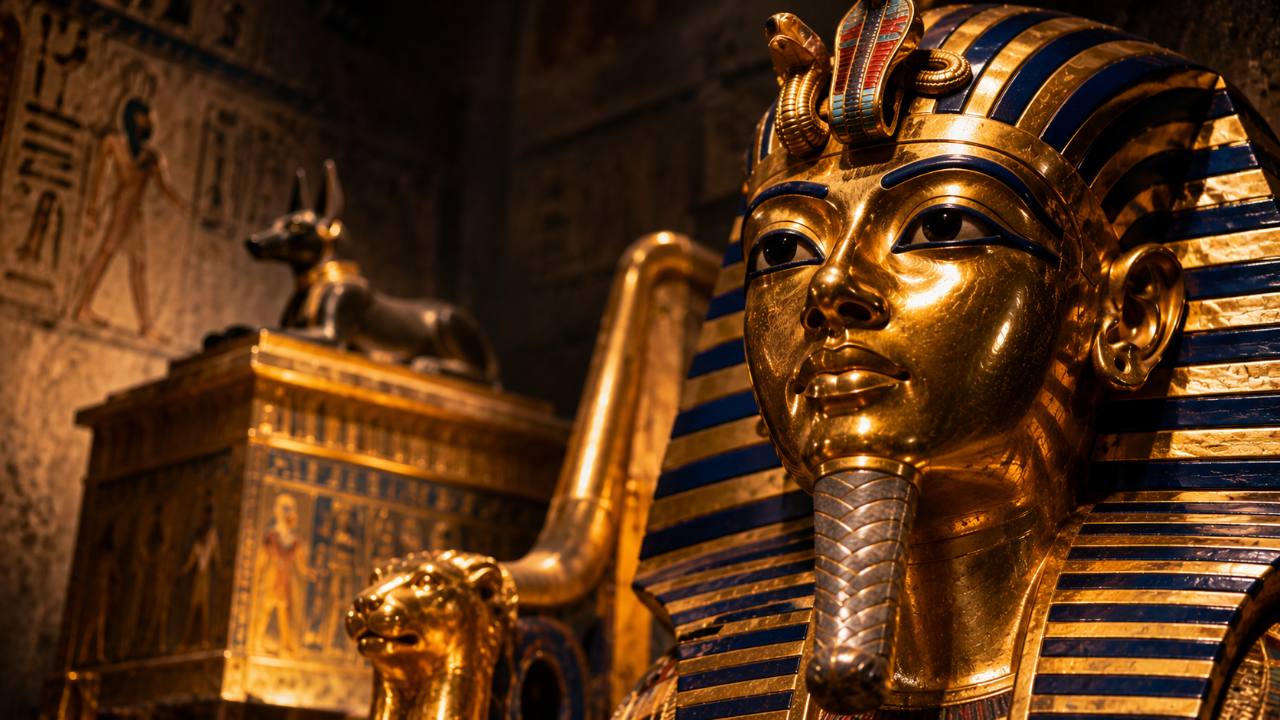
Supplied AI-generated historical illustration, preserved unchanged. It is not an excavation photograph or a reconstruction of what Carter saw on November 26, 1922.
On November 26, 1922, Howard Carter peered through a small opening into the antechamber of Tutankhamun’s tomb in Egypt’s Valley of the Kings. The celebrated glimpse of gilded objects was not the discovery of the entrance stairway, and it was not the opening of the burial chamber. Those events occurred on November 4, 1922 and February 16, 1923 respectively. Griffith Institute: first excavation season, 1922–1923
Separating those dates does not diminish the drama. It restores the discovery’s true scale: a brief first view followed by years of recording, conservation and removal. The golden mask that now dominates popular images of Tutankhamun was not waiting in plain sight on that November afternoon. An archaeological discovery is a process, not a single picture.
What Carter actually opened on November 26
The Griffith Institute’s reconstruction of the first season describes the clearing of ancient workmen’s huts near the tomb of Ramesses VI. A stairway appeared on November 4. After the arrival of Carter’s patron, Lord Carnarvon, the team cleared the entrance and passage. On November 26, a second sealed doorway separated the excavators from the antechamber. Griffith Institute: first excavation season, 1922–1923
| Date or record | What it establishes |
|---|---|
| November 4, 1922 | The entrance stairway emerges |
| November 26, 1922 | Carter looks through the second doorway into the antechamber |
| February 16, 1923 | Formal opening of the burial chamber |
| 1925–1926 season | The golden mask is documented as object 256.a |
| KV62 | The tomb’s designation in the Valley of the Kings |
Carter’s pocket diary records the opening of the second doorway at about four in the afternoon. The brevity of that entry contrasts with the more elaborate narrative that made the scene famous. The diary, excavation journal and later recollections are related sources, but they are not interchangeable transcripts of a conversation. The contemporary record should anchor the anniversary. Griffith Institute: Carter’s November 26–27 diary page
The first view was not the golden mask
Beyond the breach were furnishings, chariots, containers and statues. The burial chamber remained behind another doorway. The famous funerary mask is catalogued as object 256.a in records from the 1925–1926 season. Combining the mask, coffin opening and first antechamber glimpse into one night may produce a spectacular scene, but it compresses years of work into a false chronology. Griffith Institute: first excavation season, 1922–1923 Griffith Institute: the gold mask, object 256.a
Why this particular tomb mattered
Egypt’s Ministry of Tourism and Antiquities identifies KV62 as the tomb of an Eighteenth Dynasty king and emphasizes its exceptional relative preservation. Compared with other royal tombs in the Valley of the Kings, it is modest in size and decoration. Its global fame comes primarily from the survival of burial equipment on a scale rarely available to archaeologists in that cemetery. Egypt’s Ministry of Tourism and Antiquities: tomb of Tutankhamun
The objects mattered together, not just as individual valuables. Furniture, vessels, clothing and ceremonial equipment offered evidence of a royal burial’s material world. Their positions and relationships could reveal information that a detached masterpiece in a display case cannot. Recording how an object was found was therefore part of preserving what it could tell historians. Metropolitan Museum of Art: Harry Burton, the pharaoh’s photographer
Relatively intact does not mean untouched
The Metropolitan Museum’s account makes clear that ancient robbers had entered the tomb. It survived with extraordinary contents despite those intrusions. Calling it entirely unlooted or sealed forever erases the physical evidence. The real question is why so much remained, and how earlier disturbance can be distinguished from the original burial arrangement. Metropolitan Museum of Art: Harry Burton, the pharaoh’s photographer
The Egyptian workforce behind the famous names
The standard story foregrounds Carter and Carnarvon, but the Griffith Institute documents a large Egyptian workforce whose skilled labor made the excavation possible. Clearing, carrying, guarding and handling fragile finds were essential parts of the work. An account that credits only the person who looked through a doorway mistakes a memorable moment for the whole achievement. Griffith Institute: the Egyptian workforce
The archive also cautions against reading a photograph of an Egyptian boy wearing a pectoral as automatic proof of a particular discovery story. Images have their own production context. Recognizing Egyptian participation does not require converting every later anecdote into a verified fact; it requires taking the documented workforce seriously and acknowledging where individual contributions were poorly recorded. Griffith Institute: the Egyptian workforce
Photography created a record beyond the spectacle
Harry Burton, lent by the Metropolitan Museum’s expedition, photographed the excavation and objects systematically. The museum describes years of detailed recording that preserved stages of the work. These photographs are historical documents, with dates and contexts. They are different from modern colorizations, dramatizations and AI-generated interiors, even when all are visually persuasive. Metropolitan Museum of Art: Harry Burton, the pharaoh’s photographer
Why clearing the tomb took years
Opening a sealed room was only the beginning. The team had to document objects, assess their condition, stabilize vulnerable materials and prepare them for transport. Fragility could be hidden by the apparent solidity of gold or wood. Moving a decorated object quickly might preserve its outline while destroying textiles, surface details or evidence of its original arrangement. Metropolitan Museum of Art: Harry Burton, the pharaoh’s photographer
The archive separates seasons, rooms, object cards and conservation notes for a reason. A single famous artifact belongs to a much larger system of records. The mask’s number, 256.a, links it to that system rather than making it a free-floating image of ancient wealth. Following these records is a practical way to study how archaeological knowledge is produced. Griffith Institute: the gold mask, object 256.a
The curse: a powerful story without demonstrated supernatural evidence
Lord Carnarvon died on April 5, 1923, after the burial chamber had been formally opened. That death became central to the curse narrative. A temporal sequence, however, is not evidence that a tomb caused a death by supernatural means. Publicity can connect selected events while ignoring the many people who continued to live for decades. Griffith Institute: first excavation season, 1922–1923
A 2002 BMJ historical cohort study examined survival among people associated with the opening. It found no significant mortality association with the supposed exposure. This was a limited historical study, not proof that every excavation environment is harmless. It addressed a specific legend and found no support for its predicted pattern, a more defensible conclusion than repeating a list of ominous coincidences. BMJ, 2002: historical cohort study of the mummy’s curse
The continuing challenge is conservation
The tomb’s real modern risks are measurable. Getty’s scientific programme examined humidity, temperature, dust, carbon dioxide and air exchange. Its research also investigated brown spots on the paintings, already visible in early documentation. Conservation requires distinguishing active deterioration from older marks rather than assuming that every visible feature is a new threat. Getty: scientific investigation of the tomb’s environment
Getty and Egyptian authorities completed a major conservation project announced in 2019, including painting treatment, presentation improvements and environmental management. Visitor access and preservation have to be considered together in a confined space. Keeping a famous tomb available to future generations is a less sensational story than a curse, but a much more consequential one. Getty Conservation Institute: completed tomb conservation project
A discovery timeline with the dates kept separate
November 4, 1922: the first stairway step emerges. November 26: the antechamber is first viewed through the second doorway. February 16, 1923: the burial chamber is formally opened. April 5: Carnarvon dies. The 1925–1926 season documents the mask. Subsequent seasons continue the excavation and conservation rather than repeating the original discovery. Griffith Institute: first excavation season, 1922–1923 Griffith Institute: the gold mask, object 256.a
How to look at the golden tomb today
The supplied hero is an AI-generated illustration, not an excavation photograph or a faithful reconstruction of Carter’s first view. For documentary evidence, use the Griffith Institute’s object records and Burton photographs. A caption that identifies the difference protects the reader from mistaking a compelling visual for a primary source.
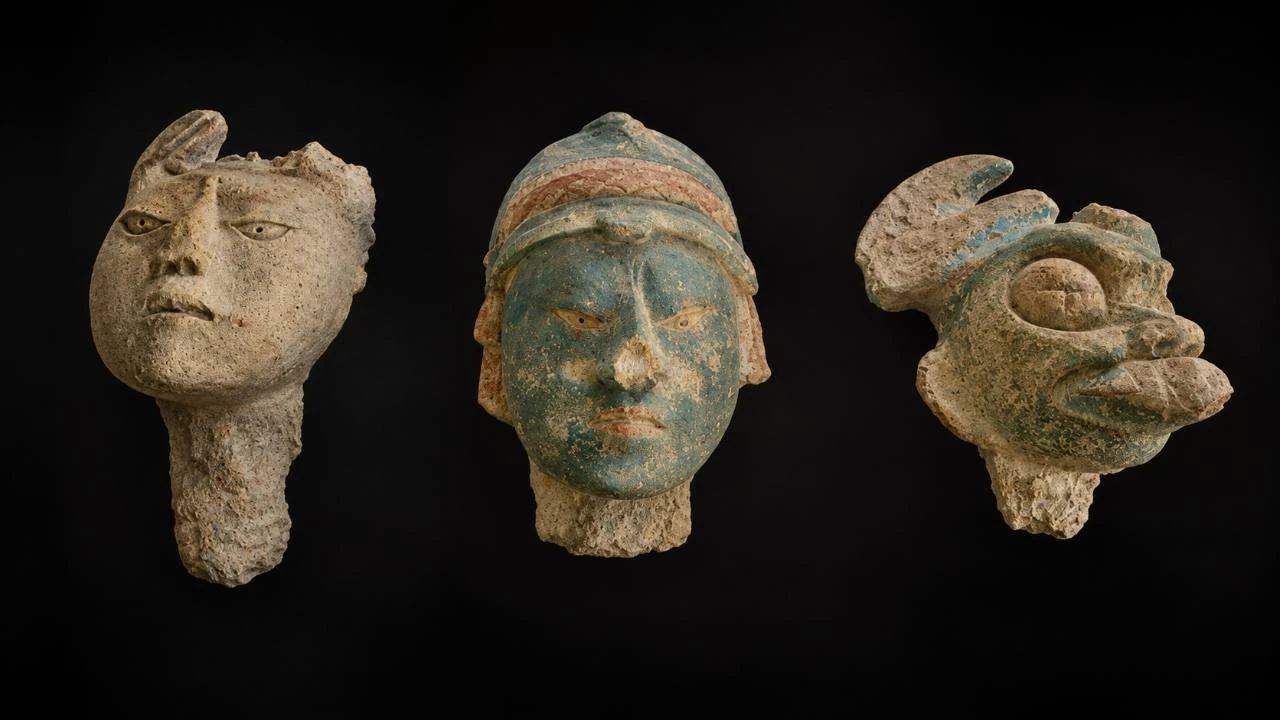
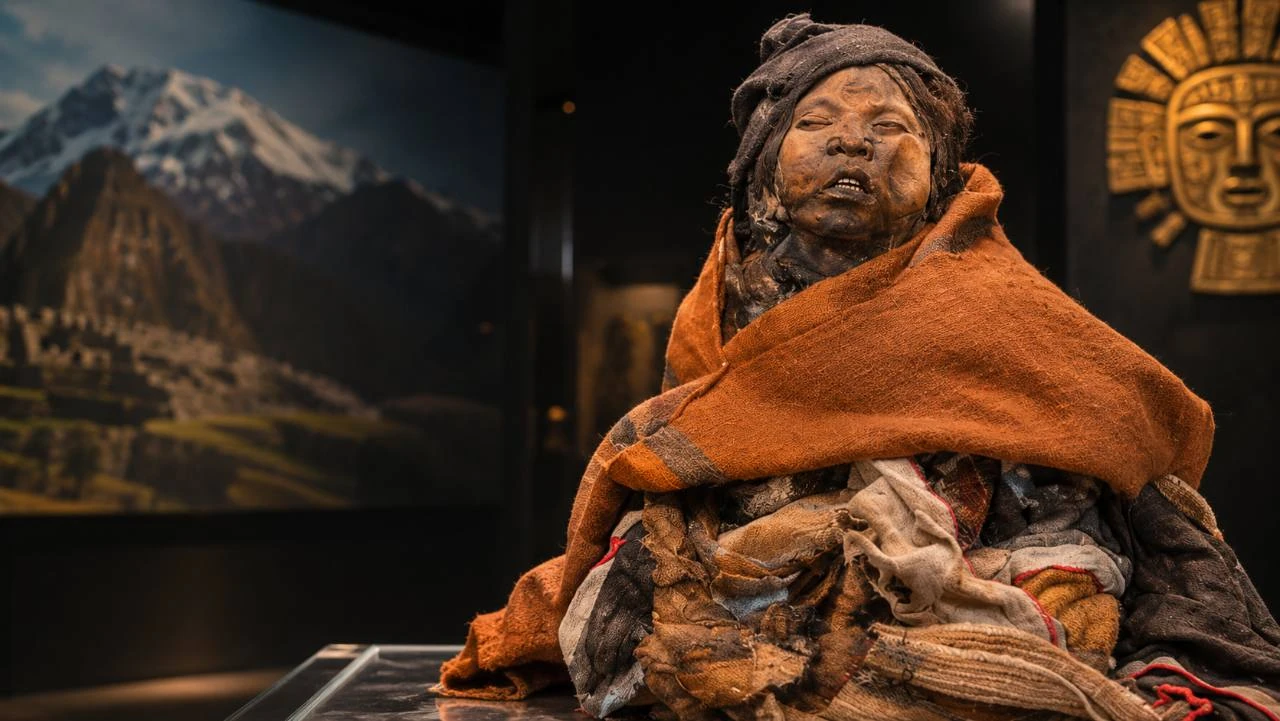
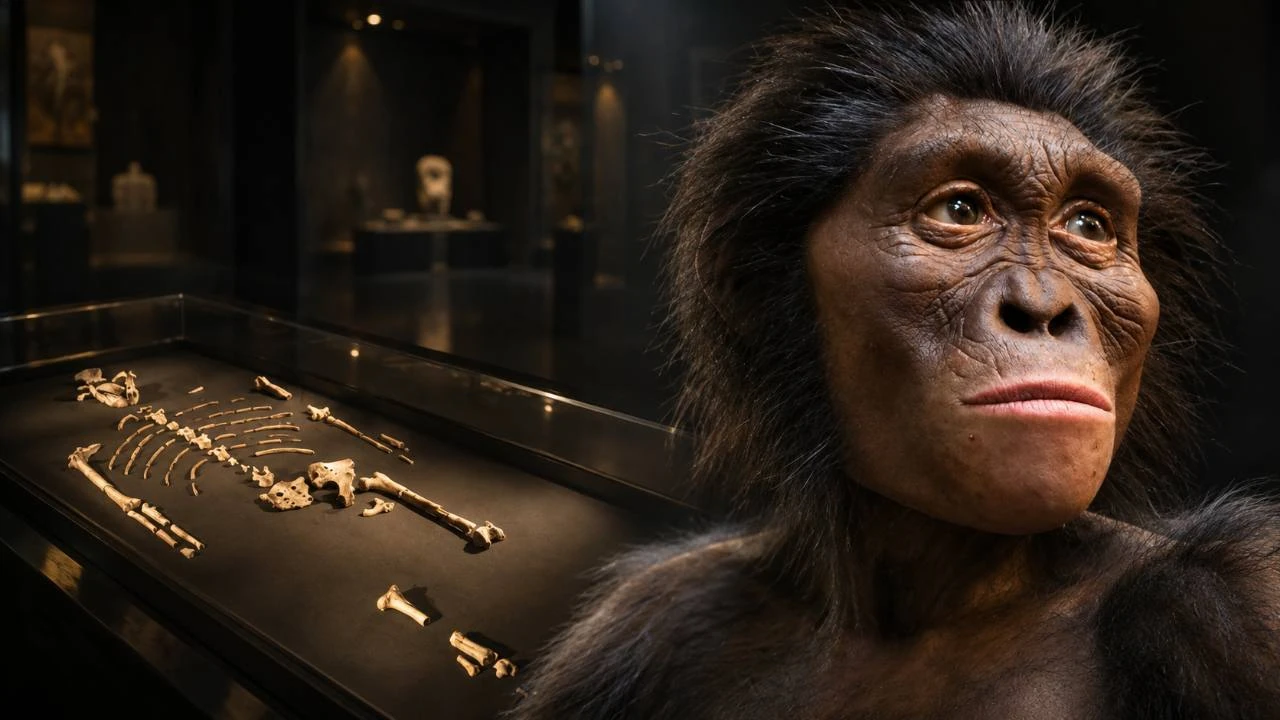
PRESDA’s features on Maya discoveries, Inca mummy research and Lucy’s fossil discovery explore the same larger question: how surviving material becomes evidence. Tutankhamun’s lasting importance lies not simply in gold, but in the patient work of connecting objects, people and records.
FAQ
Frequently Asked Questions
Was Tutankhamun’s tomb discovered on November 26?
The stairway was found on November 4, 1922. November 26 marks Carter’s first view through the second doorway into the antechamber.
Did Carter see the gold mask that day?
No. The mask belonged to the king’s burial equipment deeper inside. Its archive record belongs to the 1925–1926 season.
Was the tomb completely untouched?
No. It was unusually well preserved but had suffered ancient intrusions and theft. Relatively intact does not mean never entered.
Is there evidence for a supernatural curse?
No reliable evidence establishes one. A 2002 historical cohort study found no significant mortality association among the people it examined.
PRESDA Dispatch
Stay Informed. Stay Aware.
A sharp briefing across AI, gaming, sport, business, world affairs, paparazzi, and lifestyle.