UNESCO World Heritage: Nine archaeological sites that tell different human stories
From the pyramids of Giza to Rapa Nui, see where nine listed places are, what survives at each and what the UNESCO designation covers.
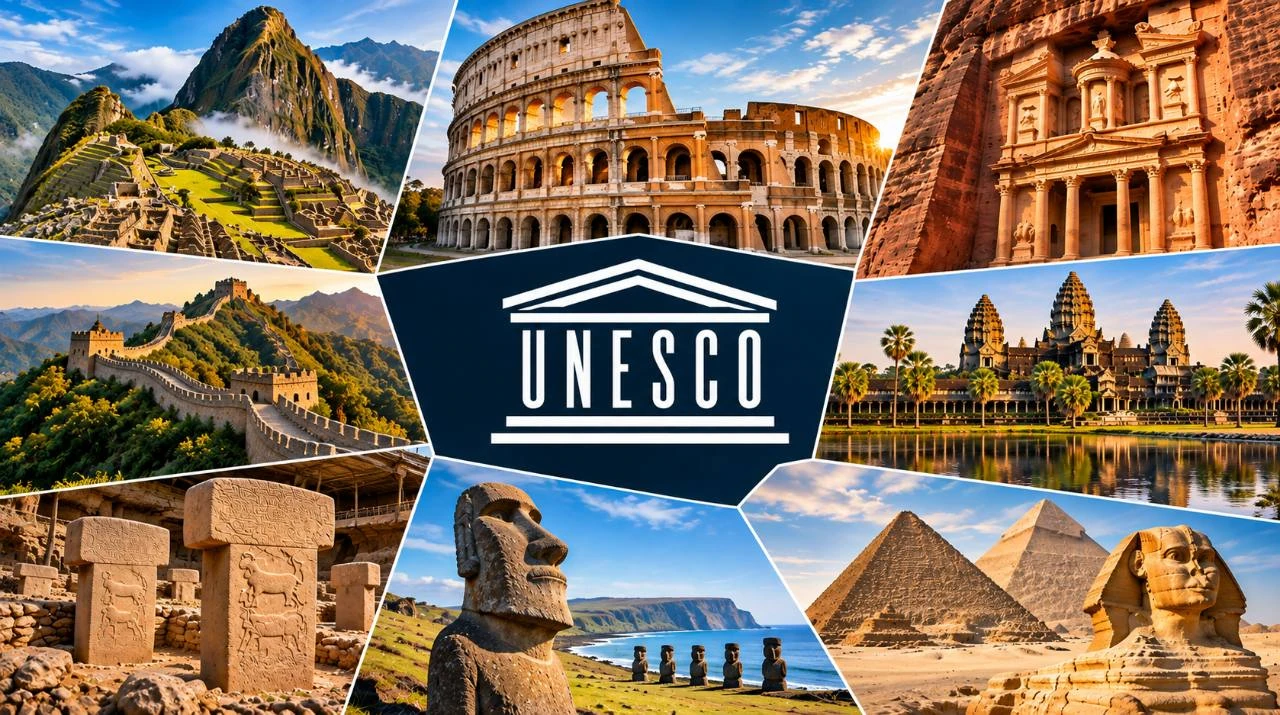
Independent editorial montage supplied to PRESDA.
A World Heritage listing identifies a property with outstanding universal value. It is a decision about recognition and conservation, and UNESCO does not rank the properties. The examples below show what archaeology can recover from royal graves, city streets, walls and ceremonial landscapes. UNESCO selection criteria
Africa
Giza’s pyramids, Egypt
The pyramids and Sphinx at Giza form part of the larger Memphis necropolis property, inscribed in 1979. Its tombs, temples and pyramids preserve the funerary architecture of ancient Egypt beyond the most familiar skyline. UNESCO: Giza’s pyramids, Egypt
Great Zimbabwe, Zimbabwe
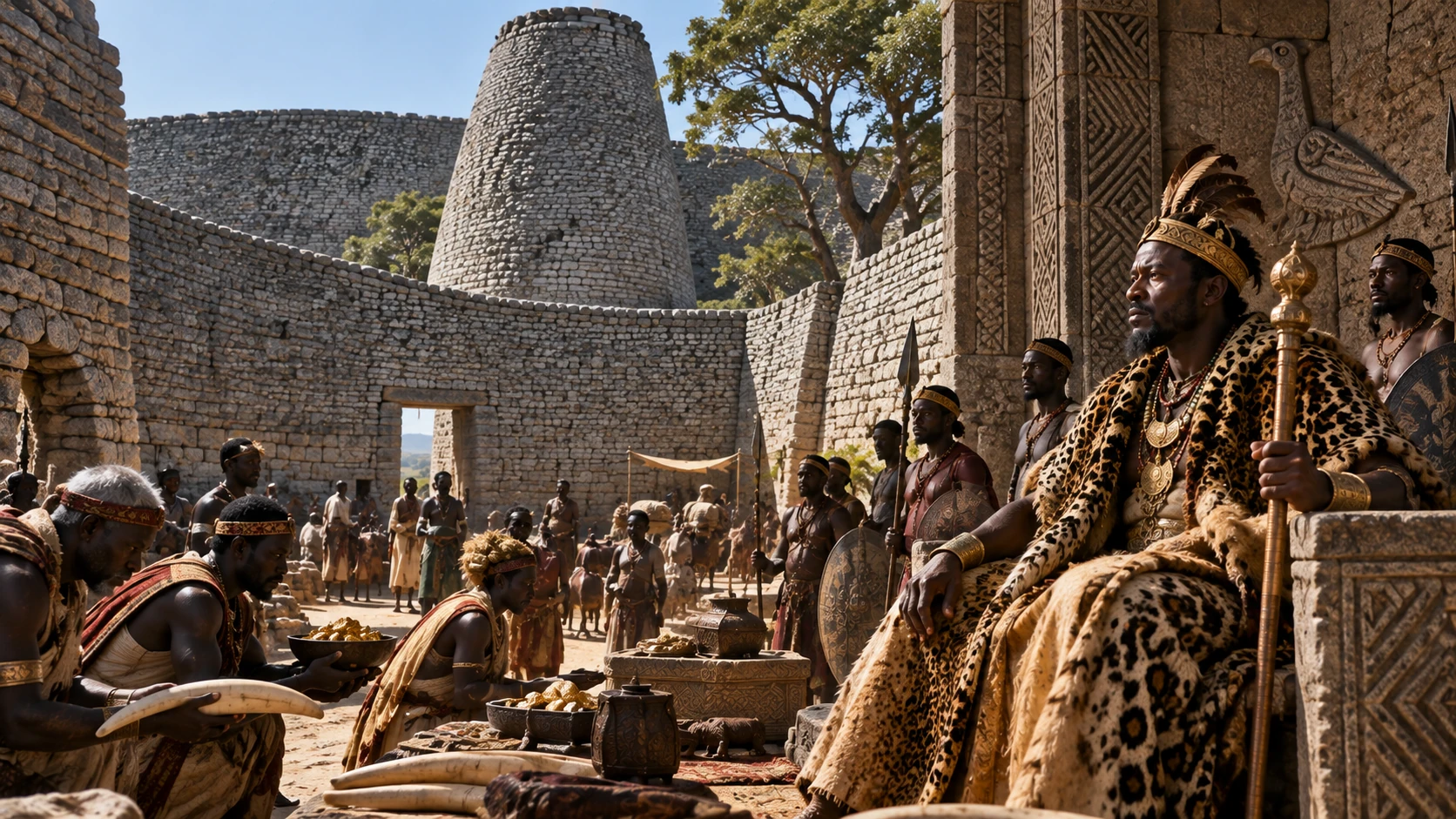
The dry-stone walls near Masvingo testify to a medieval centre of power and trade built by ancestors of Shona-speaking communities. UNESCO inscribed the national monument in 1986. UNESCO: Great Zimbabwe, Zimbabwe
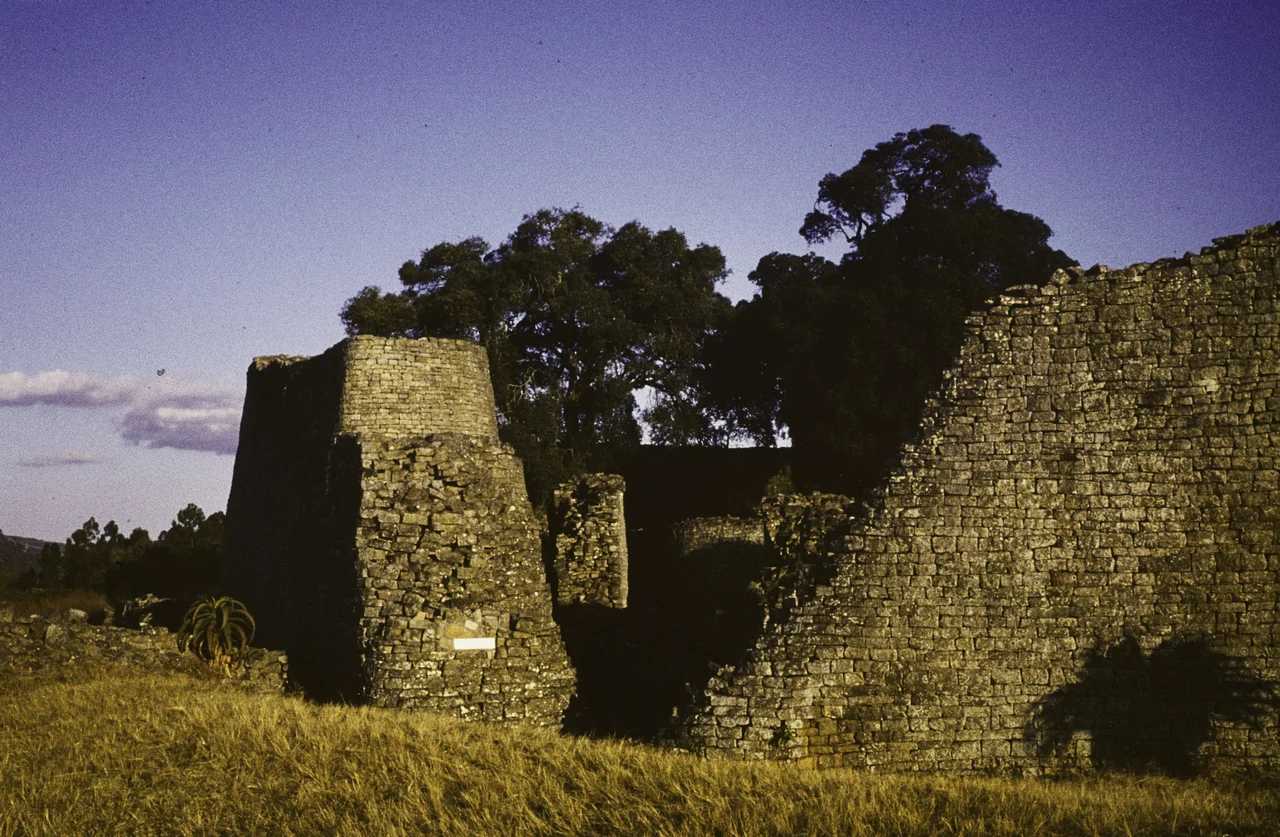
A dry-stone wall at Great Zimbabwe near Masvingo, photographed in 1975.
Aart Rietveld / African Studies Centre Leiden · CC BY-SA 4.0 · Resized
West Asia and Europe
Petra, Jordan
The Nabataean city in southern Jordan prospered along caravan routes. Its rock-cut façades are the most visible part of a city that also engineered water storage and distribution. Inscribed in 1985. UNESCO: Petra, Jordan
Göbekli Tepe, Türkiye
Near Şanlıurfa, carved T-shaped pillars mark monumental enclosures built in the Pre-Pottery Neolithic. Their scale is evidence that communities could organize major construction very early. Inscribed in 2018. UNESCO: Göbekli Tepe, Türkiye
The Colosseum, Italy
The Roman amphitheatre is part of the Historic Centre of Rome property, first inscribed in 1980. The wider boundary places the arena alongside other remains of ancient public life and the city that grew around them. UNESCO: The Colosseum, Italy
East and Southeast Asia
The Great Wall, China
China’s northern defences developed in stages under different dynasties. The walls, passes and watchtowers make up a dispersed system with a long construction history. Inscribed in 1987. UNESCO: The Great Wall, China
Angkor, Cambodia
Near Siem Reap, Angkor includes Angkor Wat, the Bayon and the remains of several capitals of the Khmer Empire. The landscape around the temples is essential to understanding the scale of those cities. Inscribed in 1992. UNESCO: Angkor, Cambodia
The Andes and the Pacific
Machu Picchu, Peru
The Inca complex above the Urubamba links terraces and masonry to the steep Andes. The sanctuary was listed as a mixed cultural and natural property in 1983, reflecting the importance of both the built site and its mountain setting. UNESCO: Machu Picchu, Peru
Rapa Nui National Park, Chile
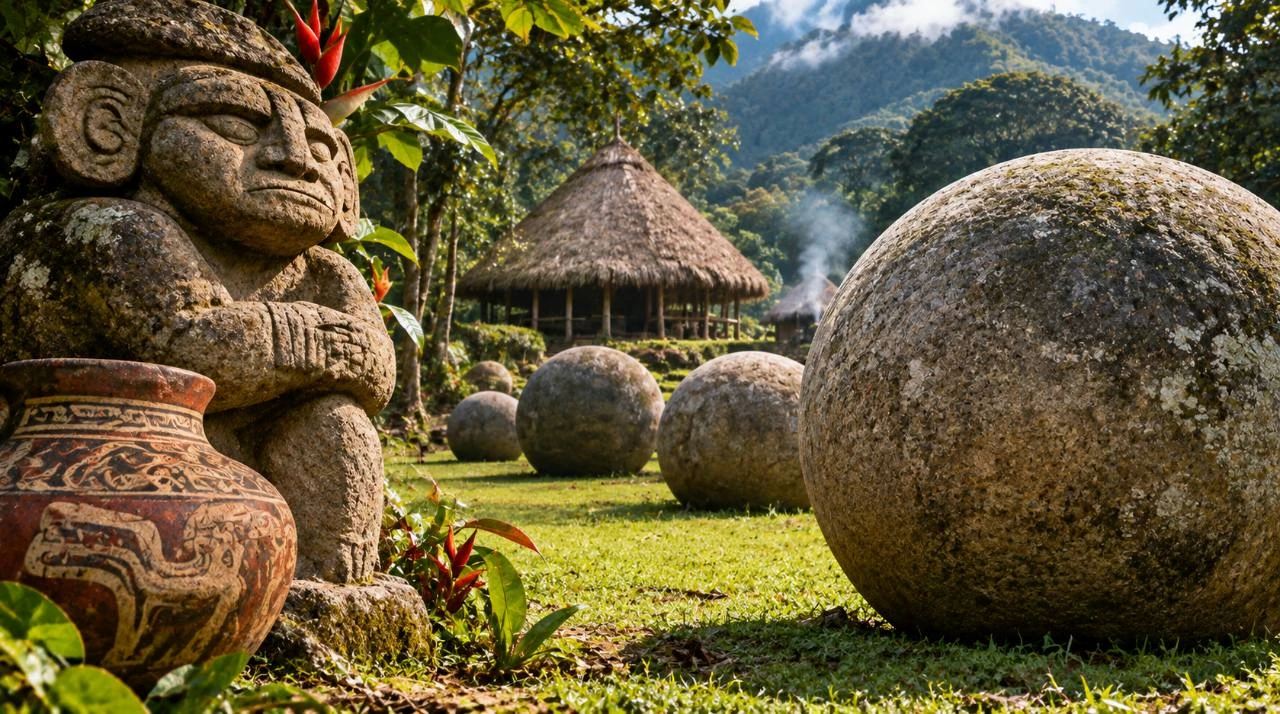
On this Polynesian island in the southeastern Pacific, carved moai belong to a landscape of ceremonial platforms and places of production. The park was inscribed in 1995. UNESCO: Rapa Nui National Park, Chile
What a World Heritage listing actually covers
UNESCO’s list identifies properties of outstanding universal value against published criteria. Authenticity and integrity, where relevant, and arrangements for protection and management also matter. A famous building may be part of a much larger entry. The Colosseum, for example, belongs to the listing for Rome’s historic center and associated properties. The relevant UNESCO page describes the full property. That distinction matters when comparing places or citing an inscription date. Source · whc.unesco.org Source · whc.unesco.org
Why one entry can appear in several places on a map
A single inscription can cover separate physical locations. UNESCO’s official map for the Diquís property in Costa Rica lists four component sites, each with its own boundary and buffer zone. Comparing that map with the Rome listing shows how World Heritage boundaries follow the heritage being recognized, whether that means an urban landscape or a series of archaeological sites. Source · whc.unesco.org Source · whc.unesco.org Read about the four Diquís settlements.
What the boundaries actually protect
UNESCO’s listing for Giza follows a chain of pyramid fields south to Dahshur. The Colosseum, by contrast, is one monument within the historic centre of Rome. At Angkor, the temple most visitors recognise sits within a much larger archaeological landscape. For conservation, the difference matters: protecting a single structure does not automatically protect the setting that explains how it worked. Source · UNESCO: Giza’s pyramids, Egypt Source · UNESCO: The Colosseum, Italy Source · UNESCO: Angkor, Cambodia
Why a site may be listed for culture and nature
Machu Picchu is a mixed property. The terraces and stone buildings preserve evidence of Inca engineering, while the mountain forests and the wider Andean environment carry natural value in their own right. At Petra, researchers also consider the setting, but for a different reason: channels, cisterns and the rugged terrain are part of the evidence for how a city functioned in that environment. Source · UNESCO: Petra, Jordan Source · UNESCO: Machu Picchu, Peru
| Place | First inscription |
|---|---|
| Giza pyramid fields | 1979 |
| Great Zimbabwe | 1986 |
| Petra | 1985 |
| Göbekli Tepe | 2018 |
| Historic centre of Rome | 1980 |
| Great Wall | 1987 |
| Angkor | 1992 |
| Machu Picchu | 1983 |
| Rapa Nui National Park | 1995 |
An inscription date records a decision by the World Heritage Committee. It does not rank the places or date their construction. The four protected Diquís sites offer a compact example of several components inscribed together.
FAQ
Frequently Asked Questions
Does UNESCO rank archaeological sites?
No. The World Heritage Committee inscribes properties under criteria for outstanding universal value.
Is the Colosseum an individual UNESCO property?
It is part of the Historic Centre of Rome World Heritage property.
PRESDA Dispatch
Stay Informed. Stay Aware.
A sharp briefing across AI, gaming, sport, business, world affairs, paparazzi, and lifestyle.