Jebel Irhoud Morocco: The Fossils Behind 'We Are All Moroccans'
Jebel Irhoud in Morocco holds some of the oldest Homo sapiens fossils ever found, but its real importance is bigger than a slogan: it points to a wider African origin story.
Jebel Irhoud is an archaeological and fossil site in Morocco that changed the way scientists talk about human origins. The site is best known for fossil remains assigned to early Homo sapiens and dated to about 315,000 years ago, far older than the simplified timelines that once placed modern human origins mostly around 200,000 years ago in East Africa.
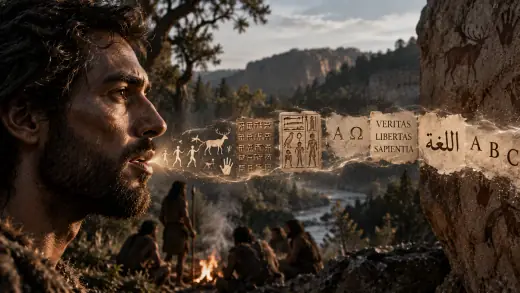
The PRESDA hook, "We Are All Moroccans," is intentionally editorial, not literal. Jebel Irhoud does not prove that every modern human came only from Morocco. What it does show is more interesting: by roughly 300,000 years ago, early Homo sapiens features existed in North Africa, supporting a broader pan-African picture of human evolution.
For the broader scientific framework, read our guide to Darwin and the theory of evolution, alongside PRESDA's Science coverage.
What Is Jebel Irhoud?
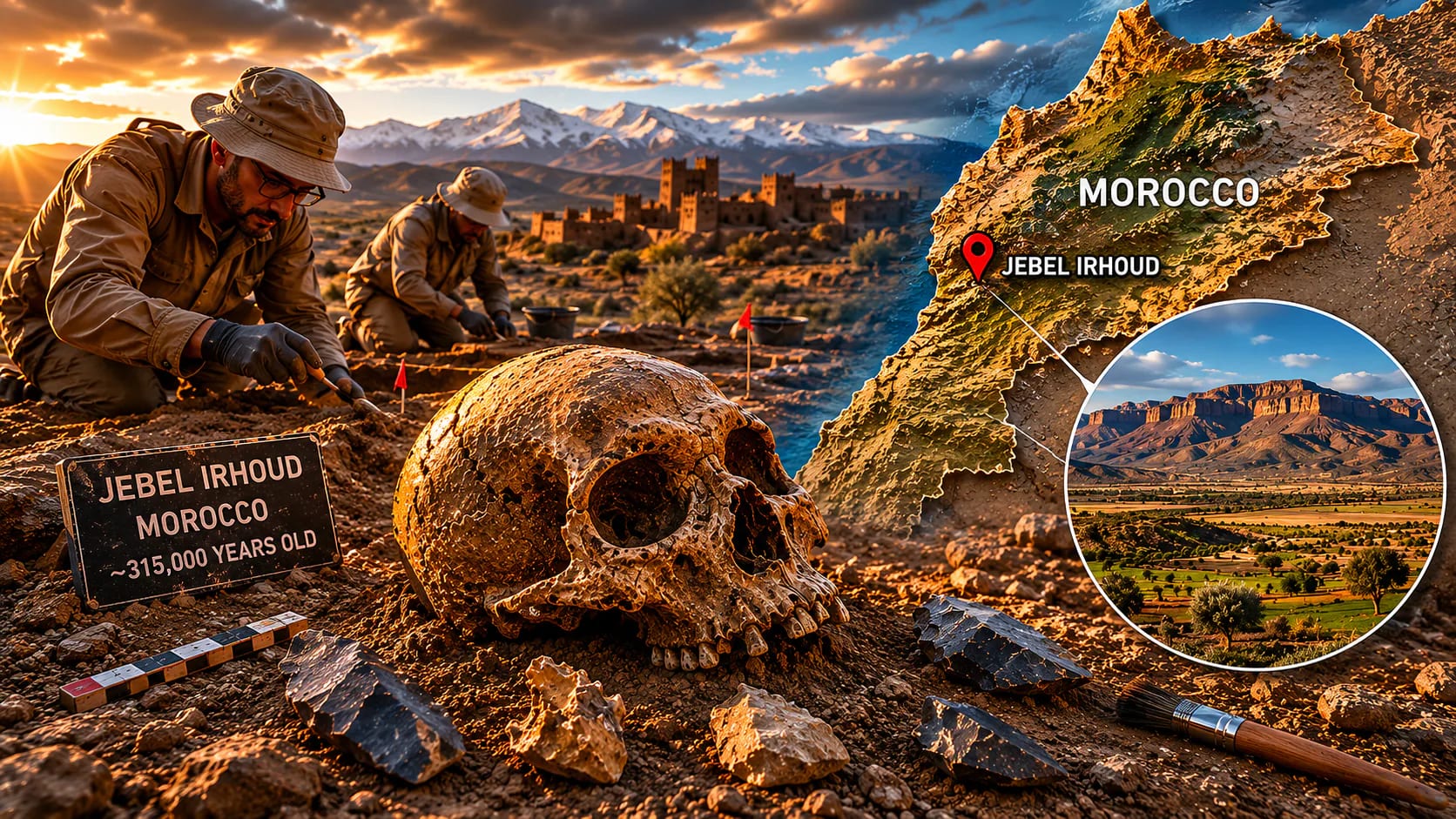
Jebel Irhoud is a prehistoric site in Morocco, in the northwest of Africa. It is commonly described as being in the Marrakesh-Safi region, near the town of Tlet Ighoud and southeast of Safi. Long before it became a global headline, it was a mining area where fossil remains were first recognized in the 1960s.
The site matters because it combines human fossils with Middle Stone Age archaeology. That means researchers were not looking only at isolated bones. They were studying fossil remains, stone tools, sediments and evidence of fire in the same broader archaeological context.
What Fossils Were Found At Jebel Irhoud?
The key Jebel Irhoud fossils include skull, jaw, tooth and other skeletal remains from multiple individuals. In the 2017 Nature paper led by Jean-Jacques Hublin and colleagues, newly discovered fossils were analyzed together with earlier finds from the site.
Scientists described the fossils as showing a mosaic of features. The face, jaw and teeth align with early or recent anatomically modern humans, while the braincase and endocranial shape look more archaic. That mix is central to the discovery. It suggests that Homo sapiens did not appear suddenly with every modern trait fully formed.
How Old Are The Jebel Irhoud Fossils?
The most cited age for the Jebel Irhoud fossils is 315 ± 34 thousand years. The dating work was published in Nature in 2017 by Daniel Richter and colleagues. Their analysis used thermoluminescence dating of fire-heated flint artifacts found in the same Middle Stone Age context as the hominin fossils.
The researchers also compared that result with other dating evidence, including a recalculated uranium-series/electron spin resonance age for a tooth from the Irhoud 3 mandible. The result placed the fossils and associated artifacts far deeper in time than earlier interpretations had suggested.
How Scientists Dated The Discovery
Thermoluminescence dating works by measuring trapped electrons in heated mineral materials. When flint tools are heated by fire and later buried, they begin accumulating a measurable signal from natural radiation. By measuring that signal and the surrounding radiation environment, researchers can estimate when the material was last heated.
At Jebel Irhoud, the fire-heated flints were especially useful because they were directly associated with the archaeological layer containing the hominin fossils. The fossils themselves were not simply guessed to be old because they looked archaic; their age was built from dating the archaeological context around them.
Why Jebel Irhoud Changed The Story Of Homo Sapiens
Before Jebel Irhoud was redated, many summaries of human origins leaned heavily on a model in which anatomically modern humans emerged in East Africa around 200,000 years ago. East African fossils remain essential to the story, but Jebel Irhoud expanded the map and the timeline.
Nature's 2017 fossil paper argued that the Jebel Irhoud material documents early stages of the Homo sapiens clade and supports the idea that the emergence of our species involved the whole African continent. The point is not that Morocco replaced East Africa as a single cradle. The point is that Africa's human origins story looks wider, older and more connected.
The Pan-African Origin Model
A pan-African model does not picture Homo sapiens beginning as one finished population in one small place. It suggests that different populations across Africa may have carried different combinations of traits, technologies and adaptations, with climate shifts and migration routes periodically connecting or separating them.
Jebel Irhoud fits that model because it places early Homo sapiens-like fossils in North Africa at about 315,000 years ago. Other African fossils, archaeological sites and later genetic evidence continue to shape the picture. The Moroccan discovery is therefore a major chapter, not the entire book.
Stone Tools, Fire And Early Human Behavior
The Jebel Irhoud discovery is also important because of the stone tools found with the fossils. The tools belong to a Middle Stone Age context, showing that the site was not only a place where bones were preserved, but a place connected to behavior, technology and landscape use.
Fire matters too. Some flint artifacts were heated, which helped scientists date the site. But the broader point is behavioral: early Homo sapiens populations were making tools, using fire and living in environments that required practical knowledge and adaptation.
What Scientists Can Conclude
Scientists can conclude that Jebel Irhoud contains some of the oldest widely cited Homo sapiens fossils known, dated to roughly 315,000 years ago, and that these fossils show a combination of modern and archaic anatomical features.
They can also conclude that North Africa played a more important role in early Homo sapiens evolution than older simplified maps suggested. Jebel Irhoud supports a continental African frame for human origins, where multiple regions contributed to the emergence of our species over time.
What Scientists Cannot Conclude
Jebel Irhoud does not prove that all modern humans literally originated only in Morocco. It does not provide a complete genetic history of early Homo sapiens, and the fossils do not represent living humans in a fully modern anatomical form.
It also does not close the human origins debate. New fossil discoveries, improved dating methods and ancient DNA research can still refine or complicate the story. In science, a discovery this important is not an ending. It is a better starting point.
Why 'We Are All Moroccans' Still Works As A Hook
The phrase works because it captures the emotional force of the discovery. Jebel Irhoud gives Morocco a central place in one of humanity's oldest scientific stories. It reminds readers that the history of Homo sapiens is not owned by one nation, one ethnicity or one modern identity.
Used carefully, "We Are All Moroccans" means that Morocco holds one of the oldest known windows into our species. It is a poetic headline for a scientific truth: the human story is African, ancient, connected and still being rewritten by evidence.
Final Word
Jebel Irhoud changed human origins science because it made the map bigger and the timeline older. The fossils from Morocco show that early Homo sapiens evolution was not a neat single-point story, but a layered process across Africa.
That is why the discovery still matters. It gives Morocco a place in deep human time while reminding everyone else that origins are rarely simple. We are not all literally from Jebel Irhoud. But the site belongs to all of us because it helps explain how the human story began.
FAQ
Frequently Asked Questions
What is Jebel Irhoud?
Jebel Irhoud is an archaeological and fossil site in Morocco known for early Homo sapiens fossils and Middle Stone Age artifacts that reshaped scientific understanding of human origins.
Where is Jebel Irhoud in Morocco?
Jebel Irhoud is in Morocco's northwest, commonly described in the Marrakesh-Safi region near Tlet Ighoud and southeast of Safi.
How old are the Jebel Irhoud fossils?
The widely cited Nature dating study places the fossils and associated Middle Stone Age artifacts at about 315 ± 34 thousand years old.
Are the Jebel Irhoud fossils the oldest Homo sapiens fossils?
They are among the oldest and most important Homo sapiens fossils widely cited in scientific literature. The discovery pushed the known early Homo sapiens timeline back by roughly 100,000 years compared with older simplified models.
Does Jebel Irhoud mean all humans came only from Morocco?
No. Jebel Irhoud does not prove a Morocco-only origin for modern humans. It supports a broader pan-African model in which early Homo sapiens evolution involved multiple regions of Africa over time.
Why did Jebel Irhoud change human origins science?
It showed that early Homo sapiens features were present in North Africa around 315,000 years ago, making the origin of our species look older, wider and more continental than a single-location origin story.
PRESDA Dispatch
Stay Informed. Stay Aware.
A sharp briefing across AI, gaming, sport, business, world affairs, paparazzi, and lifestyle.