Bacteria: The Good and Bad Microbes That Shape Our Lives
Explore bacteria, the human microbiome, antibiotics, resistance and the microbes that shape food, oceans and life on Earth.
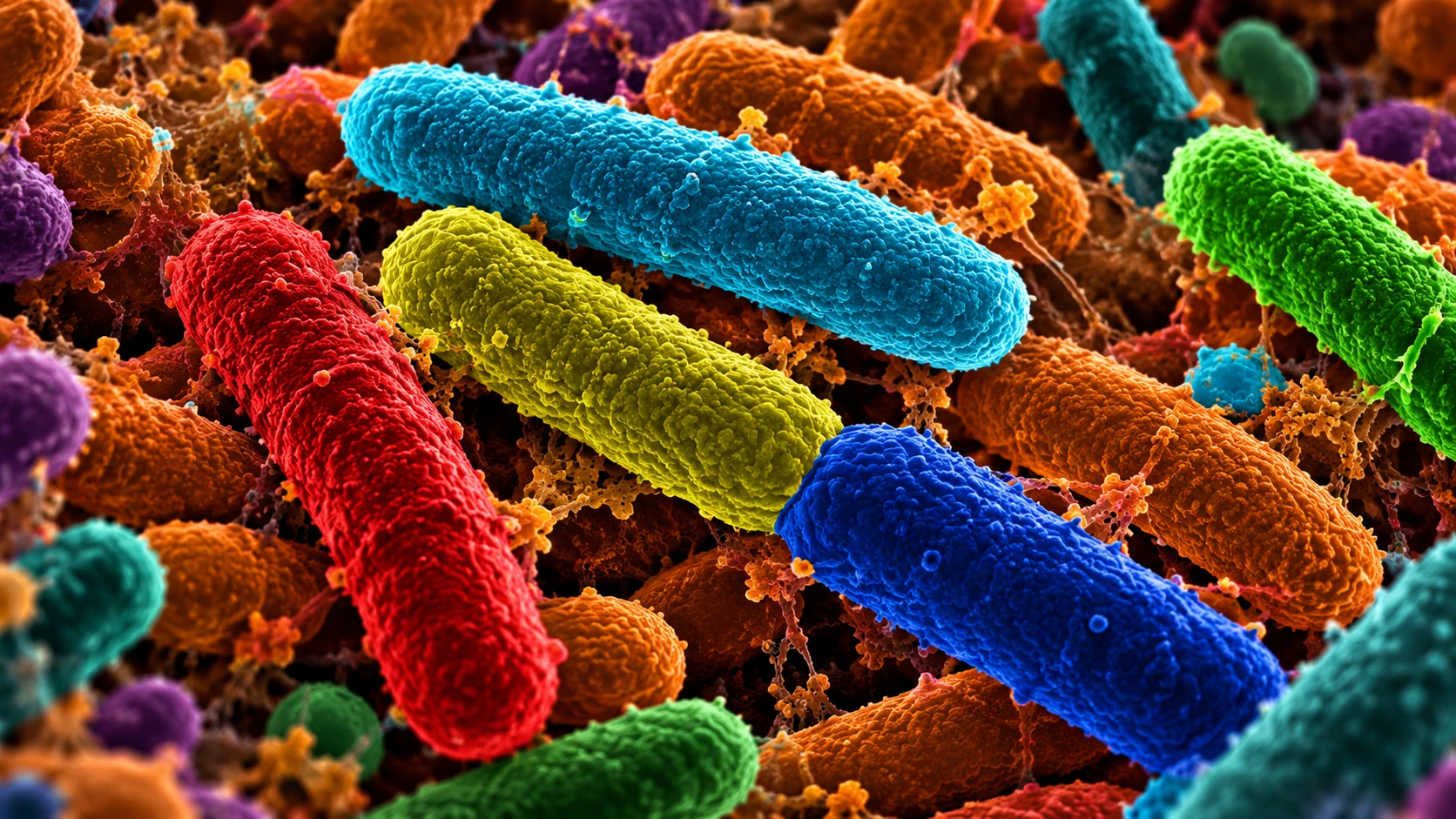
Hero: PRESDA AI-generated scientific illustration. This is not an authentic microscope photograph; shapes and colors are artistic representations.
A spoonful of yoghurt, a handful of soil and the surface of a tooth belong to different worlds. Yet all are shaped by bacteria. These organisms help transform food, recycle nutrients and maintain living communities. Some also cause devastating disease. Their importance cannot be captured by calling them either enemies or allies: what matters is which bacterium is present, where it is living, what it is doing and how its surroundings respond.
Bacteria are living cells, not miniature viruses. They have evolved for billions of years and developed ways to exploit environments ranging from sunlit seawater to oxygen-poor intestines. Understanding them changes the scale at which we see ourselves. Our bodies are habitats; a healthy ecosystem depends on microscopic processes; and an antibiotic prescription can exert evolutionary pressure. The story is both intimate and planetary, connecting daily life to the history of Earth's atmosphere.
What makes a bacterium a bacterium?
A bacterial cell encloses its contents within a membrane and carries genetic information in DNA. Ribosomes manufacture proteins, while enzymes support the chemical reactions of life. Unlike human cells, bacteria lack a membrane-bound nucleus. Their DNA occupies a region called the nucleoid, and many also carry smaller genetic elements called plasmids. Most have a cell wall containing peptidoglycan, although exceptions such as Mycoplasma show why biological definitions need care. A bacterium is compact, but compact does not mean chemically unsophisticated. NCBI: bacterial structure
The familiar shapes are spheres, rods and spirals, sometimes arranged in chains, clusters or filaments. Shape is useful for description but cannot alone identify a species or predict danger. Some bacteria move using flagella; others attach to surfaces using specialized structures. Capsules and other outer layers can influence interactions with hosts and the environment. The Gram stain divides many bacteria into groups reflecting differences in their cell envelopes. It is a laboratory clue, not a complete map of bacterial diversity. NCBI: bacterial cell envelopes
Bacteria, viruses and archaea are different
Viruses depend on host cells to produce new virus particles. They do not possess the independent cellular machinery found in bacteria. This distinction explains why antibiotics that target bacterial structures or processes do not treat viral infections such as influenza. A symptom such as a cough does not reveal the cause by itself: different organisms can produce similar illnesses, and diagnosis determines whether a particular treatment is useful. Describing every microscopic threat as a bacterium confuses both biology and medicine. CDC: antibiotics and viruses
Archaea are cellular organisms that can resemble bacteria under a microscope, but they form a distinct evolutionary lineage with important differences in membranes and molecular machinery. They are not simply unusual bacteria. Nor do all archaea live in extreme conditions: they occur in ordinary soils, oceans and animal-associated communities. The human microbiome also contains organisms other than bacteria, including archaea, fungi and viruses. A study measuring bacterial DNA therefore captures only part of a wider biological community. NCBI: Archaea NIH: our microbial menagerie
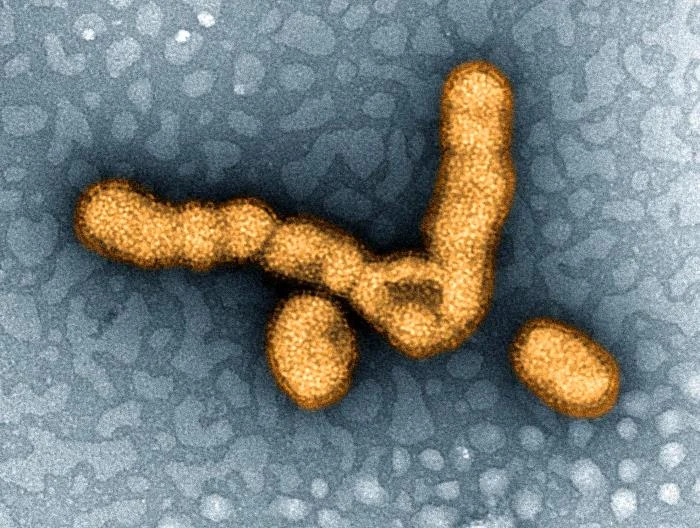
H1N1 influenza virus particles, 2012. Authentic transmission electron micrograph from NIAID, digitally colorized. These are viruses, not bacteria, and are shown here for comparison.
NIAID / NIH; source: CDC Public Health Image Library
Public domain. Source images available free from CDC PHIL. Use does not imply endorsement by CDC, NIH, HHS or the US Government.. Resized and converted to WebP by PRESDA. Full composition preserved. Reuse follows the individual license stated here.
A history older than animals, forests or continents as we know them
Microbial life reaches deep into Earth's history. Rocks around 3.5 billion years old preserve evidence relevant to ancient microbial ecosystems, but identifying the exact organisms responsible is difficult. Minerals can imitate biological shapes, and geological alteration can obscure chemical signals. Scientists therefore combine structural, chemical and geological evidence rather than dating the first bacterium from a single suggestive photograph. Modern bacteria are descendants of long evolutionary histories, not unchanged specimens of the earliest life. Nature Communications: ancient microbial environments Nature: interpreting early microfossils
Evolution has repeatedly reshaped bacterial metabolism and relationships with other organisms. The familiar branching tree of ancestry remains useful, but exchanging genes adds connections between branches. Even the meaning of a bacterial species can become complicated when closely related strains carry different accessory genes. The result is extraordinary functional diversity. Some organisms obtain energy from sunlight, others consume organic compounds, and others exploit inorganic chemistry. This history is best understood as diversification, not a ladder whose final goal was the appearance of humans.
Multiplication, mutation and borrowed genes
Many bacteria reproduce by binary fission: a cell copies its genetic material and divides. The speed depends on the organism and conditions, including temperature, nutrients and oxygen availability. The rapid doubling sometimes demonstrated in laboratories is not a universal bacterial timetable. In nature, cells encounter scarcity, competition and predators, and many grow slowly or enter inactive states. Population growth is therefore an ecological outcome, not an unlimited mathematical promise. Mutations introduce genetic variation, while natural selection changes which variants persist.
Bacteria can also acquire DNA from sources other than their immediate ancestors. Transformation involves taking up DNA from the surroundings; transduction involves transfer mediated by bacterial viruses; conjugation transfers DNA through contact between cells. These forms of horizontal gene transfer can spread useful traits, including some antibiotic-resistance mechanisms. They do not mean that every bacterium can exchange every gene with every other bacterium. Compatibility, ecological contact and the costs of carrying new DNA all matter. Evolution involves both inherited history and opportunities created by proximity. NCBI: bacterial genetics
Good and bad depend on context
Escherichia coli illustrates the limits of a simple moral classification. Many strains normally inhabit intestines without causing disease, while particular strains can cause serious illness. Genes that enable toxin production or attachment to a host can change the consequences of an encounter. Location matters too: organisms tolerated in one body site may be harmful elsewhere. The name of a species is therefore only the beginning of a clinical interpretation, not a complete account of risk. CDC: E. coli
Other examples make the contrast clearer. Rhizobia associate with legumes and help make nitrogen available to the plant. Streptococcus thermophilus contributes to yoghurt production. Mycobacterium tuberculosis causes tuberculosis, while certain Salmonella can cause intestinal infection. These roles are real, but the language of good and bad is our shorthand for consequences. Bacteria are not choosing to help or harm us. Their traits evolved within particular environments, and disease emerges from an interaction between organism, host and circumstances. WHO: tuberculosis CDC: Salmonella
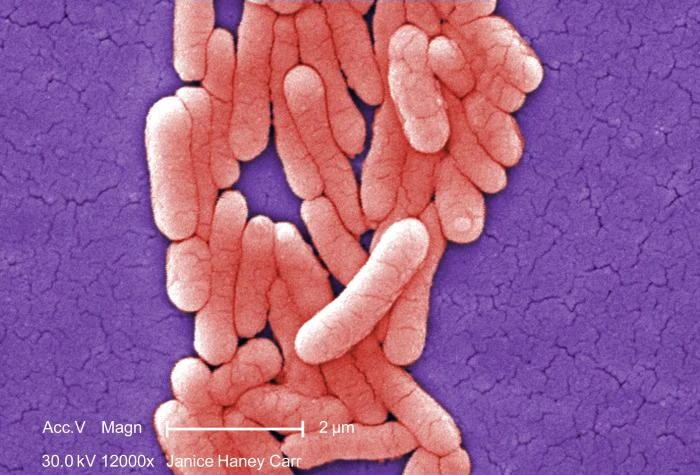
Salmonella Typhimurium grown in pure culture, 2009. Authentic scanning electron micrograph, digitally colorized by the source.
CDC / Bette Jensen; photograph: Janice Haney Carr
Public domain. Source images available free from CDC PHIL. Use does not imply endorsement by CDC, NIH, HHS or the US Government.. Resized and converted to WebP by PRESDA. Full composition preserved. Reuse follows the individual license stated here.
The human body is a collection of microbial habitats
Skin, mouth and intestine offer different conditions, so their bacterial communities are not interchangeable. Moisture, acidity, oxygen and available nutrients influence which organisms can persist. Even neighbouring locations may support different communities. The microbiota refers to the organisms themselves; microbiome is often used more broadly for their genetic material and ecological setting. Definitions vary between studies, making it important to read what researchers actually measured. A stool sample, for example, does not represent every intestinal surface equally well. NIH: the human microbiome
These communities interact with host tissues and with one another. Competition for resources can limit opportunities for incoming organisms, while microbial products can affect host physiology. But there is no single list of bacteria that defines health for every person. Age, diet, medications and other exposures influence composition. Treating an individual microbiome as a score that must be maximized or purified is scientifically misleading. A useful question is whether a particular community function has been demonstrated, in a defined setting, to influence a meaningful health outcome.
Digestion and gut health: mechanisms before marketing
Some gut bacteria ferment carbohydrates that escape digestion in the small intestine. Among the products are short-chain fatty acids such as acetate, propionate and butyrate. These molecules can serve as energy sources and participate in signalling pathways; butyrate is an important fuel for cells lining the colon. Their effects depend on context, concentration and interactions with the host. Finding a potentially beneficial metabolite does not prove that adding a particular bacterium will prevent disease or improve everybody's health. Nature Reviews Microbiology: short-chain fatty acids
Microbiome research frequently begins with associations: people with a condition may have different microbial profiles from comparison groups. That observation does not establish which change came first or whether bacteria caused the condition. Diet, medication and illness itself can alter the microbiome. Stronger explanations combine carefully controlled human studies, mechanistic experiments and clinical trials. A mouse experiment can reveal a pathway worth studying without proving that an advertised supplement works in humans. The distinction is central to interpreting headlines about weight, immunity or mood. Nature: confounding in microbiome studies Nature Chemical Biology: evidence and causality
Why probiotics are not a universal solution
A probiotic is not simply any food containing bacteria. Its proposed benefit depends on the identified microorganisms, formulation, dose, intended use and evidence. Results for one strain or condition cannot automatically be transferred to another product. Some applications have supportive research, while many commercial claims run ahead of reliable clinical evidence. Safety also depends on the person: serious infections have occurred in vulnerable patients. NCCIH advises against replacing proven treatment with unproven products. More bacteria is not inherently better, and natural does not mean risk-free. NCCIH: probiotics, usefulness and safety
Soil: an economy of decomposition and exchange
Bacteria help transform dead organic matter and release nutrients into forms other organisms can use. They operate alongside fungi, archaea and other soil inhabitants, rather than doing all decomposition alone. Their activity depends on water, temperature, oxygen and the chemistry of the material available. Soil is therefore not an inert support for plants. It contains interacting organisms whose metabolism affects fertility, carbon storage and greenhouse-gas exchange. Changing land use or climate can alter those interactions, with consequences that vary between ecosystems. Nature Reviews Microbiology: soil microbiomes
Nitrogen makes these relationships especially visible. Some bacteria fix atmospheric nitrogen into biologically usable compounds, including rhizobia living with legumes. Other microbial reactions convert nitrogen compounds or return nitrogen to the atmosphere. These processes form networks, not a tidy assembly line carried out by one species. Wastewater treatment also uses microbial transformations to remove excess nutrients. Understanding which reactions dominate matters because microbes can both reduce pollution and produce environmentally important gases under different conditions. Nature Reviews Microbiology: nitrogen cycling
Oceans and the oxygenation of Earth
In sunlit oceans, cyanobacteria such as Prochlorococcus contribute to photosynthesis and marine food webs. Other bacteria consume dissolved organic material and participate in recycling carbon and nutrients. Ocean bacteria are diverse communities, not a single interchangeable workforce. Differences in temperature, light and nutrient supply shape their distributions and activity. Their small size does not diminish their ecological significance, but assigning all marine oxygen production to bacteria would erase the contributions of other photosynthetic organisms. Nature Reviews Microbiology: Prochlorococcus Nature Reviews Microbiology: the microbial carbon pump
Cyanobacteria also helped transform Earth's atmosphere through oxygen-producing photosynthesis. The Great Oxidation Event, beginning around 2.4 billion years ago, marks a major shift in persistent atmospheric oxygen. It was not an instant switch to modern air. Production, chemical consumption and geological processes interacted, and researchers still debate aspects of timing and mechanism. Oxygen opened new possibilities while challenging organisms adapted to oxygen-poor conditions. For the wider planetary setting, see PRESDA's Solar System feature. Nature: early oxygen Nature: oxygen and nitrogen cycling
Infection and the importance of identifying the cause
Pathogenic bacteria may damage tissues directly, produce toxins or trigger harmful inflammatory responses. Infection is not synonymous with mere presence: people can carry an organism without becoming ill. Conversely, the same organism may cause severe disease in a susceptible host. Routes of transmission differ between pathogens, so prevention cannot be reduced to one universal measure. Vaccination where available, safe water, sanitation, food safety and appropriate infection-control practices address different parts of the problem. Microbiology makes prevention more precise rather than simply encouraging fear of every surface.
Antibiotics can kill bacteria or inhibit their growth by targeting processes such as cell-wall construction or protein production. Different drugs have different activity, and treatment decisions depend on the infection and the patient. Laboratory identification and susceptibility testing can help guide selection. These medicines transformed care, but they also have adverse effects and can disturb resident communities. CDC advises taking antibiotics exactly as prescribed, not sharing them or saving them for a later illness. A viral infection does not become treatable with antibiotics merely because symptoms feel severe. CDC: appropriate antibiotic use
Resistance is evolution with public-health consequences
Antibiotic resistance belongs to microbes, not to a person's body becoming accustomed to treatment. Mutations or acquired genes may alter drug targets, destroy a medicine, reduce its entry or help remove it from the cell. Exposure can favour resistant organisms, which may then spread. Inappropriate use accelerates the problem, but access to effective diagnosis and treatment matters too. Resistance is not confined to hospitals or national borders; human, animal and environmental systems are connected. WHO: antimicrobial resistance
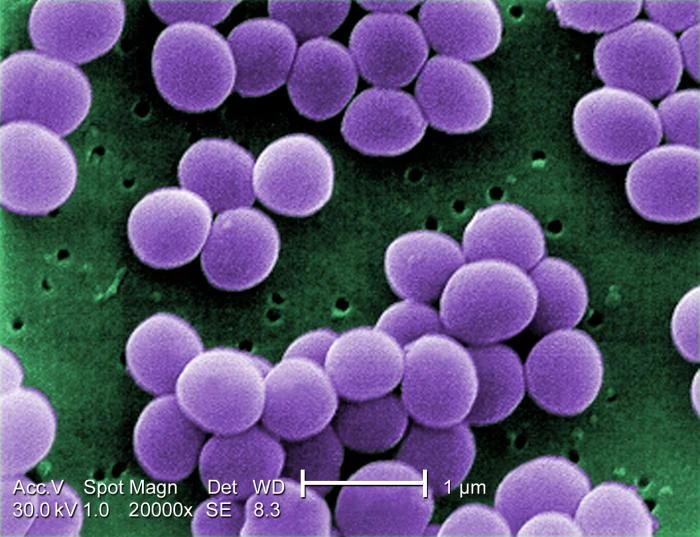
Staphylococcus aureus from a culture with intermediate vancomycin resistance (VISA), 2001. Authentic scanning electron micrograph, digitally colorized by the source. Appearance alone does not reveal resistance.
CDC / Matthew J. Arduino, DrPH; photograph: Janice Haney Carr
Public domain. Source images available free from CDC PHIL. Use does not imply endorsement by CDC, NIH, HHS or the US Government.. Resized and converted to WebP by PRESDA. Full composition preserved. Reuse follows the individual license stated here.
The broader term antimicrobial resistance includes resistance in viruses, fungi and parasites as well as bacteria. Distinguishing these categories prevents misleading statistics and unrealistic solutions. Better prescribing, infection prevention, surveillance and development of new therapies must work together. An impressive laboratory compound is not automatically a safe medicine, and a new antibiotic is not an unlimited resource. The challenge is to preserve effective treatment while ensuring that people who need it can obtain it. Research progress and equitable access are complementary goals.
Biofilms: bacteria living together
Many bacteria live attached to surfaces within communities embedded in an extracellular matrix. This matrix can contain polysaccharides, proteins and DNA, creating local conditions different from those in surrounding fluid. Dental plaque is a familiar example of a biofilm; biofilms also occur on rocks, in pipes and on medical devices. They may contain several species, sometimes including organisms other than bacteria. Calling them bacterial cities can help visualization, but it should not imply conscious planning or human-like cooperation. Nature Reviews Microbiology: the biofilm matrix
Cells within a biofilm may experience different oxygen and nutrient levels and show altered susceptibility to treatment. Physical structure, slow growth and physiological changes can contribute to survival. This tolerance is not identical to inherited antibiotic resistance, although both can occur together. The distinction matters when researchers design interventions: disrupting a matrix, changing cellular physiology and targeting a resistance gene are different strategies. Biofilm research asks how a community's organization changes behaviour, not merely whether bacteria are present. Nature Reviews Microbiology: matrix functions
Survival strategies and life's limits
Some bacteria form endospores, durable dormant structures that can survive conditions damaging to actively growing cells. Bacillus subtilis is a well-studied example. A spore is a survival stage, not evidence that all bacteria are indestructible, and forming one is not a way to multiply the number of cells. When conditions become suitable, germination can allow growth to resume. This helps explain why food processing and sterilization require validated methods rather than assuming that every microbe responds identically to heat or chemicals. Nature Reviews Microbiology: endospores
Extremophiles are organisms adapted to conditions that humans consider extreme, such as high temperature, acidity or salinity. Some are bacteria and others are archaea; the terms are not synonyms. Adaptation to one stress does not confer unlimited tolerance to all stresses. Studying microbial survival helps scientists understand membranes, proteins and repair systems, and informs questions about environments beyond Earth. It does not demonstrate extraterrestrial life. Habitability and actual detection remain separate questions, as discussed in Our Universe.
Fermentation and biotechnology
Humans used microbial activity in food long before understanding cells. Bacterial fermentation contributes to yoghurt, cheeses and fermented vegetables by changing acidity, flavour and texture. Yoghurt commonly relies on Streptococcus thermophilus and Lactobacillus delbrueckii subsp. bulgaricus. Many fermentations also involve yeasts or other fungi. Fermented is not a synonym for probiotic: processing may remove or kill live organisms, and a health claim requires evidence beyond the fact of fermentation. Safe production depends on controlled conditions, ingredients and hygiene, not on assuming that every growing microbe is desirable. Nature Reviews Gastroenterology & Hepatology: fermented foods
Bacteria also became tools for biotechnology. Introducing suitable genetic instructions into laboratory strains can enable production of useful proteins, including recombinant insulin. Industrial production requires controlled manufacturing and purification; it is not simply a matter of consuming the bacteria. Another example is CRISPR, developed into gene-editing tools from microbial defence systems. These achievements show how basic research can reveal mechanisms that become useful in medicine. They also require distinction between a naturally occurring process and a carefully engineered application. NIH: recombinant DNA and insulin NIH: CRISPR
Discovery is still changing the picture
Microscopy made previously invisible organisms observable, while experiments connected particular microbes to disease and fermentation. Antibiotics then changed what clinicians could do about bacterial infection, a turning point explored in PRESDA’s history of medicine. The 1945 Nobel Prize recognized Alexander Fleming, Ernst Chain and Howard Florey for penicillin and its therapeutic effects, a reminder that discovery and development are distinct achievements. Modern sequencing has added another transformation: researchers can investigate microbial DNA in communities that are difficult to grow using standard laboratory methods. Nobel Prize: penicillin
Important questions remain. Which community changes cause disease, rather than accompany it? How reliably can a laboratory result predict behaviour in a living ecosystem? Which organisms and functions remain missing from our surveys? DNA reveals potential, but activity depends on gene expression and environment. Better answers will combine cultivation, imaging, chemistry, sequencing and carefully designed experiments. Bacteria deserve neither blanket fear nor blanket celebration. They deserve the close attention appropriate to organisms that help make this planet habitable and sometimes make human life precarious.
FAQ
Frequently Asked Questions
What is this PRESDA article about?
Explore bacteria, the human microbiome, antibiotics, resistance and the microbes that shape food, oceans and life on Earth.
Which category does this story belong to?
This story is part of PRESDA's Science coverage.
Who published this article?
Bacteria: The Good and Bad Microbes That Shape Our Lives was published by PRESDA Editorial on PRESDA.
PRESDA Dispatch
Stay Informed. Stay Aware.
A sharp briefing across AI, gaming, sport, business, world affairs, paparazzi, and lifestyle.