Ancient Mexican cave paintings offer clues to Teotihuacan warrior rituals
Three red glyphs and traces of fire in Cave 19 at Chalcatzingo suggest a place where fallen warriors may have been commemorated.
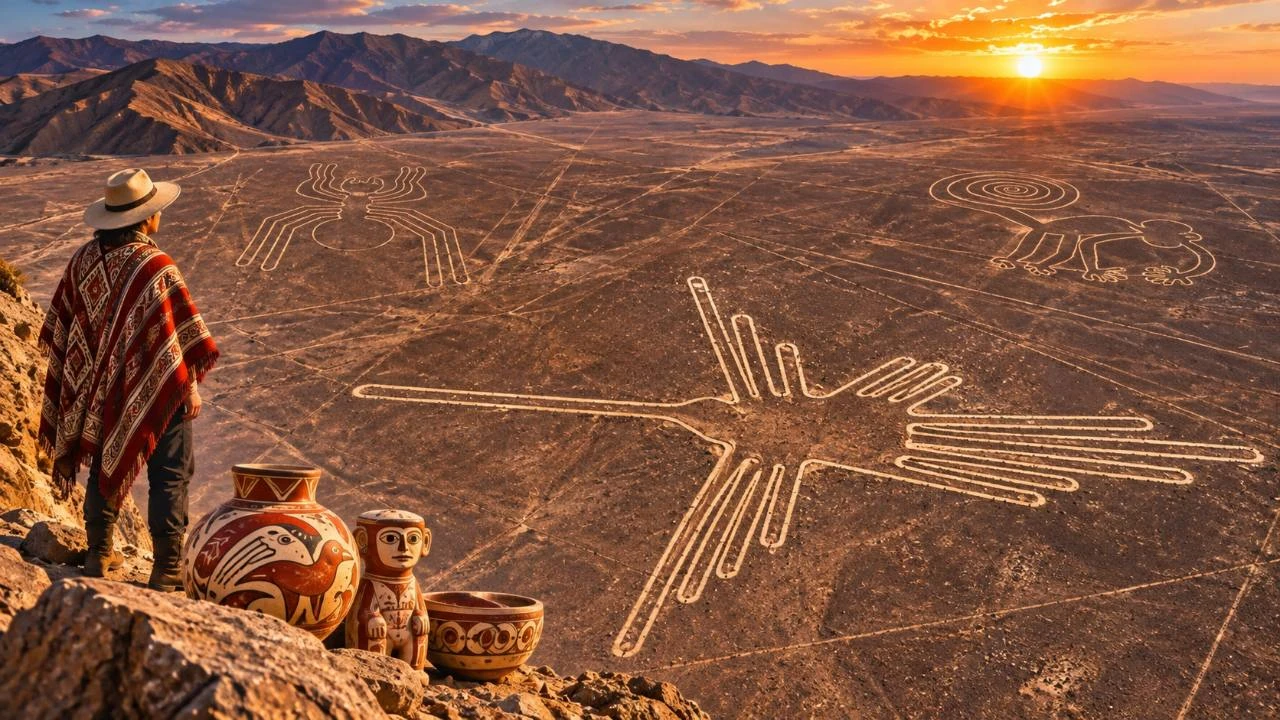
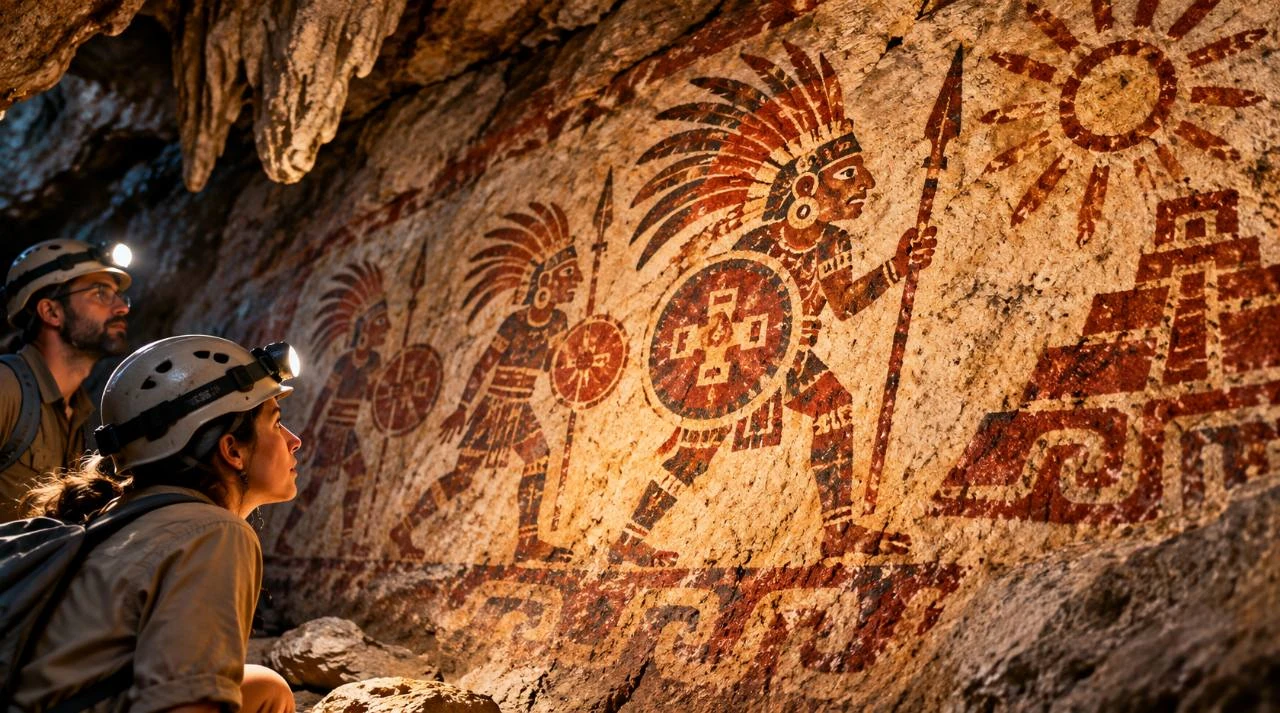
Editorial illustration supplied to PRESDA. The painted figures are imagined. The study documents three red glyphs.
High on Cerro Delgado in Morelos, three dark-red signs share a shallow shelter with a soot-darkened ledge. In a study in Antiquity, researchers read the signs as Teotihuacan writing and argue that the shelter may have hosted ceremonies honoring dead warriors. The evidence comes from the shape and placement of the glyphs, parallels at Teotihuacan and traces of burning. Antiquity study
A shelter revisited in 2022
The paintings were documented in the 1980s and surveyed again in August 2022. The authors place this use of the shelter in the fourth to sixth centuries CE. That range comes from archaeological context and comparisons with Classic-period imagery and writing. The paper does not report a direct laboratory date for the pigment. Antiquity study
A site with a much older history
Chalcatzingo lies between two rocky hills and is especially known for earlier reliefs connected to Olmec cultural exchange. Cave 19 belongs to a different phase of activity. Its signs point to later links with Teotihuacan, the major Classic-period city in the Basin of Mexico. INAH site profile
Why the landscape matters
Chalcatzingo lies beneath two hills in the fertile Morelos valley. Mexico’s National Institute of Anthropology and History notes that a spring supplied the ancient settlement. At Cave 19, the setting changes from the broad valley to a shallow recess in the western face of Cerro Delgado. The authors measured the shelter at 5.43 metres across and no more than 2.24 metres deep. That scale helps explain why they call it a rock shelter. The photograph shows the wider archaeological landscape, where monumental platforms and rock art coexist. It provides geographical context for the small painted space. Source · Helmke et al., Antiquity Source · Instituto Nacional de Antropología e Historia
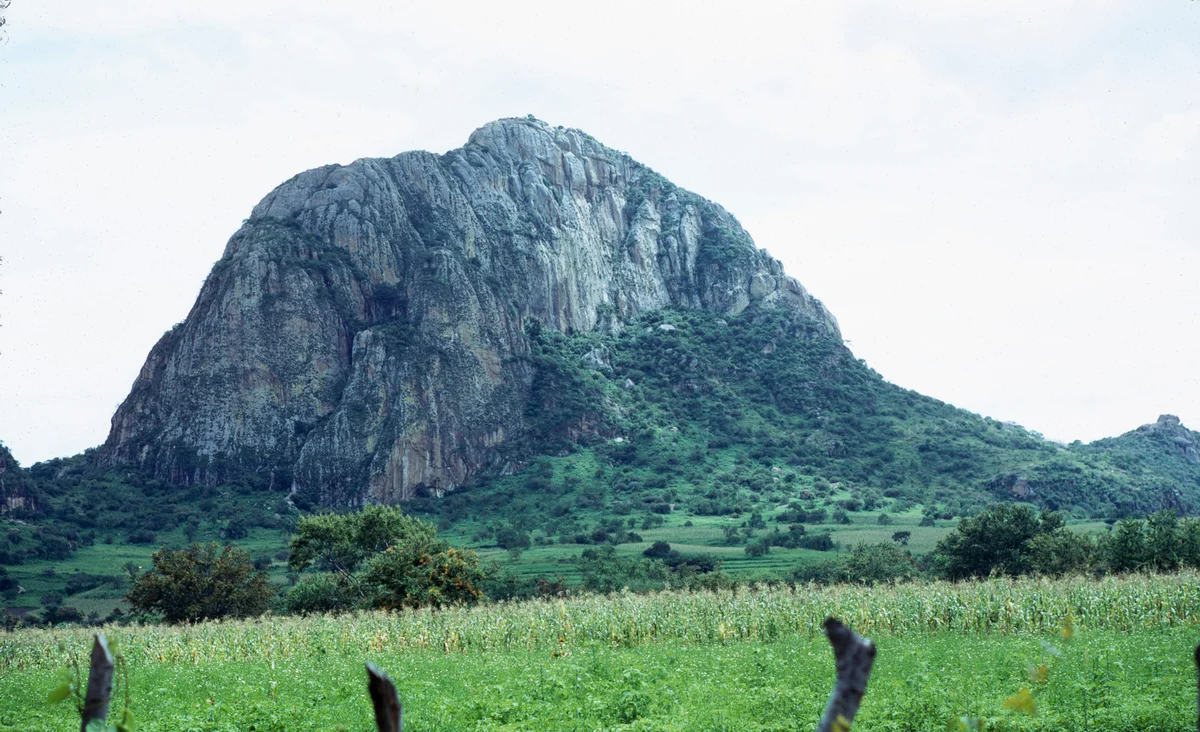
A hill at Chalcatzingo, Morelos. Photo by HJPD, resized and converted to WebP.
How researchers date the paintings
The published interpretation puts the painted signs in the Classic period, approximately 350–550 CE. That dating depends on comparison with Teotihuacan writing and imagery. The earlier tradition of carving the hills is a separate chapter in the site’s history. Excavations reported diagnostic Teotihuacan ceramics at the broader site, which help establish later activity there. A nearby ceramic type is context for the argument, but it does not give a direct laboratory date for every pigment line. Source · Helmke et al., Antiquity
From a blackened shelf to a hypothesis about ritual
The shelf stands below the largest painted design. The report documents blackening on the wall and ceiling above it, scattered pottery fragments on the floor, and a fragment of a grinding stone. Their position is important: traces of fire in a separate part of the hill would not create the same connection with the painted frame. Yet the same evidence leaves several possibilities open. The authors consider the ceremonial burning of incense and the treatment of a funerary bundle, and cannot choose with certainty between them. Source · Helmke et al., Antiquity
Why the interpretation depends on comparison
The proposed military title rests on a combination of elements rather than on the presence of a human figure. The authors compare the items with warrior regalia in Teotihuacan imagery, and the starry frame with related designs on ceramic objects. Similarity helps propose a reading. It does not provide a complete record of who took part or exactly what happened in the shelter. Compare this distinction between a surviving object and its meaning with PRESDA’s study of the Diquís settlements. Source · Helmke et al., Antiquity
The mountain and the warrior title
The first glyph combines a mountain motif with scrolls that can denote sound. The authors propose a place-name, Singing Mountain, and compare it with murals at Teotihuacan. They interpret the second sign, which incorporates martial equipment and regalia, as a possible title or reference to a warrior order. It does not yield an identified individual. Antiquity study
What the soot can tell us
The largest sign frames the ledge and resembles a star-decorated canopy in related imagery. Fire marks support the idea of burning in the shelter. Incense and the commemoration of warriors fit the comparisons, while cremation remains a possibility proposed by the authors. The ledge and soot do not establish what was burned. Antiquity study
The wider landscape helps explain why the position of the shelter matters. At Chalcatzingo, hills and rock faces had long been places for images with religious themes. The later glyphs show how a new writing tradition could mark terrain that already carried meaning. Museo Nacional de Antropología
How researchers recovered the outlines
The team measured and mapped the signs, photographed them and compared enhancements made from different color channels. Figure 4 lets readers compare those treatments. The enhanced colors help separate faint traces from the rock surface and should be read alongside the original views. Figure 5 shows the weathered mountain sign and the authors’ drawing. Its incomplete left side matters because the drawing includes a suggested reconstruction. Source · doi.org
What the objects in the paintings can tell us
Figure 6 sets the photograph alongside an enhanced image and a drawing. The authors identify a beaded necklace, cloth and a dart as signs associated with warrior attire. Figure 7 places the star-decorated frame above a shelf with signs of burning. Parallels in Teotihuacan art suggest a ceremonial setting, but the shelf preserves too little to decide between an incense burner and the cremation of a funerary bundle. The strongest evidence is for the signs and burning themselves. The reconstruction of a particular ceremony remains an interpretation. Source · doi.org
FAQ
Frequently Asked Questions
Were the paintings discovered in 2026?
They were documented in the 1980s and surveyed again in 2022. The study offers new interpretations.
Do the glyphs prove cremation took place?
The researchers discuss cremation as a possibility. The fire traces do not identify what burned.
PRESDA Dispatch
Stay Informed. Stay Aware.
A sharp briefing across AI, gaming, sport, business, world affairs, paparazzi, and lifestyle.