GOOD VS EVIL: WHAT MAKES A HUMAN CROSS THE LINE?
If evil always had horns, morality would be easy. Psychology, history and philosophy show how ordinary people can cross the line, and why others refuse to.
If evil always had horns, morality would be easy.
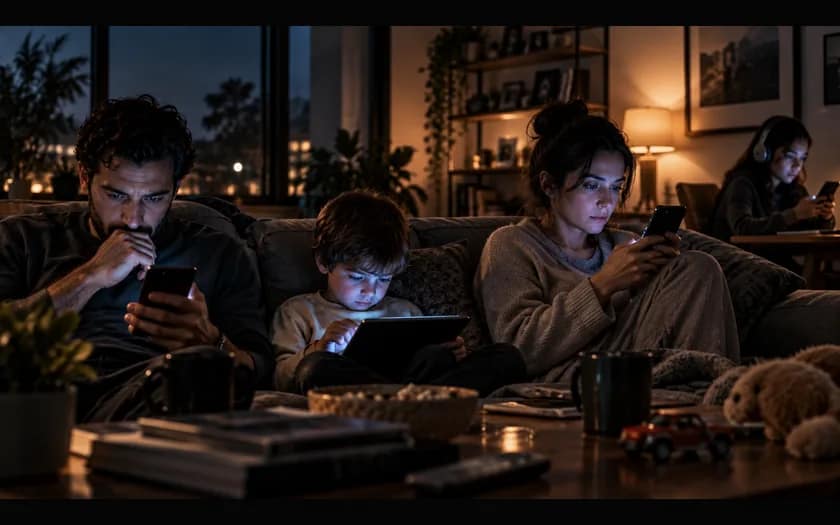
The dangerous truth is that harm often arrives wearing ordinary clothes. A polite official signs a paper. A neighbor repeats a slogan. A soldier obeys an order. A crowd stays silent. A frightened person decides that another group is less human.
Real life rarely divides people into pure heroes and pure monsters.
Psychology, history and philosophy point toward a darker and more useful thesis: humans should not be divided into two biological categories of good and evil. We carry capacities for empathy, cooperation, selfishness and aggression, while circumstances and choices strongly shape behavior.
The question is not only whether people are born good or evil. It is what makes a human being cross the line, and what helps another person refuse.
For related PRESDA context on the human mind, biology and social systems, read Designer Babies, Hachikō and the science of loyalty and PRESDA's Science coverage.
Are Humans Born Good Or Evil?
The old argument is often framed through Thomas Hobbes and Jean-Jacques Rousseau.
Hobbes imagined human beings without strong political order as vulnerable to fear, rivalry and violence. In a state of nature, life could become a war of all against all, requiring a powerful social contract to restrain chaos.
Rousseau is often remembered as the thinker who saw human beings as corrupted by society, though his actual philosophy is more complex than the slogan noble savage suggests.
The modern evidence does not fully vindicate either cartoon version. Humans are not born angels who become bad only because society ruins them. They are not born demons who behave only because law terrifies them.
We are social animals with evolved capacities for care, competition, imitation, anger, loyalty, fear and rule-making.
The Evolution Of Morality
Morality did not appear from nowhere.
Cooperation helped human groups survive. Empathy, reciprocity, reputation, punishment of cheaters and care for kin all have evolutionary logic. Groups that could coordinate, share information, protect children and punish betrayal had advantages.
Aggression also has evolutionary roots. Humans can defend, dominate, retaliate, exclude and compete. The same mind that can protect a child can demonize an enemy.
Evolution did not give us a simple moral compass. It gave us capacities that can be directed by culture, law, identity, fear and choice.
Do Babies Show Early Moral Preferences?
Studies of infants have suggested that very young children may prefer helpers over hinderers in simplified experiments.
Those findings became famous because they seemed to show early moral evaluation before formal teaching.
But the field is more cautious today. Replication debates, methodological questions and alternative explanations have complicated the strongest claims.
A reasonable conclusion is that babies are not blank machines, but neither are they tiny philosophers with adult morality. Early social preferences may be building blocks, not fully formed ethics.
Morality develops through biology, attachment, imitation, language, discipline, culture and experience.
Conscience, Guilt And Empathy
Conscience is not a single organ.
It involves emotions, memories, self-image, social learning, fear of harm, concern for others and internalized norms. Guilt can tell a person, I did something wrong. Shame can say, I am wrong. Empathy can make another person's pain feel psychologically real.
These capacities can stop harm, but they can also be narrowed.
People often feel empathy most strongly for family, friends, tribe, nation, religion or group. Propaganda and dehumanization work partly by pushing victims outside the circle of concern.
The moral danger is not always no empathy. Sometimes it is selective empathy.
Moral Decision-Making And The Brain
Neuroscience shows that moral judgment involves networks linked to emotion, attention, reward, memory, social cognition and cognitive control.
Brain regions such as the prefrontal cortex, amygdala, temporoparietal junction and default-mode networks may be involved depending on the task.
But there is no evil brain.
No scan can divide humanity into good people and bad people. Moral behavior emerges from biology, development, social context, norms, incentives and decisions.
The brain matters because morality is embodied. It does not erase responsibility, culture or choice.
Psychopathy Is Not Evil
Psychopathy is a personality construct associated in some people with traits such as shallow affect, manipulativeness, low remorse, impulsivity or callousness.
It is not a synonym for evil.
Many people with psychopathic traits are not violent. Many violent acts are committed by people who would not meet criteria for psychopathy. Mental illness in general should not be equated with danger or moral corruption.
Psychopathy can help researchers study empathy, fear, punishment learning and antisocial behavior. It should not be used as a dramatic label for anyone society dislikes.
Calling people monsters may feel satisfying. It often explains less than it hides.
Why Good People Can Do Terrible Things
Ordinary people can do terrible things when moral boundaries shift step by step.
Obedience, conformity, fear, revenge, ideology, propaganda, career ambition, humiliation, group identity and perceived threat can all move the line.
A person may begin by tolerating a cruel joke, then accepting discriminatory language, then following unfair rules, then justifying violence against people described as dangerous or subhuman.
Most moral collapse is not experienced from the inside as I am becoming evil.
It is experienced as loyalty, duty, safety, justice, revenge, obedience, survival or belonging.
Obedience And The Milgram Experiments
Stanley Milgram's obedience studies in the 1960s are among psychology's most famous experiments.
Participants believed they were administering increasingly severe electric shocks to another person during a learning task. Many continued when instructed by an authority figure.
The studies suggested that ordinary people could obey harmful orders under pressure.
But modern criticism matters. Researchers have questioned aspects of deception, participant belief, experimental variation, archival interpretation and ethical treatment. Some participants may not have fully believed the shocks were real; others experienced serious stress.
Milgram remains important, but the lesson is not people are robots. The better lesson is that authority, setting, gradual escalation and moral framing can powerfully shape behavior.
The Stanford Prison Experiment And Its Problems
The Stanford Prison Experiment is often told as proof that roles instantly turn normal people cruel.
That popular story is too simple.
The 1971 study placed college students into mock prisoner and guard roles. It was stopped early after abusive behavior and distress. For decades it became a symbol of situational power.
Major methodological criticism has since challenged the study: demand characteristics, researcher involvement, coaching or expectations, weak controls, small sample size and dramatic retellings that exceeded the evidence.
The study should not be treated as a clean demonstration that anyone becomes sadistic when given a uniform.
Its value today may be as a warning about bad institutions, power, role expectations and the danger of turning flawed studies into myths.
Propaganda And Dehumanization
Atrocity rarely begins with killing.
It begins with language. They are vermin. They are criminals. They are parasites. They are traitors. They are not like us.
Dehumanization reduces moral inhibition. It makes cruelty feel defensive, cleansing or necessary.
Propaganda repeats the image until ordinary people stop seeing neighbors and start seeing threats.
History shows that mass violence requires more than hatred. It requires bureaucracy, fear, incentives, silence and stories that make victims seem outside moral protection.
Power, Fear, Revenge And Ideology
Power can make people less accountable. Fear can make cruelty feel like self-defense. Revenge can turn pain into permission. Ideology can make moral doubt look like betrayal.
Group identity intensifies all of this.
When people believe their group is endangered, they may accept actions they would condemn in another context. They may excuse lies, humiliation, torture or killing if the victims are described as enemies of the group.
Evil, in ordinary life, often speaks the language of necessity.
Ordinary People And Atrocity
Historical atrocities were not committed only by a few obviously deranged individuals.
The Holocaust, genocides, ethnic cleansing, lynching, colonial massacres and political terror often involved ordinary officials, neighbors, soldiers, clerks, informants and bystanders.
Authoritative Holocaust scholarship has shown the importance of propaganda, bureaucracy, obedience, antisemitism, careerism, peer pressure and ideological training.
But history should not become a lazy claim that everyone would do the same thing. Some people refused, hid victims, leaked information, resisted orders or risked death to save others.
The existence of perpetrators and rescuers in the same historical worlds is one of the strongest arguments against simple biological categories of good and evil.
The Bystander Effect
The bystander effect describes situations in which people are less likely to help when others are present, partly because responsibility diffuses across the group.
The classic story around Kitty Genovese was long simplified in misleading ways, but research on diffusion of responsibility, ambiguity and social influence remains important.
People often look to others to decide whether a situation is serious. If nobody moves, stillness becomes information.
Moral failure can therefore look passive: not hatred, not violence, just waiting for someone else to act.
Moral Courage
Moral courage is the willingness to act when action carries social, physical, professional or legal risk.
Rescuers during genocides, whistleblowers, dissidents, civil-rights workers and ordinary people who protect strangers show that circumstances do not erase agency.
Courage is not the absence of fear. It is fear failing to become an excuse.
People who act morally under pressure often describe concrete attachments: a neighbor, a child, a religious duty, a professional oath, a memory of being helped, a refusal to see victims as less human.
Can Good People Become Evil?
Good people can do evil things.
That sentence is uncomfortable because people want moral identity to be stable. If I am good, surely I am safe. If they are evil, surely I am different.
But history and psychology suggest that self-image is not enough.
Under pressure, people can rationalize harm. They can obey. They can conform. They can look away. They can take revenge. They can let ideology overpower conscience.
The better question is not am I a good person? It is what habits, institutions and relationships keep me from crossing lines I will later pretend I never saw?
Can People Who Did Terrible Things Change?
Some people who commit serious harm can change, but change is not a slogan.
Genuine change requires responsibility, truth, remorse, repair where possible, accountability, time and altered behavior. It does not erase victims' suffering.
People can leave extremist movements. Some offenders rehabilitate. Some former perpetrators tell the truth. Others manipulate the language of change to escape consequences.
A humane society should allow the possibility of transformation without confusing it with automatic forgiveness.
Forgiveness And Accountability
Forgiveness is not the same as forgetting.
It is not the same as excusing. It is not the same as restoring trust. It is not owed on demand.
Accountability asks what happened, who was harmed, who is responsible and what repair or consequence is required.
Forgiveness may be spiritual, personal, communal or impossible. Accountability is a social necessity.
A culture that demands forgiveness without truth often protects the powerful.
Free Will, Biology And Environment
Human behavior is shaped by genes, brain development, trauma, culture, poverty, stress, peers, institutions and opportunity.
Those forces matter. They can raise risk, narrow options and change perception.
But explanation is not the same as excuse.
Free will is debated across philosophy and neuroscience. Even if human freedom is constrained, societies still need responsibility because choices affect other people.
The most realistic view is neither total biological destiny nor pure individual choice. Humans act inside conditions, and then their actions reshape conditions for others.
What Philosophy Says About Good And Evil
Philosophers have treated evil in many ways.
Some see evil as radical wrongdoing, some as privation or corruption of the good, some as a problem of suffering, some as a failure of reason, some as a social and political category.
Hobbes emphasized order against violence. Rousseau explored society's corrupting pressures. Kant focused on moral law, autonomy and radical evil as a corruption of maxims. Hannah Arendt famously described the banality of evil in relation to bureaucratic wrongdoing and thoughtlessness, though that phrase is often oversimplified.
Philosophy keeps the question open because evil is not only a behavior. It is a judgment about meaning, responsibility and human value.
What Religions Say About Good And Evil
Major religious traditions approach good and evil through different languages: sin, virtue, karma, temptation, compassion, justice, ignorance, obedience to God, liberation, repentance, mercy and moral discipline.
Christianity has often framed evil through sin, free will, fallenness and redemption. Islam emphasizes moral accountability before God, justice, mercy and the struggle against wrongdoing. Judaism contains deep traditions of law, responsibility, repentance and argument with God about justice. Buddhism often treats harmful action through craving, ignorance and suffering. Hindu traditions include karma, dharma and the struggle between order and disorder.
These are broad sketches, not substitutes for living traditions.
Religion matters because it has shaped how civilizations teach conscience, guilt, forgiveness, punishment, mercy and moral repair.
Is Evil A Scientific Word?
Science can study aggression, empathy, psychopathy, obedience, conformity, trauma, prejudice, moral judgment and violence.
But evil is not a clinical diagnosis or a brain region.
Evil is primarily a moral and philosophical concept. It names a judgment that some actions are not merely harmful but profoundly wrong.
Science can explain mechanisms that make cruelty possible. It cannot by itself decide what human beings ought to value.
That does not make the word useless. It means we should use it carefully.
Good Vs Evil: Myth Vs Reality
MYTH: Humans are born as either good people or evil people.
REALITY: Humans possess capacities for empathy, cooperation, selfishness and aggression, while development, culture and choices shape behavior.
MYTH: Psychopathy means evil.
REALITY: Psychopathy is not a synonym for evil, and mental illness should not be equated with violence.
MYTH: Milgram proved people blindly obey any authority.
REALITY: The experiments showed troubling obedience under certain conditions, but modern criticism complicates the simple story.
MYTH: The Stanford Prison Experiment proved anyone becomes cruel in a role.
REALITY: The study has major methodological problems and should not be treated as clean proof.
MYTH: Good people never do bad things.
REALITY: Ordinary people can cross moral lines through fear, conformity, ideology, revenge, obedience or silence.
MYTH: Evil is an evil gene or evil brain.
REALITY: No credible science divides people that way.
MYTH: Forgiveness cancels accountability.
REALITY: Forgiveness and accountability are different moral questions.
How Not To Cross The Line
Moral life requires habits before crisis arrives.
Question dehumanizing language. Notice when a leader asks you to hate an entire group. Slow down revenge. Protect institutions that limit power. Listen to victims. Keep friendships that can challenge you. Refuse small cruelties before they become normal.
Most people imagine moral courage as a dramatic moment. Often it begins earlier, with the refusal to laugh, repeat, obey, forward, exclude or look away.
The line is crossed one step at a time. It can also be defended one step at a time.
The Line We Keep Drawing
The frightening lesson of psychology and history is not that everyone is secretly evil.
It is that morality is active.
People become what they repeatedly excuse, practice, reward and ignore. Societies become what they normalize.
Perhaps the line between good and evil does not separate one kind of human from another. Perhaps it passes through the choices human beings make, again and again.
FAQ
Frequently Asked Questions
Are humans born good or evil?
Science does not support dividing humans into biological categories of good and evil. Humans have capacities for empathy, cooperation, selfishness and aggression, shaped by development, culture, circumstances and choices.
Does psychopathy mean someone is evil?
No. Psychopathy is a personality construct, not a synonym for evil. It should not be used to equate mental illness or personality traits with violence or moral corruption.
Did Milgram prove people blindly obey authority?
Milgram showed troubling obedience under specific experimental conditions, but modern criticism complicates the simple story and raises questions about belief, ethics and interpretation.
Is evil a scientific concept?
Science can study aggression, empathy, obedience and moral judgment, but evil is primarily a moral and philosophical concept rather than a diagnosis or brain region.
Can people who did terrible things change?
Some people can change, but genuine change requires responsibility, truth, accountability, time and altered behavior. It does not erase harm or automatically require forgiveness.
PRESDA Dispatch
Stay Informed. Stay Aware.
A sharp briefing across AI, gaming, sport, business, world affairs, paparazzi, and lifestyle.