HAM: THE CHIMPANZEE WHO WENT TO SPACE BEFORE AMERICA'S FIRST ASTRONAUT
Ham’s 1961 suborbital mission, training, technical problems, ocean rescue and later life, with NASA archives and the ethical questions behind the achievement.
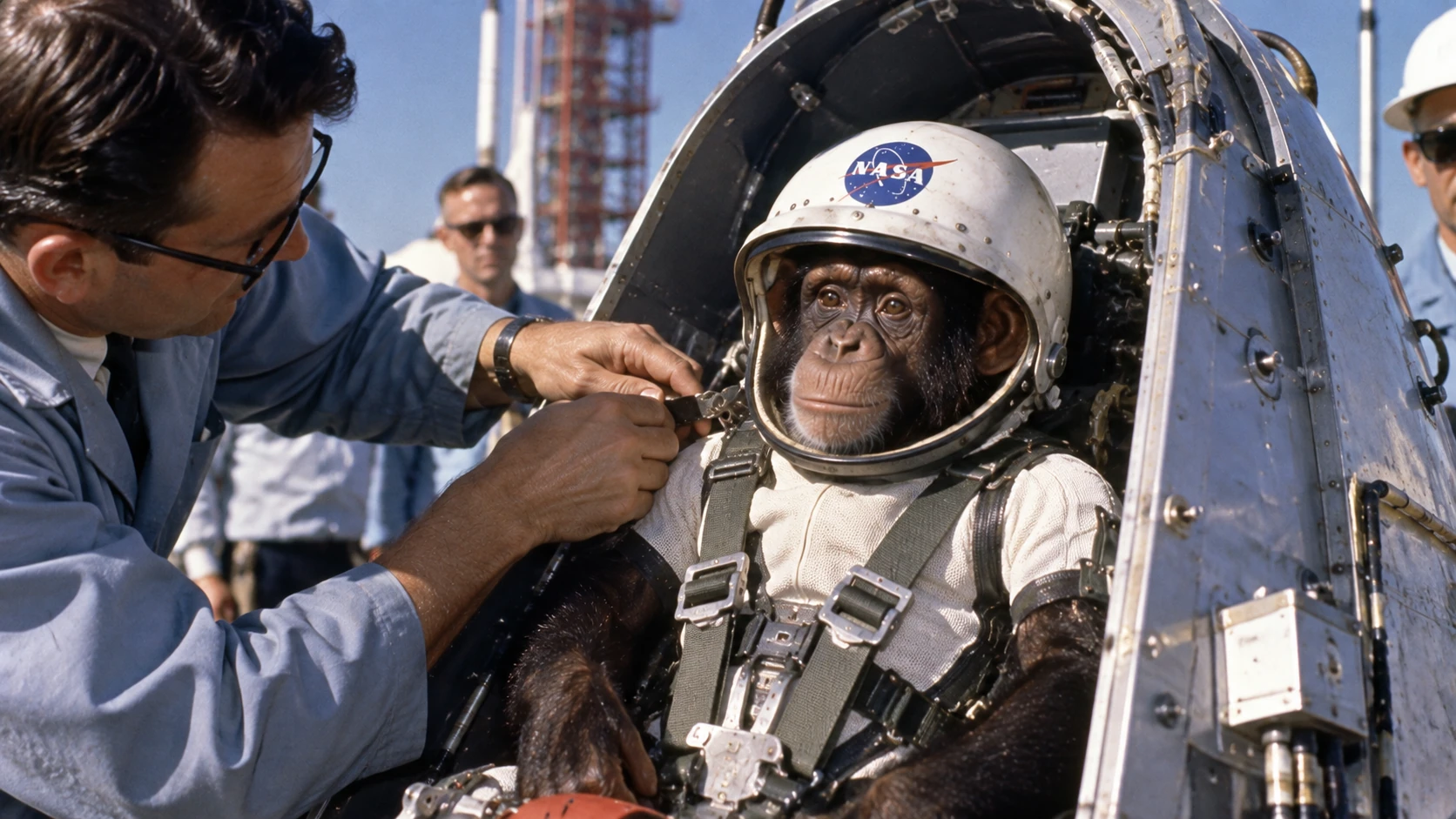
AI-assisted historical reconstruction supplied for PRESDA. Not an authentic NASA photograph of Ham. The imagined equipment and insignia do not document his actual flight or imply NASA endorsement.
An apple appears in one of the most memorable photographs from America's early space program. Ham, still in his flight equipment, receives it after being recovered from the Atlantic. The photograph records survival. It cannot tell us what the chimpanzee understood about the rocket, the ocean or the people around him. That distinction matters in a story so often told as an uncomplicated adventure. NASA recovery photograph
On January 31, 1961, Ham flew aboard Mercury-Redstone 2, becoming the first chimpanzee to reach space. His journey was suborbital: the capsule climbed above the atmosphere and fell back toward Earth without completing an orbit. Three months later, Alan Shepard would become the first American in space. Between those two flights lay an important experiment, significant engineering problems and an animal whose participation was never a choice. Project Mercury chronology
From Cameroon to a numbered research subject
Ham came from Cameroon, then passed through the commercial animal trade before entering the American aerospace research program. The sanctuary organization Save the Chimps traces his transfer from a Florida animal dealer to Holloman Air Force Base in New Mexico in July 1959. Accounts differ over his precise birth year, so a confident birthday would manufacture certainty where the record is incomplete. Ham's early history
Before the public knew him as Ham, researchers identified him as Number 65. His eventual name referred to Holloman's aeromedical organization. He was one of a group of chimpanzees prepared for Mercury experiments, with six candidates brought to Florida for the flight preparations. The scientific reasoning depended on similarities between chimpanzees and humans, including their capacity to learn tasks. Those similarities also make the ethical questions impossible to dismiss: an animal capable of learning is not merely a biological instrument. Smithsonian historical account
Learning the lights and levers
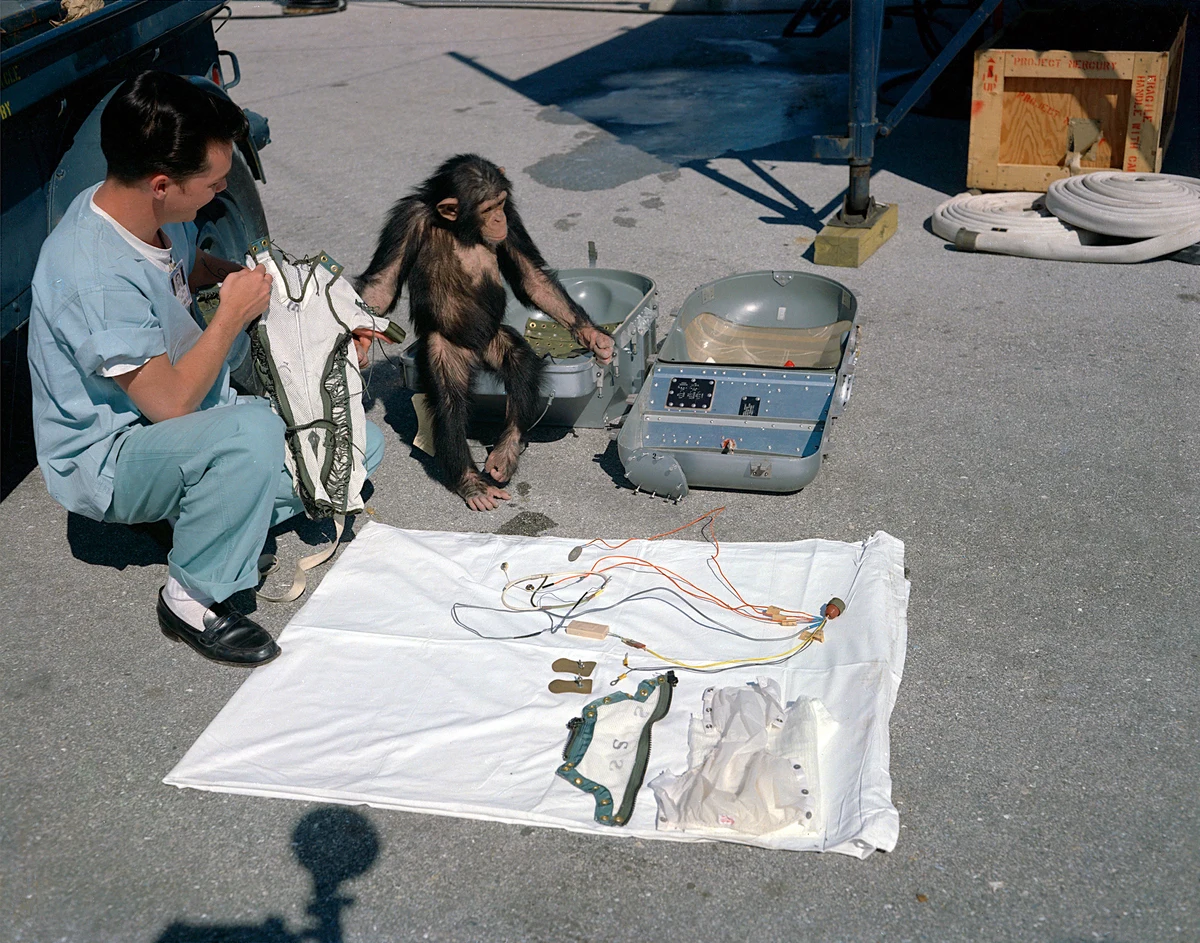
Ham and a technician during preparations, 23 January 1961. Authentic NASA archival photograph of preflight equipment.
NASA / 61C-0109 (GPN-2000-001003)
Public domain. Resized and converted to WebP by PRESDA. Full composition preserved. Reuse follows the individual license stated here.
Preparations involved much more than sitting inside a capsule. Ham learned to operate levers in response to signals. NASA's historical account describes food rewards and electric-shock avoidance in the conditioning procedures. During the flight, he completed the left-hand task correctly and made two errors in 50 responses on the right-hand task. These were measurements of performance under unusual conditions, not evidence that he understood the mission's purpose. NASA history of the Kennedy space program
The apparatus transformed small actions into data. A response could be timed and compared with performance on the ground. Researchers wanted to investigate whether an organism could still perceive a signal and carry out a learned action during acceleration and weightlessness. The experiment therefore asked something more specific than whether a living passenger could remain alive. It tested a narrow chain of behavior, not the full range of judgment a human astronaut might need.
Ham was restrained in a specially designed biopack couch. Some preparation took place in Hangar S at Cape Canaveral, and NASA photographs show technicians working with him and the equipment. The archival images are useful because they expose the physical scale of the experiment: a young chimpanzee, a confined support system and machinery built around his body. They should not be confused with later illustrations of animals dressed as miniature human astronauts. NASA preparation record
A biological passenger in a political race
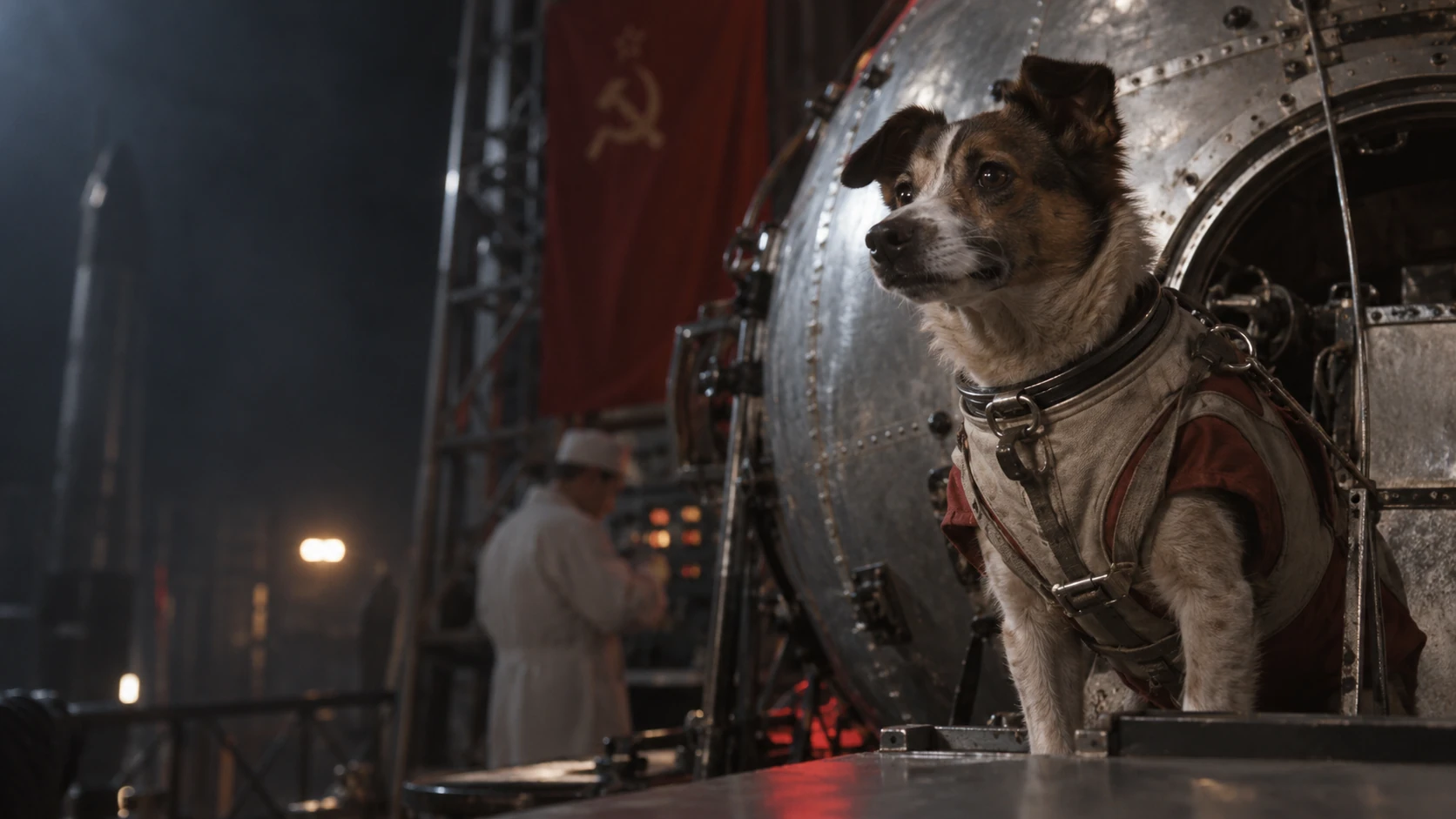
Mercury belonged to a contest in which technical demonstrations carried immense political meaning. The Soviet Union had launched Sputnik 1 in 1957 and sent Laika into orbit that November. American engineers were working toward their own crewed flights, while fundamental questions about life support, recovery and human performance remained unresolved. Animals had already been sent above the atmosphere before either Ham or Laika. Neither was the first animal in space. NASA history of animals in space
The pressure to achieve a national first did not make every experiment scientifically identical. Laika's flight addressed orbital survival without a return capability. Ham's mission included trained behavior and a planned recovery. Understanding those differences prevents the animals from becoming interchangeable symbols. It also directs attention to the decisions humans made about which risks to impose and what information they expected to gain.
January 31, 1961: a flight beyond the plan
Mercury-Redstone 2 lifted off from Cape Canaveral with Ham inside spacecraft Number 5. NASA's historical reference gives a flight of about 16 minutes 39 seconds, reaching roughly 157 miles, or 253 kilometers, in altitude and traveling about 422 miles, or 679 kilometers, downrange. These are rounded historical figures, not an orbital distance. At the top of the trajectory, the capsule entered a period of weightlessness before descending. NASA historical reference
Suborbital does not mean that space was never reached. It means the vehicle did not acquire the sideways speed required to keep falling around Earth. Ham traveled on a high ballistic arc. That distinction is essential when comparing his mission with Enos, the chimpanzee who orbited Earth later in 1961, or with human orbital flights that required different launch and recovery capabilities.
What the instruments could tell researchers
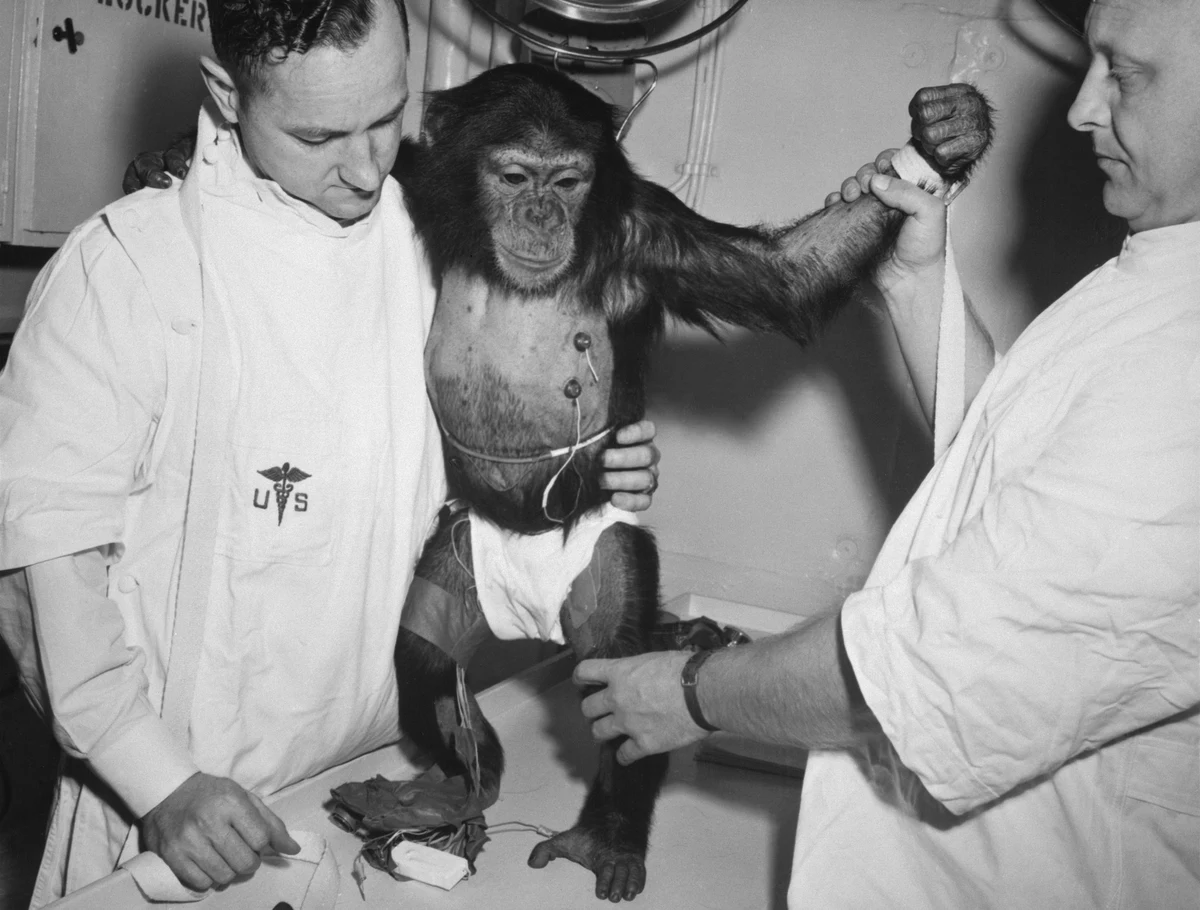
Biological sensors attached to Ham during preparations for Mercury-Redstone 2, 31 January 1961. Authentic NASA photograph.
Public domain. Resized and converted to WebP by PRESDA. Full composition preserved. Reuse follows the individual license stated here.
Photographs taken on launch day show biological sensors attached to Ham while handlers prepared him. Monitoring bodily responses alongside his lever operations allowed investigators to connect behavior with the physical stresses of flight. The sensors and task records were evidence about a particular animal on a particular journey. They were never a guarantee that every human body, every spacecraft system or a much longer mission would behave the same way. NASA biological-monitoring photograph
His survival and continued responses were meaningful results. Their limits matter just as much. A correct lever movement does not measure comfort, freedom from distress or consent. Nor does a photograph of a chimpanzee's face establish happiness. Reading the mission carefully requires holding the technical finding and the animal's vulnerability together, rather than using one to erase the other.
Trouble above Earth, danger on the ocean
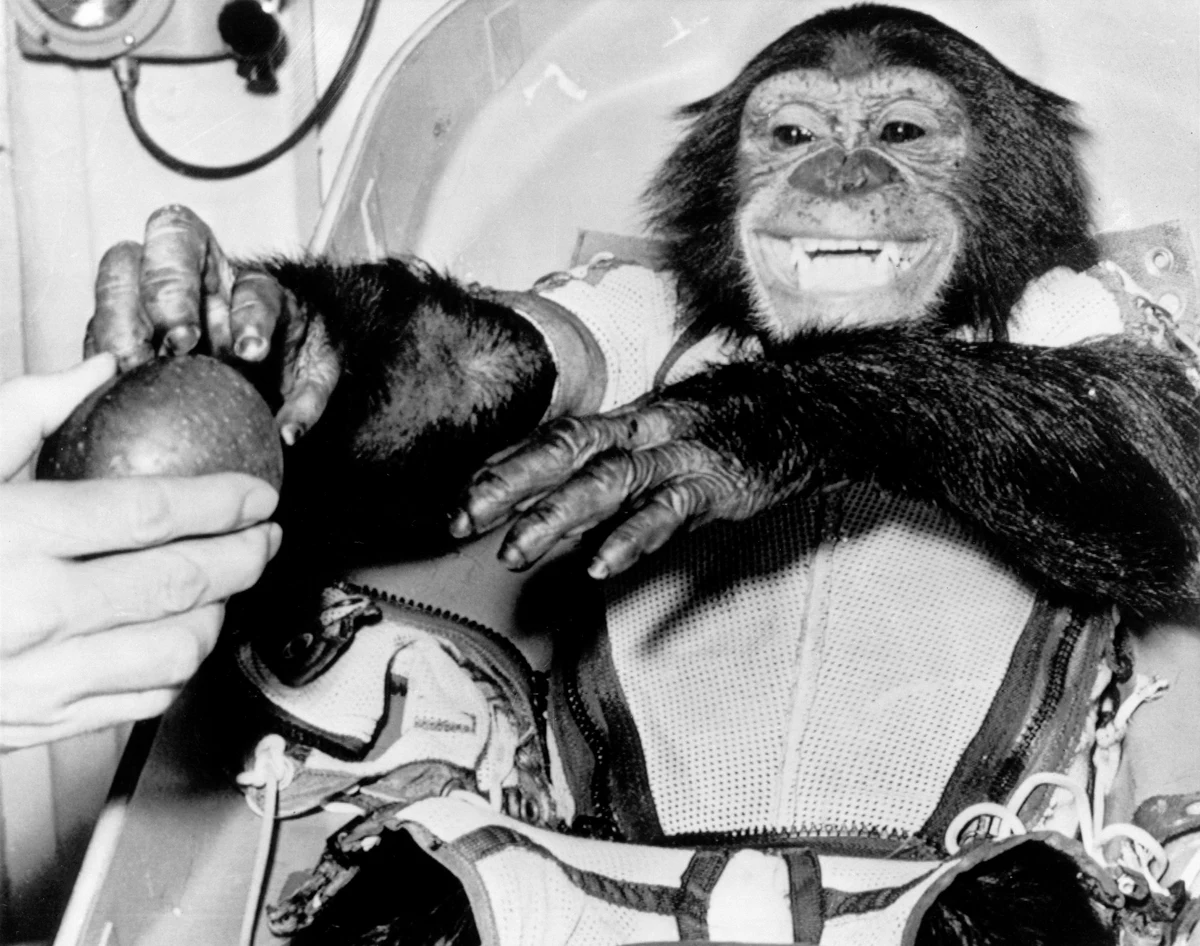
Ham receives an apple after his recovery from the Atlantic, 31 January 1961. Authentic NASA photograph; his expression alone cannot establish his emotional state.
Public domain. Resized and converted to WebP by PRESDA. Full composition preserved. Reuse follows the individual license stated here.
The flight did not follow its intended trajectory. NASA's project review describes propellant depletion triggering the abort sequence before the relevant cutoff protections had changed state. The escape system added velocity, and the spacecraft overshot its intended landing area by approximately 110 nautical miles. The successful recovery therefore should not be mistaken for an entirely successful performance by the launch vehicle. Mercury project review
Reentry imposed a peak deceleration of about 14.7 times Earth's gravity. After splashdown, water entered the spacecraft, although Ham remained protected inside his own enclosure. Recovery crews brought him back alive. The mission demonstrated that a trained primate could continue working during this short spaceflight, while simultaneously exposing problems that engineers had to address before putting a person aboard. NASA mission analysis
The road to Alan Shepard
NASA's launch-vehicle history connects the MR-2 problems with the decision to fly another uncrewed booster-development test. That flight, Mercury-Redstone BD, succeeded on March 24, 1961. Shepard followed on May 5 aboard Freedom 7. Ham was part of the evidence behind that achievement, alongside extensive ground testing, engineering revisions and other flights. Saying that he alone made human spaceflight possible would exaggerate both the experiment and its place in a collective program. Mercury-Redstone development history
Shepard was America's first space traveler, not the world's first. Yuri Gagarin had orbited Earth on April 12. Ham's journey and Shepard's were both suborbital; Enos reached orbit on November 29, and John Glenn became the first American to orbit Earth in February 1962. A clear chronology is more revealing than a contest of loosely defined firsts. Mercury mission timeline
A life that continued after the headlines
Ham did not die on his mission. He lived at the National Zoo in Washington from 1963, then moved to the North Carolina Zoological Park in 1980. A Smithsonian archival entry documents the September transfer after 17 years at the National Zoo and describes the intention to reintroduce him to other chimpanzees. His postflight life lasted far longer than the minutes that made him famous. Smithsonian transfer record
He died in January 1983. Smithsonian's retrospective reports heart disease. Accounts of his later years include recollections from caregivers, but those memories cannot supply a complete account of his inner life. An honest biography can describe captivity, care and social conditions without inventing thoughts for him. Ham deserves a history extending beyond the launch photograph, even where that history is less spectacular than the rocket. Smithsonian retrospective
Ham, Laika and Félicette: different outcomes, shared questions
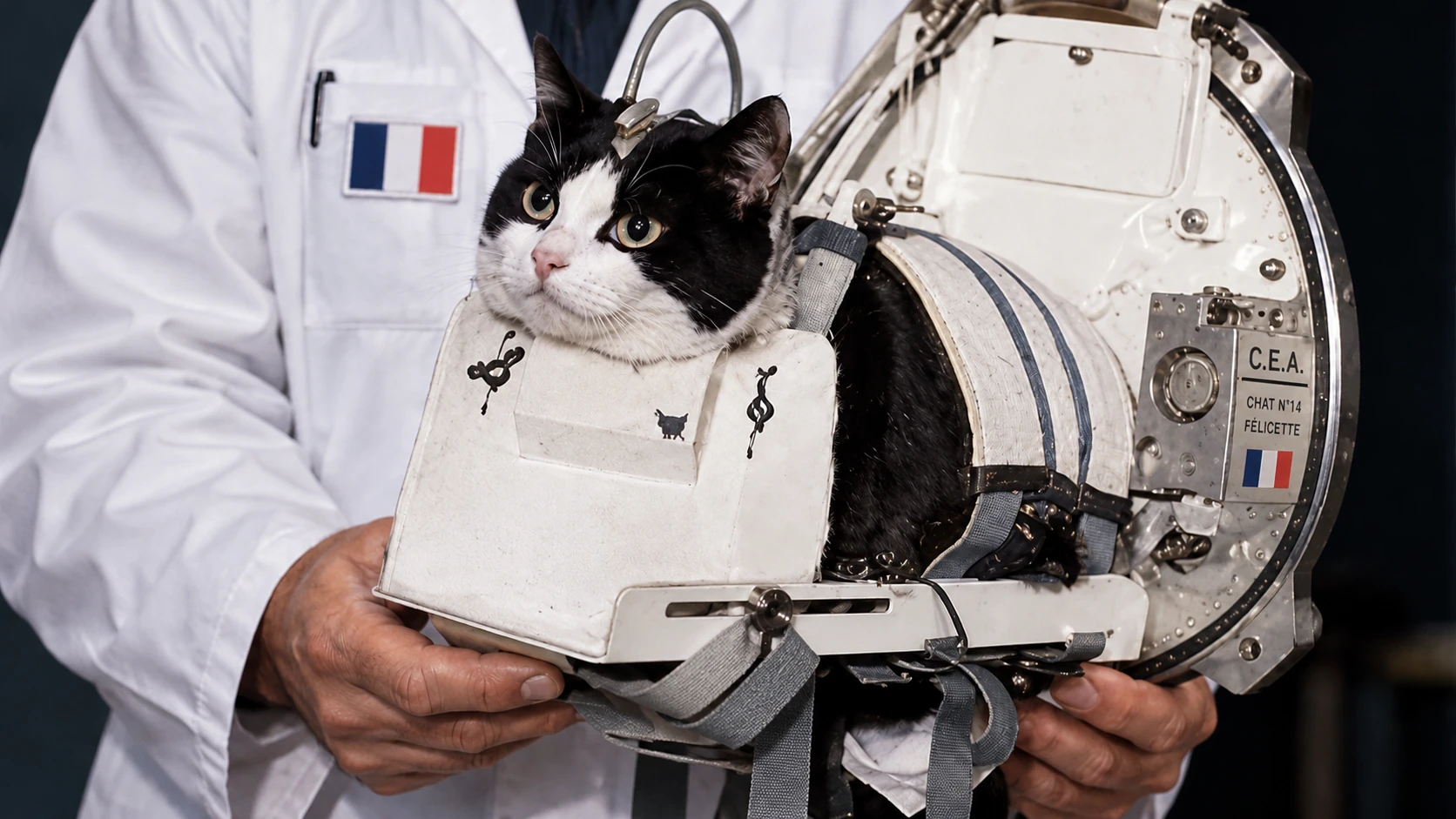
Laika never returned from her 1957 orbital mission. Félicette survived a French suborbital flight in 1963 but was later euthanized for research. Ham survived his flight and lived for decades afterward. These different endings matter; there was no single experience shared by all space animals. Our accounts of Laika's mission and Félicette's flight and tragic end examine those histories in detail.
Animal research is often defended through the benefits it produced. A serious assessment must also examine the methods, the necessity of each experiment and the possibility of alternatives. The 3Rs framework asks researchers to replace animals where possible, reduce the numbers used and refine procedures to minimize suffering. It offers a more precise ethical vocabulary than simply calling every experiment either heroic or worthless. NC3Rs principles
Those questions connect Ham's story with the wider history of animal testing and scientific progress. Historical context explains why researchers acted as they did; it does not automatically settle whether their choices were justified. Equally, recognizing suffering does not require denying that measurements were obtained or engineering knowledge advanced.
Remembering the passenger as well as the mission
Ham's flight left two kinds of evidence: records of a spacecraft and records of a living creature placed inside it. The first helped engineers evaluate a path toward human spaceflight. The second asks us to consider the cost of making that path safer for ourselves. Both belong in the same history.
The apple in the recovery photograph is a small, tangible detail beside the enormous language of the Space Race. Ham came back. That fact deserves recognition without turning survival into consent, or scientific usefulness into a complete moral answer. Remembering him accurately means preserving the achievement while refusing to let the animal disappear behind it.
FAQ
Frequently Asked Questions
What is this PRESDA article about?
Ham’s 1961 suborbital mission, training, technical problems, ocean rescue and later life, with NASA archives and the ethical questions behind the achievement.
Which category does this story belong to?
This story is part of PRESDA's Science coverage.
Who published this article?
HAM: THE CHIMPANZEE WHO WENT TO SPACE BEFORE AMERICA'S FIRST ASTRONAUT was published by PRESDA Editorial on PRESDA.
PRESDA Dispatch
Stay Informed. Stay Aware.
A sharp briefing across AI, gaming, sport, business, world affairs, paparazzi, and lifestyle.