
THE MONA LISA: WHO WAS THE WOMAN BEHIND THE SMILE?
The Louvre identifies the sitter as Lisa Gherardini. Explore the 1503 documentary evidence, Leonardo’s portrait and the limits of theories about her smile.
Conceptual editorial composition inspired by the Mona Lisa, not a faithful reproduction or a documented studio scene. The original painting is shown separately in the article with its own attribution. Editorial image supplied for PRESDA. Original creator and reuse licence not provided.
The woman behind the Mona Lisa is identified by the Louvre as Lisa Gherardini, the wife of Florentine merchant Francesco del Giocondo. That answer is more securely grounded than the endless catalogue of secret identities suggests. The mystery does not disappear, but it changes shape: how did a portrait of a particular woman become an image onto which viewers project so many stories? The identity of the sitter, Leonardo’s artistic choices and the meaning of the smile are related questions, not interchangeable ones. Musée du Louvre: collection record for the Mona Lisa
Lisa Gherardini in the historical record
The State Archives of Florence identifies Lisa as the woman described by the biographer Giorgio Vasari and places her marriage to Francesco in 1495. Her husband’s work in the silk trade locates the portrait within Florentine social and commercial life. This is a more useful starting point than treating the sitter as an anonymous code waiting to be cracked. The archive can establish relationships and events without recovering every thought of the woman herself. A documented identity is not a complete private biography. State Archives of Florence: La Gioconda or Monna Lisa
The note written in 1503
A crucial piece of evidence survives in a book held at Heidelberg. Agostino Vespucci’s marginal note, dated October 1503, refers to Leonardo working on Lisa del Giocondo’s portrait. The university’s account explains how this contemporary annotation supports the identification associated with Vasari’s later writing. It is not a letter from Lisa or a message hidden inside the painting. Its strength lies in being a dated comment connecting an artist, a sitter and work in progress, rather than an interpretation of facial resemblance. University of Heidelberg: the October 1503 marginal note
A portrait Leonardo kept working on
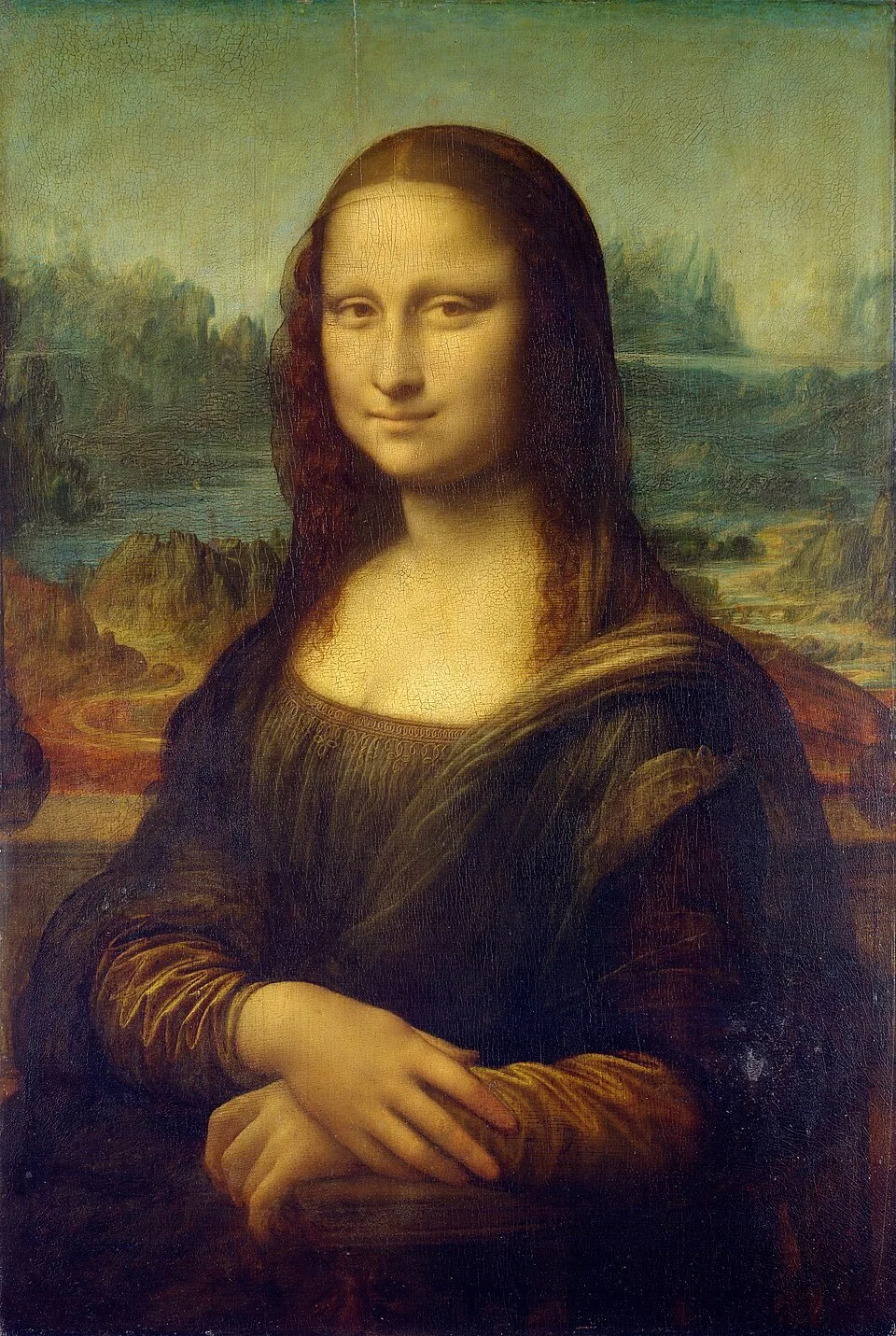
The Louvre dates the painting across 1503–1519 and describes a portrait begun in Florence, probably for Francesco, that Leonardo retained while continuing to work on it. This is why a single year can be misleading if presented as the whole history of the object. A commission, a sitting, continued painting and later ownership are different stages. The familiar image was not simply a quick encounter preserved untouched. The museum’s material record also identifies oil on poplar, grounding the discussion in an actual object rather than a free-floating legend. Musée du Louvre: collection record for the Mona Lisa
Why the smile resists a single explanation
The Louvre emphasizes Leonardo’s treatment of the sitter and the atmospheric quality of the image. Soft transitions, rather than sharply outlined features, help make the expression difficult to pin down. But identifying a painting technique is not the same as identifying the sitter’s exact emotion during a session. A smile does not disclose a medical condition, a secret relationship or a private thought without independent evidence. Looking closely can enrich an interpretation while leaving the woman’s inner life partly beyond reach. Musée du Louvre: the Mona Lisa and the Salle des États
The original and the imagined studio
The approved hero is a conceptual composition inspired by the portrait. Its books, candle, drawings and studio arrangement are not a photograph of Leonardo’s workplace or part of the Louvre painting. The separate documentary reproduction lets readers compare the actual artwork with that imagined scene. This distinction matters especially for a painting whose fame encourages endless visual reinvention. An illustration can invite attention to history without becoming evidence for the setting it invents.
Lisa Gherardini does not become less interesting when a sensational theory is set aside. The surviving evidence places an actual Florentine woman behind a painting that became larger than any individual biography. We can identify the sitter more confidently than we can explain every reason for the smile. Respecting that imbalance is part of taking both the woman and the artwork seriously: documents establish some things, painting creates others, and not every uncertainty is a hidden code.
Related reading: How a historical image became the Napoleon myth.
FAQ
Frequently Asked Questions
Who was the Mona Lisa?
The Louvre identifies the sitter as Lisa Gherardini, wife of Florentine merchant Francesco del Giocondo.
What supports that identification?
The historical tradition associated with Vasari is reinforced by Agostino Vespucci’s October 1503 marginal note about Leonardo painting Lisa del Giocondo.
Does the smile reveal exactly what Lisa was feeling?
No. Artistic technique and interpretation cannot establish a precise private emotion without independent evidence.
PRESDA Dispatch
Stay Informed. Stay Aware.
A sharp briefing across AI, gaming, sport, business, world affairs, paparazzi, and lifestyle.